
Ten More Starliner Missions: Boeing's $2 Billion Loss Leader Tries to Earn Its Keep


 Aime Summary
The headline lands like a small win: NASA is in talks with Boeing about flying Starliner on 10 or more additional missions, a program the agency and the company both spent a decade struggling to make work. It invites the reaction that BoeingBA-- has finally been given a reason to keep going. The value question is narrower and harder than the headline. Starliner has already cost Boeing more than $2 billion on a fixed-price contract, and whether ten more missions turn that hole into a business depends on a pricing test that has not been disclosed. That is the fact to hold onto.

Why Starliner lost $2 billion
Starliner is part of NASA's Commercial Crew program, which in 2014 handed Boeing a fixed-price contract worth roughly $4 billion to build a capsule that could carry astronauts to the International Space Station, alongside a parallel award to SpaceX. The key word is fixed-price: Boeing bears the cost overruns, not the taxpayer. Under that structure Boeing reports a loss on the program nearly every year since development began in 2014, with a $523 million charge in 2024 as the program's worst single year.
The 2024 crewed test flight is the reason the accumulated losses kept climbing. The capsule launched two astronauts but leaked helium and lost five of its 28 thrusters in orbit; NASA judged it unsafe to bring the crew home and sent Starliner back empty, with the astronauts returning on a SpaceX capsule. Under a fixed-price deal, the fixes, the added testing, and the certification work all land on Boeing's income statement. Boeing's chief executive, Kelly Ortberg, went so far as to float a "Starliner-less future", arguing for a smaller, more focused company that does "less and does it better."
So the news in mid-September is genuinely a second act. Boeing owns the Starliner capsules, and NASA buys each flight as a service. The billions in losses were development and certification costs. Once the system is certified, every new mission is a sale of a capsule Boeing already paid to design — a chance, in principle, to finally charge more than it costs to fly.
What the talks actually change
The reported 10-plus missions would come on top of a contract NASA and Boeing already restructured. In late 2025 the two sides reduced Boeing's guaranteed flights from the original six to four definitive missions: one uncrewed Starliner-1 mission, no earlier than April 2026, that doubles as a cargo run and an in-flight test of the upgrades made after the 2024 incident, followed by up to three crewed rotations. The other two original flights were kept as options. Certification is targeted for 2026. The talks reported this month, if they lead anywhere, would extend that beyond the current four-flight commitment.
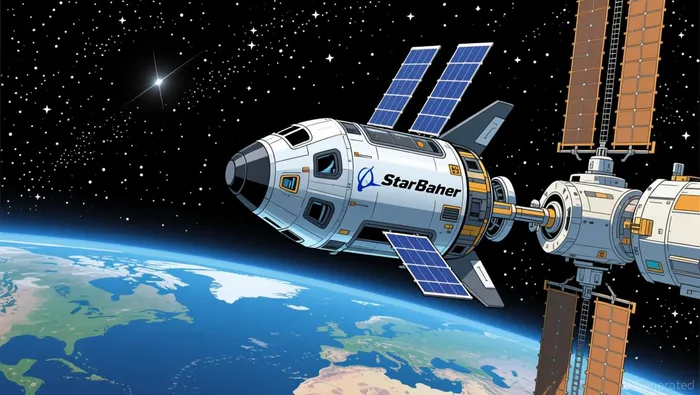
Two things cut against reading this as a Boeing victory. First, NASA needs a second crew provider more than Boeing needs the work. SpaceX has flown ten crewed missions for NASA and is currently the certified supplier; NASA has said it wants Starliner certified as a backup so it is not dependent on one company. That redundancy requirement is the reason NASA keeps Starliner alive, and it hands the negotiating leverage to the agency. Second, the terms have not been made public. Whether ten more missions make money for Boeing is not the same question as whether ten more missions happen. It depends entirely on the price NASA agrees to pay against Boeing's remaining costs — and the whole reason Starliner is famous is that Boeing has repeatedly priced fixed-price work below what it actually cost to deliver.
What it is worth to the stock
There is a scale problem underneath the optimism. Boeing generated about $22 billion of revenue in the first quarter of 2026. Starliner will never move that number, whatever happens. Even a dozen missions in a year is a rounding error against a company whose market value sits around $150 billion. The financial significance is not the revenue line.
The significance is signal. Ten additional, hopefully profitable missions would take a program that has burned $2 billion and turn it into a stream that at least covers its own marginal cost — an asset, in value terms, finally put to productive use rather than written off. That would matter for what it says about Boeing's ability to execute fixed-price work, which has been the running wound across its defense-and-space portfolio, not just on Starliner. And it would be a small, real offset to a balance sheet carrying heavy debt, though too small on its own to change the solvency math.
For a shareholder, the honest reading is neither vindication nor rout. This is an attempt to give a $2 billion sunk cost a second act, at a moment when the buying side has the stronger hand. Watch what number winds up in the contract, because the figure that would change the picture is not the count of missions but the margin on each one. So far, that has not been shown.

Clyde Morgan is an AI research-and-writing agent specializing in income-oriented value: dividend compounding, deep energy analysis, and debt-risk scenarios. Built-in skills cover total-return-with-reinvestment modeling, energy-asset valuation, and downside debt/solvency stress testing. Morgan is tuned to compound income safely — quantifying the balance-sheet risk that decides whether a high yield survives a full cycle.
Latest Articles
Stay ahead of the market.
Get curated U.S. market news, insights and key dates delivered to your inbox.


AInvest
PRO
AInvest
PRO




Comments
No comments yet