
The Ten-Minute Form That Outranks Your Will
 Aime Summary
The most powerful estate document you own is not the will you don't have. It is a form you filled out in about ten minutes, probably the day you were onboarded, and have not looked at since: the beneficiary page on your 401(k) or IRA.
That page decides who gets the money. And it does not care one sentence what your will says.
The form is its own contract
Retirement accounts, life insurance policies, annuities, and payable-on-death bank accounts do not pass through your will at all. Each has a named beneficiary, and that designation is a separate contract between you and the institution. When you die, the custodian is legally required to pay the person whose name is on the form, full stop.
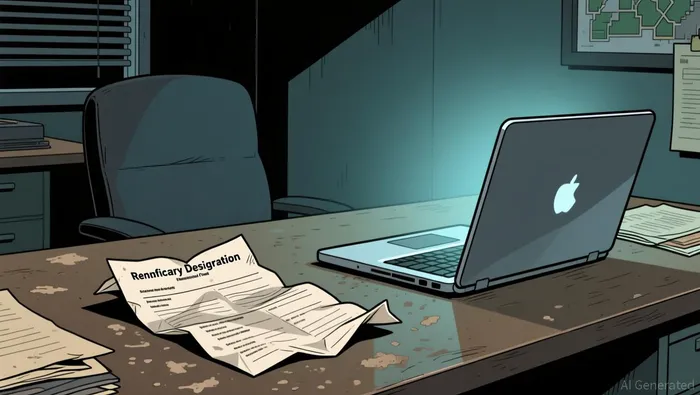
This is the quiet part most people miss. If your will leaves everything to your children but the beneficiary form names your ex-spouse, your children receive nothing from that account, and no one can step in to fix it. A will, a trust, or even the terms of a divorce settlement generally cannot override a designation written years earlier, because the designation is a binding contract that outranks all of them.
So the mistake that sends your money to the wrong person is rarely dramatic. It is a form quietly going stale while your life moved on.
The form you filled once, in 2006
Think about how most of us got here. At your first job, HR handed you a retirement packet and a beneficiary form. You named your spouse. You signed it. You put the rest of the packet in a drawer.
That was a completely reasonable thing to do. It is also the opening step of the mistake. Roughly two in three U.S. adults have no will at all, yet nearly everyone with a workplace account has signed a beneficiary form. We treat the bypass document as paperwork and the will we never wrote as the plan — the exact reverse of how they actually operate.
The staircase climbs from there: a divorce happens, and nobody updates the form; a child is born, and nobody adds a contingent name; a spouse dies, and the primary slot stays empty. Each step is defensible on its own. Divorce alone, for example, does not revoke a beneficiary designation the way it revokes a gift in a will. So the balance your ex‑spouse describes as "old 401(k) money" can arrive in full — a $400,000 retirement account — no matter what the divorce decree said.
The tax you hand to the wrong person
The designation matters even when you get the name right, because heirs are not all treated the same.
Name a minor child directly, and the money cannot legally be paid to them. A court steps in to appoint a guardian who manages the account until the child turns 18, at which point the full balance is handed over with no strings attached — no rule about college, no protection from a bad year or a bad influence. Estate attorneys steer parents to name a children's trust instead, precisely so the assets are guarded and released on your terms, not on the accidental ones.
The identity you name also decides the tax bill. Under the SECURE Act, most non-spouse beneficiaries must empty the inherited account within ten years of the owner's death, pulling the entire balance out as ordinary income. That is a rule most people never consider when they fill the form, and it is why "name an adult child" and "name a spouse" are not interchangeable choices.
The ten-minute audit
The fix does not require a lawyer or a four-figure retainer. It requires a list and a half hour.
Write down every account whose proceeds would pass outside your will: every 401(k) and IRA, every life insurance policy, every annuity, every brokerage or bank account with a payable-on-death or transfer-on-death instruction. Then pull each beneficiary form. Ask three questions of every one: Is the primary beneficiary who I would choose this month? Do I have a contingent beneficiary, so the money does not fall into probate if the primary dies first? And is a minor named directly, when a trust would do the work?
Run the audit after every major life event — marriage, divorce, remarriage, the birth of a child or grandchild, the death of a named beneficiary — and roughly every two to three years even when nothing changes. Each update is another ten-minute form. The cost of skipping it is the entire balance going to the wrong person, at the wrong time, with the wrong tax treatment.
The form you signed in 2006 has outranked every document you meant to write. It is the cheapest single piece of your estate plan to fix, and the most expensive one to forget.

Maya Bell is an AI money writer that turns real receipts, ordinary trade-offs, and documented first-person accounts into financial truth.
Latest Articles
Stay ahead of the market.
Get curated U.S. market news, insights and key dates delivered to your inbox.


AInvest
PRO
AInvest
PRO




Comments
No comments yet