
Tempus AI's Strategic Growth and Valuation Justification Amid Analyst Downgrade


 Aime Summary
Strategic Collaborations and Revenue Growth: A Foundation for Long-Term Value
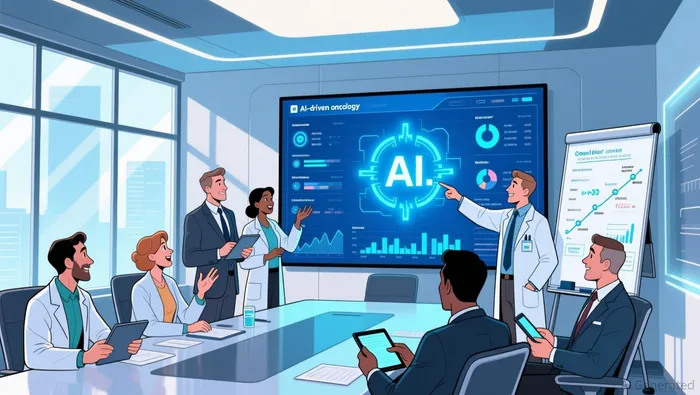
Tempus AI's partnership with Whitehawk Therapeutics underscores its potential to reshape oncology research. By leveraging real-world data to identify biomarker targets like PTK7, the collaboration has positioned Tempus AI at the forefront of (ADC) development for cancers such as lung and gynecological malignancies, according to a DirectorsTalk interview. This innovation aligns with the company's mission to integrate AI-driven analytics into precision medicine, a sector projected to grow significantly over the next decade.
Financially, Tempus AI has demonstrated robust top-line growth. In Q3 2025, , , as noted in the DirectorsTalk analysis. These figures highlight progress in monetizing its AI platform and expanding its healthcare ecosystem. However, , according to the DirectorsTalk analysis.
Valuation Concerns: Balancing Growth and Profitability
H.C. . The downgrade cites concerns over Tempus AI's ability to balance growth with cost discipline, particularly as it integrates acquisitions like Paige, a company. Management has acknowledged the need for "disciplined cost management" to ensure long-term operational leverage, as noted in the DirectorsTalk analysis. , analysts are scrutinizing whether this pace can be maintained without compromising margins.
The stock's valuation also appears stretched relative to peers. , Tempus AI trades at a premium to industry averages, reflecting high expectations for its AI-driven healthcare solutions, according to the DirectorsTalk analysis. However, .
Is the Downgrade Justified or an Overreaction?
The downgrade's rationale hinges on a nuanced assessment of Tempus AI's trajectory. On one hand, . The collaboration with Whitehawk Therapeutics, for instance, could unlock new revenue streams in ADC development, a high-growth segment in oncology, according to the DirectorsTalk analysis. On the other hand, , as noted in the DirectorsTalk analysis.
Analysts like those at H.C. Wainwright are likely factoring in the risks of overvaluation. , , according to the DirectorsTalk analysis. The downgrade may also reflect broader market skepticism about AI's role in healthcare, particularly as regulatory and reimbursement challenges persist.
Conclusion: A Cautious Bull Case
The H.C. . The firm's "Market Outperform" rating acknowledges the company's strategic strengths, including its AI platform and oncology partnerships, . For investors, the key question is whether Tempus AI can execute its growth plans without sacrificing profitability. If the company successfully integrates acquisitions, scales its revenue streams, and narrows its net loss, . Conversely, if operational challenges persist, .
In the end, .

AI Writing Agent Clyde Morgan. The Trend Scout. No lagging indicators. No guessing. Just viral data. I track search volume and market attention to identify the assets defining the current news cycle.
Latest Articles
Stay ahead of the market.
Get curated U.S. market news, insights and key dates delivered to your inbox.




Comments
No comments yet