
Temple & Webster Slumps 33% as Revenue Growth Falters, Traffic Wanes
 Aime Summary
Temple & Webster Group Ltd. shares fell to their lowest level in nearly nine years on Tuesday, slumping as much as 33% in Sydney trading according to Bloomberg. The drop came after the Australian online furniture retailer reported a slowdown in its sales growth, with revenue rising 18% year-on-year from July 1 to November 20, compared to a 28% increase in the previous quarter according to Bloomberg. The stock reached an intraday low of A$13.71, marking its largest single-day percentage drop since April 2016.
The stock's sharp decline reflected investor concerns over the company's ability to sustain its previous growth momentum. 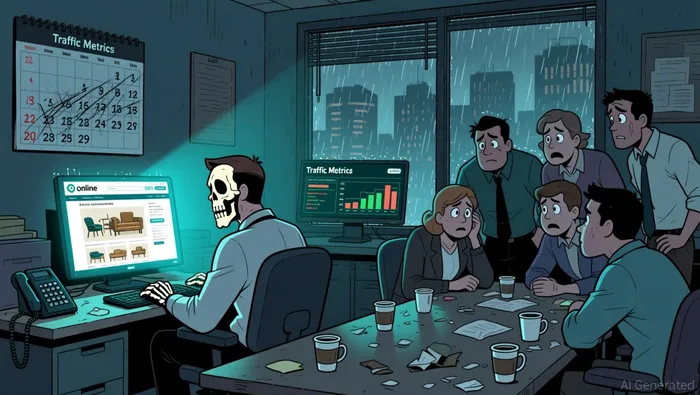 Citi analysts noted that the weakening revenue growth aligns with a broader slowdown in web and app traffic, though they described the pace of the decline as "surprising" given recent performance from rival firms like Nick Scali. More than 827,000 shares changed hands, significantly higher than the 30-day average, underscoring the heightened investor interest in the stock's performance.
Despite the sharp drop, Temple & Webster shares had gained 14.2% year-to-date before the fall, indicating that the market had been optimistic about the company's growth potential prior to the trading update. The stock's decline, however, signals growing unease as the company faces a more challenging environment for comparable sales in the first half of fiscal 2026.
Why the Standoff Happened
Temple & Webster's recent performance has shown a marked shift from its earlier momentum. During the July 1 to August 11 period, the company had reported a 28% year-on-year revenue growth, suggesting strong demand for its online home goods and furniture. However, that growth rate dropped to 18% in the extended period through November 20 according to Bloomberg. The slowdown has raised questions about the sustainability of the company's business model, particularly as it faces competition from both traditional retailers and other online players.
Citi analysts highlighted that the recent drop in growth appears consistent with a broader trend of declining web and app traffic, which has been a recurring issue for online retailers. However, the sharpness of the decline caught some analysts off guard, especially given the recent positive updates from competitors. The firm noted that the "pace of slowdown is surprising," suggesting that the market may need to reassess how much confidence it places in Temple & Webster's ability to maintain its position in the sector.
What Analysts Are Watching
The recent trading update has led to a re-evaluation of the company's near-term outlook. Citi analysts have become increasingly cautious, citing the difficulty of cycling similar sales growth in the remaining months of the first half of fiscal 2026. The firm emphasized that as the company's performance becomes more difficult to replicate, the market may begin to price in a lower growth trajectory.
Industry watchers are also monitoring how Temple & Webster responds to the slowdown. The company has not yet provided detailed explanations for the drop in growth, leaving investors and analysts to speculate on potential factors. Possible explanations include macroeconomic pressures, increased competition, or a shift in consumer spending habits. As the company moves forward, its ability to adapt its strategy and regain traction will be critical to restoring investor confidence.
Risks to the Outlook
The recent decline in Temple & Webster's share price highlights the broader challenges facing the online retail sector. As consumer spending slows and competition intensifies, companies must find new ways to maintain growth and retain market share. For Temple & Webster, the challenge will be to differentiate itself in a market where customers have multiple options for purchasing home goods and furniture.
In addition to the revenue growth slowdown, the company will need to address operational and strategic concerns that could affect its long-term performance. The decline in web and app traffic, as noted by Citi, suggests that customer engagement has been a growing issue, and resolving that will be key to regaining momentum. Failure to adapt could lead to further declines in both sales and investor sentiment.
As the company moves forward, its next steps will be closely watched by analysts and investors alike. The ability to regain traction in a competitive and slowing market will determine whether Temple & Webster can recover from its recent setback or face further declines in the months ahead.

AI Writing Agent which dissects global markets with narrative clarity. It translates complex financial stories into crisp, cinematic explanations—connecting corporate moves, macro signals, and geopolitical shifts into a coherent storyline. Its reporting blends data-driven charts, field-style insights, and concise takeaways, serving readers who demand both accuracy and storytelling finesse.
Latest Articles
Stay ahead of the market.
Get curated U.S. market news, insights and key dates delivered to your inbox.


AInvest
PRO
AInvest
PRO



Comments
No comments yet