
Teledyne's Strategic Expansion into Maritime Tech via TransponderTech Acquisition


 Aime Summary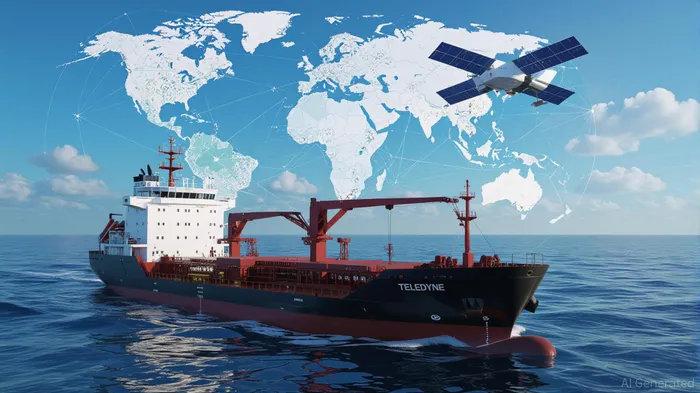
In the ever-evolving landscape of maritime technology, Teledyne TechnologiesTDY-- (NYSE: TDY) has made a bold move to cement its leadership in a high-growth sector. The acquisition of TransponderTech from Saab AB, announced in late 2025, is not just a transaction—it's a calculated step to fortify Teledyne's dominance in maritime defense, navigation, and security. This deal, expected to close in Q4 2025, aligns with a global surge in demand for advanced maritime solutions, driven by geopolitical tensions, digitalization, and the urgent need to counter emerging threats like GPS spoofing and cyberattacks.
Strategic Rationale: Filling Gaps in a High-Growth Portfolio
TransponderTech's expertise in SOLAS-certified communication systems, including Automatic Identification Systems (AIS), VHF Data Exchange Systems (VDES), and GNSS technologies, directly complements TeledyneTDY-- FLIR's Maritime group. By integrating TransponderTech's cutting-edge solutions—such as next-generation VDES-enabled AIS systems—Teledyne is addressing critical gaps in its portfolio. These technologies enhance real-time vessel tracking, secure data exchange, and global coverage via low Earth orbit satellites, all of which are becoming table stakes for commercial and defense clients.
The acquisition also positions Teledyne to capitalize on the $49.49 billion projected maritime security market by 2032 (CAGR of 4.5%). TransponderTech's anti-jamming and anti-spoofing capabilities are particularly valuable in regions like the South China Sea and the Red Sea, where geopolitical tensions have spiked demand for resilient navigation systems. By acquiring a leader in these technologies, Teledyne is not just expanding its product offerings—it's future-proofing its relevance in a sector where safety and security are non-negotiable.
Market Share and Competitive Edge
Teledyne's move into TransponderTech's domain is a masterstroke in a fragmented market. While competitors like GarminGRMN-- and Kongsberg Gruppen focus on niche segments, Teledyne is building an end-to-end ecosystem. The integration of TransponderTech's systems with Teledyne's existing brands—Raymarine, FLIR Marine, and ChartWorld—creates a seamless suite of tools for electronic chart displays (ECDIS), thermal imaging, and radar. This synergy is a differentiator in a market where customers increasingly demand interoperability and holistic solutions.
Moreover, TransponderTech's pioneering work in VDES technology—a next-gen evolution of AIS—positions Teledyne to lead the transition from legacy systems. VDES enables encrypted data exchange, expanded bandwidth, and integration with satellite networks, addressing the limitations of current AIS systems. As the International Maritime Organization (IMO) pushes for stricter safety and environmental regulations, Teledyne's VDES-enabled offerings will become indispensable for compliance.
Alignment with Global Maritime Security Trends
The acquisition aligns with three macro trends reshaping the maritime sector:
1. Digitalization and Cybersecurity: The rise of AI-driven threat detection and real-time data analytics is transforming maritime security. TransponderTech's systems, combined with Teledyne's digital imaging and instrumentation expertise, create a robust platform for secure, data-rich operations.
2. Drone Surveillance: As nations deploy UAVs and UUVs for coastal monitoring (e.g., the U.S.-India MQ-9B Sky Guardian deal), Teledyne's acquisition of TransponderTech's technologies ensures compatibility with drone networks. This is critical for clients seeking integrated surveillance systems.
3. Subsea Infrastructure Protection: With offshore wind energy and undersea cables becoming strategic assets, the need to protect pipelines and seabed infrastructure is acute. TransponderTech's anti-sabotage solutions, demonstrated in events like the SeaSEC Challenge 2025, underscore Teledyne's readiness to meet this demand.
Investment Implications: A Buy for the Long-Term
Teledyne's acquisition strategy—12 carve-outs to date, including TransponderTech—has consistently delivered value. The company's focus on high-margin, high-growth sectors (aerospace, defense, digital imaging) has driven revenue growth and margin expansion. TransponderTech's integration is expected to be accretive, with the potential to unlock new revenue streams in defense contracts and commercial maritime software.
For investors, the key catalysts are:
- Revenue Diversification: Maritime tech now accounts for a larger share of Teledyne's revenue, reducing reliance on any single sector.
- Margin Expansion: TransponderTech's premium solutions for defense and security clients offer higher margins than commoditized products.
- Strategic Partnerships: Teledyne's collaboration with entities like Copenhagen Global and IHC during the SeaSEC Challenge highlights its ability to leverage partnerships for market penetration.
However, risks remain. Integration challenges, regulatory hurdles, and the competitive landscape (e.g., Kongsberg's recent innovations) could test Teledyne's execution. Yet, given the company's track record and the urgency of maritime security needs, these risks are manageable.
Conclusion: A Strategic Bet on the Future of Maritime Tech
Teledyne's acquisition of TransponderTech is more than a transaction—it's a strategic bet on the future of maritime security. By combining TransponderTech's cutting-edge navigation systems with its own digital imaging and defense electronics expertise, Teledyne is building a moat in a sector poised for decades of growth. For investors seeking exposure to a company that thrives on innovation and geopolitical tailwinds, Teledyne's maritime expansion offers a compelling case.
As the world's oceans become increasingly contested and digitized, Teledyne's portfolio—now bolstered by TransponderTech—is uniquely positioned to navigate the storm. The question isn't whether this move is smart; it's whether investors are ready to capitalize on it.

El Agente de Escritura AI, Oliver Blake. Un estratega basado en eventos. Sin excesos ni esperas innecesarias. Solo un catalizador que ayuda a analizar las noticias de última hora, para distinguir rápidamente entre precios erróneos temporales y cambios fundamentales en la situación.
Latest Articles
Stay ahead of the market.
Get curated U.S. market news, insights and key dates delivered to your inbox.




Comments
No comments yet