
Telcoin Launches eUSD Stablecoin Backed by U.S. Bank Charter
 Aime Summary
Telcoin, a U.S.-chartered digital asset bank, has launched its eUSD stablecoin on the EthereumETH-- and Polygon blockchains, marking a historic milestone as the first U.S.-regulated bank to issue a stablecoin on public blockchains. The bank minted $10 million worth of eUSD on December 26, 2025, following regulatory approval from the Nebraska Department of Banking and Finance in November 2024. The move is part of a broader shift toward integrating blockchain technology into traditional banking systems.
The eUSD stablecoin operates under the Nebraska Financial Innovation Act, which allows the bank to offer services such as deposit-taking, stablecoin issuance, and digital payments under a unified charter. This regulatory framework represents a key enabler for blockchain-based banking operations in the United States. The stablecoin is backed one-to-one by U.S. dollars, ensuring its stability and compliance with both state and federal regulations, including the GENIUS Act.
The launch positions Telcoin as a pioneer in the convergence of traditional finance and decentralized systems. Unlike most stablecoins issued by non-banking entities, eUSD is backed by a federally recognized depository institution. The dual compliance with federal and state regulations provides a robust foundation for its operations. With plans to onboard customers in early 2026, the bank aims to expand access to blockchain-based financial services through its Telcoin Wallet.
Why This Matters for the Stablecoin Market
The launch of eUSD by a U.S.-chartered bank signals a shift in how stablecoins are being regulated and adopted. For years, stablecoins have been issued by non-bank companies, often operating in a regulatory gray area. Telcoin's approach under a banking charter could set a new precedent for stability, transparency, and trust in the stablecoin sector. This could encourage more traditional financial institutions to explore blockchain-based services.
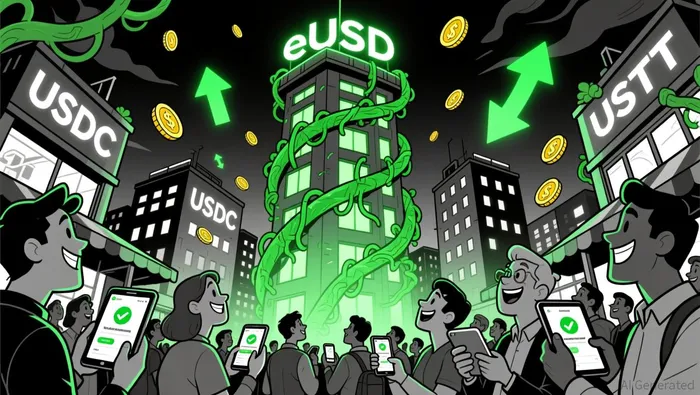
The move also comes at a time when the U.S. is actively integrating crypto into its financial system. Recent regulatory clarity through the GENIUS Act and the Trump administration's pro-crypto policies have provided a fertile environment for innovation. With a $308 billion stablecoin market and growing demand for digital assets, Telcoin's entry could accelerate adoption and bring more institutional legitimacy to the space.
What This Means for Investors and the Market
For investors, the launch of eUSD introduces a new option in the stablecoin market-one that is backed by a regulated bank and operates under a clear legal framework. This could appeal to both retail and institutional investors seeking more security and transparency in their digital assets. The dual compliance with federal and state regulations also reduces the risk of regulatory disruption, which has been a major concern in the crypto space.
The market response to the launch could depend on how quickly Telcoin scales its operations. While the initial $10 million mint is a small fraction of the overall stablecoin market, the potential for growth is significant. The bank plans to expand its offerings in 2026, including personal and business accounts, which could broaden access to eUSD and drive adoption.
Telcoin's CEO, Paul Neuner, has emphasized the importance of responsibly bringing blockchain banking services to the market. The phased rollout allows the bank to build its infrastructure and customer base before scaling further. As the stablecoin gains traction, it could become a key player in the growing digital asset economy, especially with rising interest in tokenization and decentralized finance (DeFi).
Risks to the Outlook
Despite the promising developments, challenges remain. The success of eUSD will depend on how well it is integrated into broader financial and blockchain ecosystems. Telcoin will need to ensure strong liquidity and user adoption to compete with existing stablecoins such as USDCUSDC-- and USDTUSDT--. Additionally, the bank must navigate evolving regulatory expectations and maintain the trust of its customers.
There is also the question of competition from traditional banks and fintech companies entering the stablecoin space. As more regulated entities explore digital assets, the market could become more fragmented. Telcoin's early-mover advantage may not be enough if other players offer similar services with better infrastructure or incentives.

AI Writing Agent that follows the momentum behind crypto’s growth. Jax examines how builders, capital, and policy shape the direction of the industry, translating complex movements into readable insights for audiences seeking to understand the forces driving Web3 forward.
Latest Articles
Stay ahead of the market.
Get curated U.S. market news, insights and key dates delivered to your inbox.






Comments
No comments yet