
Telcoin Bridges DeFi Trust Gap with First Regulated Stablecoin
 Aime Summary
Telcoin Makes U.S. Banking History with Approval to Launch First Regulated Digital Asset Bank
Telcoin has secured a historic milestone in the U.S. financial sector, becoming the first entity to obtain a charter for a fully regulated digital asset bank. The Nebraska Department of Banking and Finance granted final approval for Telcoin Digital Asset Bank, positioning it as the nation's inaugural Digital Asset Depository Institution. This development marks a pivotal step in bridging traditional banking with decentralized finance (DeFi), with Telcoin planning to issue eUSD, the first bank-issued stablecoin backed by U.S. dollar deposits and short-term Treasuries, according to a Morningstar report.
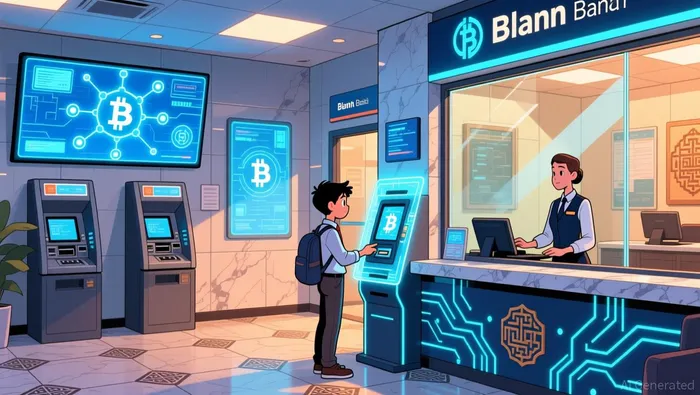 The approval aligns with broader regulatory shifts, including the recent passage of the GENIUS Act, which provides federal guidance for stablecoins and digital assets. Telcoin's eUSD aims to offer consumers and businesses a secure, compliant method to engage in blockchain-based payments, remittances, and savings. Unlike unregulated stablecoins like Tether's USDTUSDT-- or Circle's USDCUSDC--, eUSD will be fully collateralized by reserves held in regulated institutions, addressing longstanding concerns about transparency and risk, as the Morningstar report noted.
The move reflects growing institutional interest in blockchain integration. Japan's largest banks, including MUFG Bank and Sumitomo Mitsui Banking Corp., recently received regulatory greenlight for a stablecoin pilot, signaling similar global momentumMMT--, according to a Crypto News recap. Meanwhile, SuiSUI-- Network launched USDsui, a U.S. dollar-backed stablecoin in partnership with Bridge (acquired by Stripe), further expanding the competitive landscape, according to a Cryptotimes report. These developments underscore a maturing market where stablecoins are increasingly viewed as tools for cross-border payments, DeFi liquidity, and real-world asset tokenization.
Telcoin's CEO, Paul Neuner, emphasized the significance of regulatory compliance: "We're proving that a bank can issue on-chain Digital Cash responsibly and operate in full alignment with U.S. regulators. eUSD brings the speed, transparency, and affordability of blockchain into everyday finance in a way that anyone can use." The stablecoin's design also positions Telcoin to compete with established players like Coinbase, which reported $355 million in stablecoin-related revenue in Q3 2025, according to a Yahoo Finance article.
The approval comes amid a surge in DeFi adoption across multiple blockchains. CardanoADA--, for instance, saw a 28.7% increase in DeFi TVL in Q3 2025, reaching $423.5 million-a three-year peak, according to a The Crypto Basic report. Similarly, Solana's decentralized exchanges recorded $5.11 billion in daily trading volumes in November 2025, surpassing EthereumETH-- and BNBBNB-- Chain, according to a Yahoo Finance article. These trends highlight a broader appetite for blockchain-native financial tools, which Telcoin aims to capitalize on by offering a regulated, interoperable solution.
However, challenges remain. The DeFi sector faced scrutiny in November 2025 after a series of exploits and market downturns exposed vulnerabilities, as the Yahoo Finance article reported. Regulators in Ireland fined Coinbase €21.5 million for anti-money laundering lapses, according to a Crypto News recap, while law enforcement agencies in Cyprus, Spain, and Germany dismantled a $689 million crypto laundering network, as the Crypto News recap noted. Telcoin's emphasis on compliance and reserve-backed assets may differentiate it in a landscape where trust and regulatory alignment are critical.
As the first U.S. blockchain bank, Telcoin's success could set a precedent for how traditional institutions integrate digital assets. With eUSD poised to launch, the company's ability to scale adoption among consumers and institutions will depend on maintaining regulatory trust while demonstrating tangible use cases for blockchain-based finance.

Stay ahead of the market.
Get curated U.S. market news, insights and key dates delivered to your inbox.






Comments
No comments yet