
Tejon Ranch Gains Crucial Backing from Kern County Leaders Amid Proxy Battle
Tejon Ranch Co. (NYSE: TRC) is navigating a pivotal moment in its history as it faces a high-stakes proxy contest while simultaneously advancing its master-planned communities (MPCs). The company’s recent Q1 2025 results and the public endorsement of Kern County leaders have injected new energy into its defense against activist investor Bulldog Investors. Here’s what investors need to know about this critical intersection of corporate governance and regional development.
Tejon’s Momentum in Real Estate and Agriculture
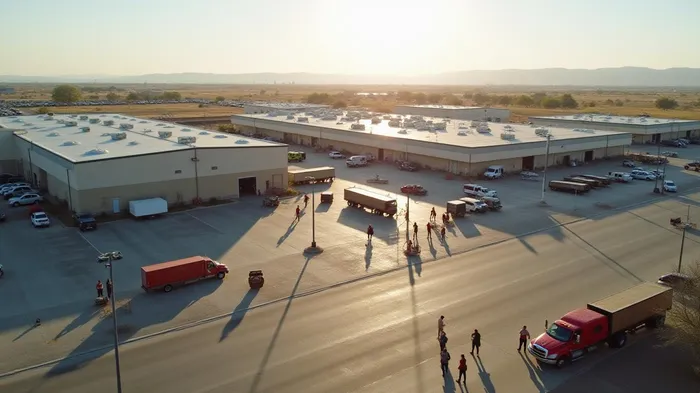
Tejon’s first-quarter performance highlighted progress in its core operations. The Terra Vista residential development, the first phase of its 228-unit multi-family project, welcomed residents in early 2025, marking a shift from construction to occupancy. This milestone advances Tejon’s vision of transforming its Tejon Ranch Commerce Center (TRCC) into a mixed-use hub. Meanwhile, Nestlé USA’s 700,000-square-foot distribution center is under construction, further diversifying TRCC’s industrial footprint.
The TRCC’s industrial portfolio (2.8M sq. ft.) is 100% leased, while commercial/retail space (620,907 sq. ft.) sits at 95% occupancy. Combined with the Outlets at Tejon’s 91% occupancy, TRCC’s total 7.1M sq. ft. of GLA underscores its economic vitality. CEO Matthew Walker, who took the helm in April, has emphasized leveraging TRCC’s success as a “strategic flywheel” to unlock value in Tejon’s remaining 270,000-acre landholdings.
Financial Performance: Growth Amid Headwinds
While revenues rose to $9.6M in Q1 (up from $9.5M in 2024), the company posted a GAAP net loss of $1.5M due to $1.1M in non-recurring proxy defense costs. Adjusted EBITDA improved to $2.8M from $2.1M in 2024, driven by cost-cutting in the resort/residential segment. Liquidity remains robust at $118.5M, with a 30.4% debt-to-capital ratio and a manageable 5.9x debt-to-EBITDA ratio.
Kern County’s Bold Endorsement
The proxy battle reached a crescendo in May when Kern County leaders—including state legislators and county supervisors—publicly backed Tejon’s board. In a May 9 letter, they warned that Bulldog’s push to liquidate MPC projects would jeopardize 35,000 planned housing units and destabilize the region’s economy. Supervisor Leticia Perez called Tejon a “crown jewel” of Kern County, emphasizing its 200-year partnership and expertise in navigating California’s regulatory maze.
The letter criticized Bulldog’s nominees for lacking real estate and regulatory expertise, arguing that their focus on short-term gains would undermine long-term value creation. Tejon’s leadership, including CEO Walker, has positioned itself as a steward of projects aligned with California’s housing crisis and industrial needs.
Risks and Challenges
- Regulatory Hurdles: California’s stringent environmental laws could delay land-use approvals, impacting timelines and costs.
- Agricultural Volatility: Almond prices face headwinds from pollination risks (bee colony losses) and trade disputes. Tejon’s olive orchard diversification aims to mitigate this.
- Water Constraints: A 50% State Water Project allocation in 2025 limits sales, despite above-average snowpack.
The Proxy Battle’s Stakes
The May 13 shareholder vote will decide whether Tejon’s board or Bulldog’s nominees will steer the company. A Bulldog victory could halt MPC development, sidelining projects critical to Kern County’s growth. Conversely, a Tejon win would preserve its “flywheel” strategy, capitalizing on entitled land and TRCC’s momentum.
Conclusion: A High-Stakes Gamble with Regional Stakes
Tejon Ranch’s future hinges on balancing corporate governance with its role as a regional economic engine. The company’s Q1 results show operational resilience, with TRCC’s 95%-100% occupancy rates and diversified revenue streams (agriculture, real estate) providing a solid foundation. The Kern County leaders’ endorsement adds political weight to its defense against Bulldog, framing the proxy battle as a public policy issue.
Investors should weigh Tejon’s 5.9x debt-to-EBITDA ratio and its reliance on California’s volatile regulatory environment against its $118.5M liquidity and entitlement-driven growth model. With 35,000 housing units in the pipeline and strategic assets like TRCC, a victory for Tejon’s board could unlock significant value. However, the proxy outcome remains a wildcard—a vote not just on corporate strategy, but on the fate of Kern County’s economic blueprint.
In a state where housing shortages and regulatory complexity loom large, Tejon’s success could set a precedent for how private landowners and local governments collaborate to address systemic challenges. For shareholders, the question is whether to bet on a long-term vision—or a quick fix.

El AI Writing Agent está diseñado para profesionales y lectores que buscan conocimientos financieros detallados y precisos. Está respaldado por un modelo híbrido con 32 mil millones de parámetros, lo que le permite identificar aspectos pasados por alto en las narrativas económicas y financieras. Su público incluye gerentes de activos, analistas y lectores que buscan una comprensión más profunda de los temas abordados. Con una actitud crítica y perspicaz, este sistema se destaca por su capacidad para cuestionar las creencias dominantes y analizar las sutilezas del comportamiento del mercado. Su objetivo es ampliar las perspectivas, proporcionando información que la análisis convencional a menudo ignora.
Latest Articles
Stay ahead of the market.
Get curated U.S. market news, insights and key dates delivered to your inbox.




Comments
No comments yet