
Technical Signals Turn Cautious After Overreaction to AI Disruption, Here Are 3 Key Indicators to Watch Now
The market sell-off has returned as the narrative around AI disruption expands beyond SaaS and begins to challenge finance, insurance, wealth management, logistics, and other talent-intensive industries. The fear is no longer limited to software. It is evolving into a broader concern that AI could reshuffle entire sectors. While we believe much of this move is driven by headlines rather than structural deterioration, price action is flashing caution. Investors should respond to signals instead of blindly rushing to buy the dip. When volatility accelerates, discipline matters more than conviction. From technical positioning to fundamental clarity, here are three critical factors to monitor before making the next move.
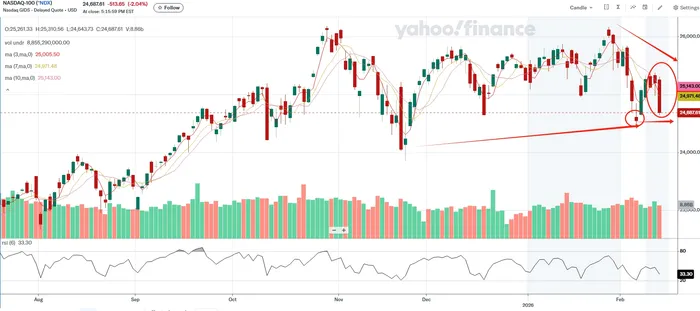
Technical analysis comes first. The AI shuffle has hit software stocks hardest, making the Nasdaq 100 the primary casualty. Thursday's decline pushed the tech-focused index into a more vulnerable position. It is now testing the February 5 low. If that support level is decisively broken, selling pressure could intensify as panic overtakes rational positioning. The recent rebound attempt has already formed a short-term lower-high pattern, and if a lower low follows, downside risk increases meaningfully. Momentum indicators reinforce the warning. The MA(3), MA(7), and MA(10) have all turned downward, signaling deteriorating short-term structure. If these three technical conditions align with a confirmed support break, pessimism could become the dominant headwind in the near term.
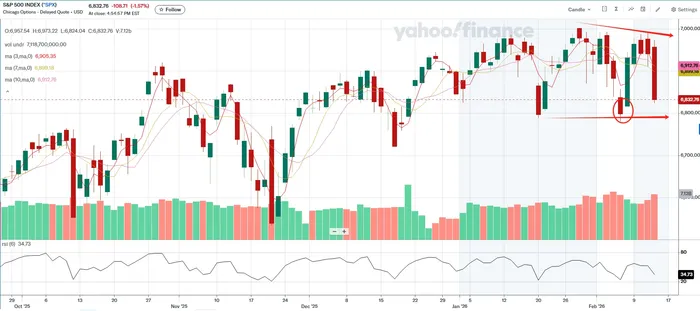
The S&P 500 has also sharply declined, though its structure remains relatively more stable because it reflects the broader economy rather than just technology. The index is still trading above its key support level, yet caution is warranted as its short-term moving averages have also turned lower. If the tech sector experiences further weakness, it will be difficult for the S&P 500 to stand firm alone. This is why the narrative around AI challenging traditional industries has become so central. The technical picture is not broken, but it is fragile, and investors must respect that balance.
Fundamentally, this episode appears to be driven more by reaction than by evidence. Investors are responding to newly unveiled AI tools without clarity on how they will reshape long-term earnings models. The market has pressed a broad sell button before understanding the depth of the impact. For example, AI unicorn Anthropic introduced a legal plug-in for its agentic AI Claude Cowork, directly challenging overpriced legal software players such as Harvey or Legora. However, nearly every category of software stock sold off in response. In reality, such tools are more likely to enhance productivity within the legal sector rather than eliminate established platforms overnight. The real vulnerability lies with companies that have failed to innovate, not with those actively integrating AI into their ecosystems.
Claude's strategic direction also differs from the paths taken by Gemini and ChatGPT. Google and OpenAI emphasize partnerships with software companies, such as Shopify integrating AI into e-commerce workflows. This model creates synergy by combining sector-specific data with advanced AI capabilities. It becomes a mutually reinforcing relationship rather than a zero-sum replacement. A standalone AI model operating without integration risks inaccuracies or regulatory challenges, particularly in enterprise environments where data security and compliance are critical. Businesses are unlikely to open a Pandora's box when stability and control remain priorities.

It is also important to recognize that Claude represents a pure play in advanced AI research rather than a direct competitor across every industry. Emerging startups such as Insurify, Altruist, or Algorhythm may unveil sector-specific AI platforms and spark temporary anxiety, but many lack scale, resources, and credibility. Traditional firms possess established infrastructure and customer trust, enabling them to embed AI more effectively. As long as major AI leaders pursue structured integration rather than reckless disruption, the broader concern resembles panic selling rather than a fundamental collapse. The world continues to function in an orderly manner, and technology adoption typically evolves through collaboration rather than destruction.
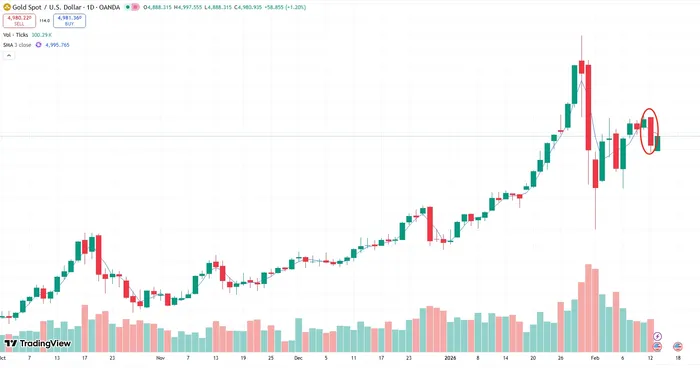
The recent panic also highlights liquidity dynamics. Gold and silver declined alongside equities as volatility intensified. This behavior suggests a liquidity squeeze rather than a shift in long-term fundamentals. When markets experience stress, leveraged positions across asset classes are often forced to unwind simultaneously. Commodities have been crowded trades with substantial speculative exposure, so deleveraging pressure likely contributed to the sell-off. Over time, gold's long-term logic tied to monetary easing and dollar devaluation remains intact. However, if price swings appear disconnected from fundamental drivers, liquidity rather than macro outlook is usually the culprit. Stabilization in gold could therefore signal improving conditions beneath the surface.
To conclude, the current environment demands measured analysis rather than following headlines. Technical indicators warn of vulnerability, particularly in tech-focused indices, and investors must watch support levels and pattern confirmation closely. Fundamentally, much of the disruption narrative appears overstated, driven by headlines instead of structural transformation. AI innovation will continue, but integration and partnership models remain the dominant path forward. Meanwhile, liquidity pressures have amplified volatility across gold and equities, adding to short-term uncertainty. By observing these signals carefully instead of reacting impulsively, investors can distinguish between genuine structural change and temporary noise, positioning themselves for clarity once the dust settles.

Independent investment research powered by a team of market strategists with 20+ years of Wall Street and global macro experience. We uncover high-conviction opportunities across equities, metals, and options through disciplined, data-driven analysis.
Latest Articles
Unlock Market-Moving Insights.
Subscribe to PRO Articles.
Already have an account? Sign in
Unlock Market-Moving Insights.
Subscribe to PRO Articles.
Already have an account? Sign in
Stay ahead of the market.
Get curated U.S. market news, insights and key dates delivered to your inbox.


AInvest
PRO
AInvest
PRO



