
Tech Stock Volatility and AI Anxiety: A Reassessment of the Market's New Risk Paradigm


 Aime Summary
The C3.ai Case Study: When Hype Meets Reality
C3.ai's troubles are emblematic of the broader AI sector's fragility. After its founder and CEO, , stepped down due to health issues, the company's stock took a nosedive. , and the firm in its latest quarter. Investors are now questioning whether C3.ai's deep integration with Microsoft's Copilot and Azure AI Foundry can offset its operational mess. The company's pivot to a potential sale or private investment signals a desperate bid to survive, but even that hasn't quelled the panic.
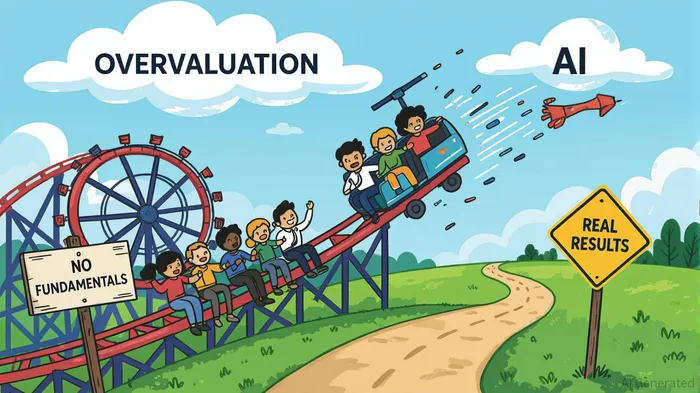
This isn't just about poor execution. It's about investor psychology. When a company's valuation is built on speculative AI promises rather than cash flow, any hint of instability-like a CEO's health scare-can trigger a stampede for the exits. As one analyst put it, "C3.ai is a microcosm of the AI sector's identity crisis: Can these companies deliver on their promises, or are they just selling vaporware?" According to the report.
Position Adjustments: Rotating to Stability
Faced with this volatility, investors are scrambling to rebalance their portfolios. The playbook? Rotate into sectors with steadier earnings and lower volatility. Healthcare, materials, and energy are now top destinations. These industries offer the kind of "boring" reliability that tech stocks once promised but increasingly fail to deliver.
But it's not just about fleeing tech. Smart investors are also hedging within the sector. For example, they're favoring sub-sectors like industrial suppliers and Asian tech firms with more reasonable valuations. The goal? To stay in the AI growth story without overpaying for it. Options strategies-like protective puts and covered calls-are also gaining traction as tools to manage volatility while staying invested in long-term trends.
Systemic Trends: The AI Bubble Debate
The broader market is now asking a question that echoes the dot-com era: Is this an AI bubble? A Bank of America survey in November 2025 found that . High-profile investors like and are sounding alarms, .
Nvidia's Q3 FY26 earnings report became a litmus test for the sector's health. While the company's data center division saw robust demand, the broader market is skeptical about whether these gains can sustain the sky-high valuations of AI darlings like Palantir (700x P/E ratio). The lesson? When the math doesn't add up, even the most bullish narratives can't hold the line.
The Road Ahead: Rationality or Recession?
So where does this leave us? For starters, the market is recalibrating. Companies with speculative business models and no clear path to profitability-like C3.ai-are being weeded out. Meanwhile, tech giants like MicrosoftMSFT--, Amazon, and Alphabet are better positioned to weather the storm thanks to diversified revenue streams and strong balance sheets.
But here's the kicker: This correction could ultimately lead to a healthier AI ecosystem. By forcing companies to prove their value with real earnings, the market may emerge with a more sustainable model. As one noted, "The pain of this correction is the price of progress. Only the companies that can deliver tangible results will survive." According to the analysis.
Final Take
Traders, this is a pivotal moment. The AI sector isn't dead-it's just being held to a higher standard. If you're still bullish on AI, focus on companies with strong fundamentals and clear revenue streams. Avoid the ones that rely on hype. And if you're nervous about volatility, diversify into sectors that don't dance to the same hype-driven tune.
The market's new risk paradigm isn't just about avoiding losses-it's about building resilience. And in this environment, resilience is the ultimate competitive advantage.

Delivering real-time insights and analysis on emerging financial trends and market movements.
Latest Articles
Stay ahead of the market.
Get curated U.S. market news, insights and key dates delivered to your inbox.
AInvest
PRO
AInvest
PRO



Comments
No comments yet