
As Tech Selloff Deepens, Fed's Crisis Credibility Faces Crucial Test


 Aime Summary
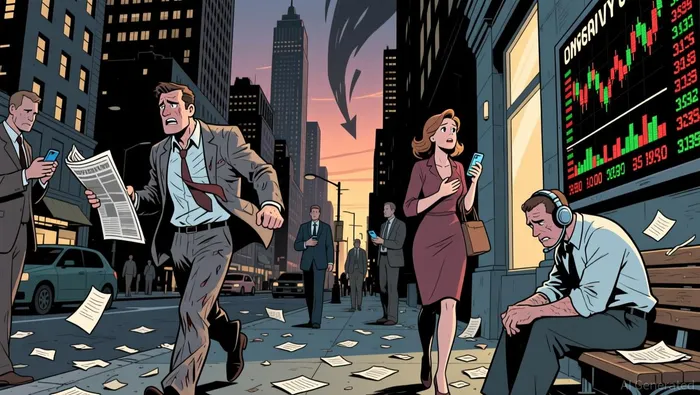
The U.S. tech sector's recent selloff has deepened, with investors bracing for prolonged uncertainty as inflation data and shifting Federal Reserve policy expectations fuel panic. The Nasdaq Composite fell 4.4% over two weeks, its worst performance since April, while the S&P 500 dropped 3%, though both rebounded slightly after the government avoided a prolonged shutdown. Analysts point to stretched valuations of so-called "Magnificent Seven" stocks-Apple, Microsoft, and others-as a key driver, with many trading at price-to-earnings ratios exceeding 35.
Apple's decision to delay the second-generation iPhone Air, originally slated for 2026, has further rattled markets. The company reportedly paused development due to weaker-than-expected sales of the current model, with Foxconn and Luxshare halting production lines according to reports. This move underscores broader challenges in consumer demand, compounding concerns about tech sector overvaluation. Meanwhile, Monday.com (NASDAQ:MNDY) saw its stock plunge 20% premarket after issuing cautious guidance despite strong Q3 results, including 26.3% revenue growth and $95.1 million in operating cash flow.
 The selloff coincides with mixed signals from the Federal Reserve. November inflation data showed core CPI rising 3.3% year-over-year, matching expectations but stalling progress toward the 2% target according to Barrons. While markets still price in a 99.9% chance of a 25-basis-point rate cut at the December meeting, economists warn of fewer cuts in 2025. Cleveland Fed President Beth Hammack emphasized the need for "somewhat restrictive" policy, noting inflation remains stubbornly above target and warning of renewed upward pressure in 2026.
Political dynamics are adding to the uncertainty. President Donald Trump hosted Wall Street leaders to discuss affordability and mortgage rates. Treasury Secretary Scott Bessent highlighted lower borrowing costs as a tool to ease financial burdens, but Trump's push for deregulation and tariffs has raised concerns about market stability and inflation according to Business Standard.
Beyond equity markets, underlying risks are emerging in U.S. dollar funding markets. The tightening of repo rates and the Fed's shrinking balance sheet have pushed the SOFR-IOER spread to its widest since 2020, raising fears of contagion. European and Japanese banks, heavily reliant on dollar funding, could face destabilizing effects if repo rates remain elevated.
While tech sector corrections and inflationary pressures dominate headlines, analysts caution that the true test lies in the Fed's ability to navigate a fragile global financial system. "The real danger isn't just in stock swings" wrote Hung Tran of the Atlantic Council. With political pressures mounting and dollar markets under stress, investors are bracing for a turbulent path ahead.

Stay ahead of the market.
Get curated U.S. market news, insights and key dates delivered to your inbox.




Comments
No comments yet