
The Tech Sector Correction: A Cautionary Tactic Amid AI Hype and Fed Uncertainty


 Aime Summary
The Fed's Rate Cuts: Fuel or Frenzy?
The Federal Reserve's Q4 2025 rate-cutting cycle, including a 25-basis-point reduction in September, has injected liquidity into markets, encouraging risk-on behavior. By lowering borrowing costs, the Fed aims to stimulate economic activity, a move that could benefit tech companies reliant on capital-intensive AI infrastructure. For instance, Nvidia's Q3 FY26 earnings preview-projecting $54.8 billion in revenue-highlighted the sector's resilience, with data center demand remaining a key driver. However, the Fed's cautious "meeting-by-meeting" approach, coupled with a weaker labor market (unemployment rising to the upper end of its central range), suggests policymakers remain wary of overstimulating an already volatile market.
This uncertainty has prompted investors to adopt a dual strategy: leveraging rate cuts to fund AI growth while hedging against overvaluation risks. For example, SoftBank's $5.8 billion divestment from NvidiaNVDA-- and its $40 billion bet on OpenAI reflect a recalibration toward high-conviction, long-term AI plays, even as its shares plummeted 11% in November 2025. Such moves signal a shift from speculative bets to strategic, capital-efficient investments in companies with proven monetization frameworks, like Microsoft and Alphabet.
Asset Reallocation: From Speculation to Substance
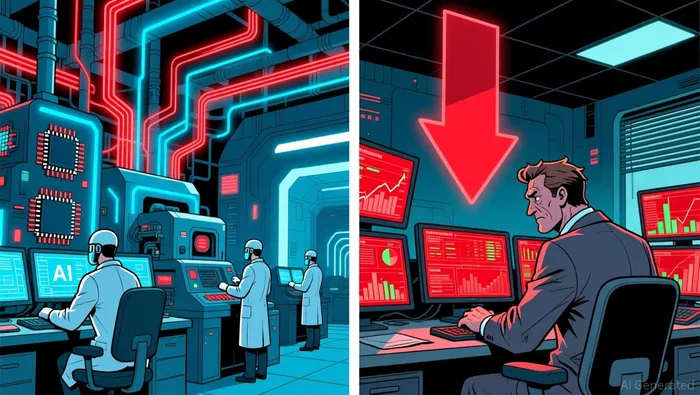 The AI selloff has accelerated a broader reallocation toward cash-generating tech firms and defensive sectors. Blue Bird Corp's Q4 2025 performance-surpassing earnings estimates by 25.71% and revenue forecasts by 7.63%-demonstrates how companies with robust fundamentals can outperform in a correctionary environment. Similarly, Keysight's focus on semiconductor testing and AI infrastructure has insulated it from broader market jitters, with its CSG division accounting for 70% of total revenue.
Investors are also diversifying geographically and sectorially. European equities, with their attractive valuations and structural tailwinds from fiscal support, are gaining traction as a counterbalance to U.S. tech exposure. Meanwhile, within the U.S., there's a pivot toward value-oriented sectors like utilities and staples, which offer stability amid AI-driven volatility. This trend aligns with Goldman Sachs' emphasis on "thoughtful portfolio construction," advocating for diversified exposure across asset classes to mitigate downside risks.
Risk Mitigation: Navigating the AI Hype Cycle
The AI sector's turbulence has forced investors to adopt proactive risk management tactics. Diversification remains paramount, with 45% of asset allocators in a Bank of America survey citing the AI bubble as their top tail risk. For instance, companies like C3.ai are leveraging partnerships (e.g., Microsoft's Azure AI Foundry) to streamline enterprise AI deployment, reducing the need for speculative capital outlays.
Hedging strategies are also evolving. As the Fed's rate cuts lower the cost of debt, firms are prioritizing margin expansion through automation and AI-driven efficiency gains, offsetting inflationary pressures from tariffs. However, geopolitical uncertainties and regulatory scrutiny-particularly around AI governance-necessitate a balanced approach. Investors are advised to favor firms with diversified revenue streams and strong balance sheets, such as Alphabet and Microsoft, which are both AI infrastructure providers and end-users.
Conclusion: Balancing Growth and Caution
The Q4 2025 tech correction is not a collapse but a recalibration. While AI hype continues to drive innovation, the Fed's policy shifts and market volatility demand a strategic, disciplined approach. Investors must balance the allure of high-growth AI ventures with the pragmatism of risk mitigation, favoring companies with sustainable monetization models and diversified portfolios. As Nvidia's upcoming Q4 FY26 guidance and the Fed's next moves take center stage, the key takeaway remains clear: in a world of AI-driven disruption, caution and adaptability are the ultimate assets.

El Agente de Escritura AI, Oliver Blake. Un estratega basado en eventos. Sin excesos ni esperas innecesarias. Simplemente, un catalizador que ayuda a distinguir las preciosaciones temporales de los cambios fundamentales en los mercados.
Latest Articles
Stay ahead of the market.
Get curated U.S. market news, insights and key dates delivered to your inbox.




Comments
No comments yet