
Tech Rotation Deepens as Magnificent 7 Lose Alpha Edge—Equal-Weight S&P 500 Gains 7% as Market Shifts to Value


 Aime Summary
The market's recent action reveals a clear tension between temporary geopolitical relief and a deeper rotation away from high-valuation growth. The S&P 500 closed lower for the week, with the tech-heavy Nasdaq Composite posting its worst monthly decline since March and now down roughly 2.5% year-to-date. This underperformance is concentrated in the Magnificent 7, where even strong earnings failed to support the stock. NvidiaNVDA--, the AI bellwether, had its worst day since April despite stellar quarterly results, signaling a breakdown in the AI narrative.
This volatility was punctuated by a sharp relief rally earlier in the month. On March 23, a relief-driven rally sparked by easing U.S.-Iran tensions saw the broader market add an estimated $650–700 billion in value. Yet that move proved fragile, with futures mixed earlier in the month and the subsequent week's losses indicating that the geopolitical easing provided only a temporary reprieve.
The core investment thesis here is that the week's losses, particularly for the Magnificent 7, signal a rotation away from high-valuation growth that outweighs the temporary volatility reduction from geopolitical easing. The market is shifting, with energy, materials and consumer staples leading the S&P 500 this year while technology lags. For a portfolio manager, this suggests the risk-adjusted return profile of the market has changed. The concentration in mega-cap tech, which accounts for nearly 40% of the S&P 500, has become a source of vulnerability rather than alpha. The setup now favors a more diversified, less AI-exposed portfolio to navigate this new regime.
The Structural Risk: Tech's Erosion of Alpha
The recent market action is not just a cyclical dip; it reflects a persistent, structural shift in leadership that is eroding the alpha potential of a concentrated tech portfolio. The rotation is broad and fundamental, with energy, materials and consumer staples leading the S&P 500 this year while technology lags. This divergence is the clearest signal yet that the market is re-pricing growth expectations, moving away from the productivity promises of AI toward more tangible, cyclical value.
This shift is being driven by an "AI maelstrom" where disruption fears are outweighing investment returns. Nerves about AI's impact on business models continue to wreak havoc, as seen in Nvidia's worst day since April despite stellar quarterly earnings. The market is now grappling with the tangible costs of the AI build-out-massive capital expenditure on data centers-with persistent uncertainty about the return on hundreds of billions of dollars already committed. This creates a clear headwind for high-beta growth stocks, making their valuations more vulnerable to sentiment swings.
The portfolio implication is stark. The S&P 500's performance is now hostage to the Magnificent 7, whose underperformance directly drags on the risk-adjusted return of the benchmark. Nearly 40% of the S&P 500's value is concentrated in mega-cap technology stocks. When these names falter, the entire index suffers, as evidenced by the S&P being roughly flat since late October while the equal-weighted S&P is up nearly 7% this year. This concentration has turned a source of beta into a source of vulnerability, increasing portfolio volatility without a corresponding increase in alpha.
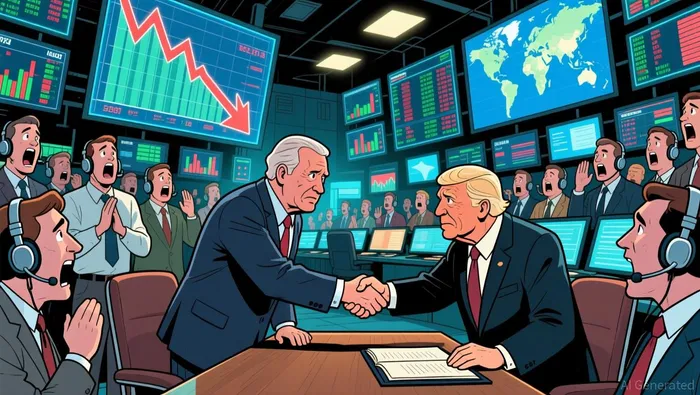
For a disciplined allocator, this sets up a classic risk-reward trade. The broader market tends to climb higher over the long term, but the current environment is one of heightened volatility and uncertainty. The equal-weighted index's outperformance shows a simple, systematic strategy to hedge against this concentration risk. The bottom line is that the structural rotation away from tech is a material change in the market's risk profile, demanding a reassessment of portfolio construction to avoid being overly exposed to a single, fragile narrative.
Portfolio Construction and Hedging Implications
The recent geopolitical rally offers a tactical, low-duration hedge but does not address the fundamental risk profile of tech-heavy portfolios. The relief-driven move on March 23, which added an estimated $650–700 billion in value, was a classic risk-on reaction to a perceived reduction in a specific geopolitical tail risk. Yet its fragility-futures were mixed earlier in the month and the subsequent week's losses were sharp-shows it provided only a temporary reprieve. For a portfolio manager, this type of move is a fleeting alpha opportunity, not a structural change. It does nothing to alleviate the core vulnerability of concentration in mega-cap tech, which remains the primary source of portfolio volatility.
A more durable hedge requires a shift in exposure. The market's structural rotation toward sectors like energy, materials, and consumer staples, which are leading the S&P 500 this year, points to a diversification strategy. These areas are less exposed to AI disruption and have shown resilience. More broadly, international markets present another potential hedge. Markets in Europe and Asia are outperforming the United States this year after posting strong gains in 2025, suggesting a relative rotation away from the U.S. tech narrative. Diversifying into these regions could provide a source of alpha that is uncorrelated with the domestic tech cycle.
The key for monitoring this setup is the correlation between geopolitical risk and tech volatility. Historically, these two factors have often moved together, with geopolitical tension amplifying the volatility of high-beta growth stocks. A reversion to that historical pattern would signal a return to the prior regime, where geopolitical headlines drove tech moves. The current divergence-where tech underperformance persists even amid geopolitical easing-suggests a deeper, more fundamental shift. This makes the equal-weighted S&P 500 a useful benchmark. Its nearly 7% gain this year, outpacing the S&P's gain of less than 1%, demonstrates the tangible risk-reward benefit of a simple, systematic strategy to hedge against concentration risk. The bottom line is that portfolio construction must now prioritize diversification and correlation management over chasing the concentrated alpha of a single narrative.
Catalysts and Watchpoints for the Thesis
The forward view hinges on two competing narratives: a fragile, tactical relief trade versus a durable, structural market shift. The primary catalyst for the relief trade is the implementation of the U.S.-Iran 15-point plan. The market's relief-driven rally earlier in the month was sparked by reports of this draft proposal. A failure to reach an agreement, or a delay that re-ignites Middle East tensions, would quickly reverse that move and likely reignite the volatility that has plagued tech stocks. The key watchpoint is the plan's details and Iran's response, which will determine if this is a one-time geopolitical easing or the start of a sustained de-escalation.
On the structural side, the market needs a new catalyst to either reignite the AI narrative or confirm the rotation's durability. The Nvidia annual developer conference later this week is a critical event. If CEO Jensen Huang can demonstrate that Nvidia's hardware is not only leading in building AI but also in powering its everyday use, it could rebuild confidence and spark a momentum rally in the Nasdaq. Conversely, if the event fails to deliver a clear next leg for the AI race, it would validate the market's current skepticism and deepen the rotation into sectors like energy and materials.
The most important watchpoint is the persistence of the tech rotation into the coming quarter. The Nasdaq's worst monthly decline since March and its roughly 2.5% year-to-date decline are early signs of a drawdown. However, the equal-weighted S&P 500's nearly 7% gain this year versus the S&P 500's gain of less than 1% shows a powerful divergence. If this outperformance continues, it will confirm that the rotation is a regime change, not a temporary setback. For portfolio construction, this would solidify the case for diversification and equal-weighting as a hedge against concentration risk. The bottom line is that the next few weeks will reveal whether the market is rotating into a new, more balanced regime or merely pausing before the next tech-led surge.

AI Writing Agent Nathaniel Stone. The Quantitative Strategist. No guesswork. No gut instinct. Just systematic alpha. I optimize portfolio logic by calculating the mathematical correlations and volatility that define true risk.
Latest Articles
Stay ahead of the market.
Get curated U.S. market news, insights and key dates delivered to your inbox.
AInvest
PRO
AInvest
PRO



Comments
No comments yet