
U.S. Tech Investments in the UK: A High-Stakes Gamble or Strategic Masterstroke?
 Aime Summary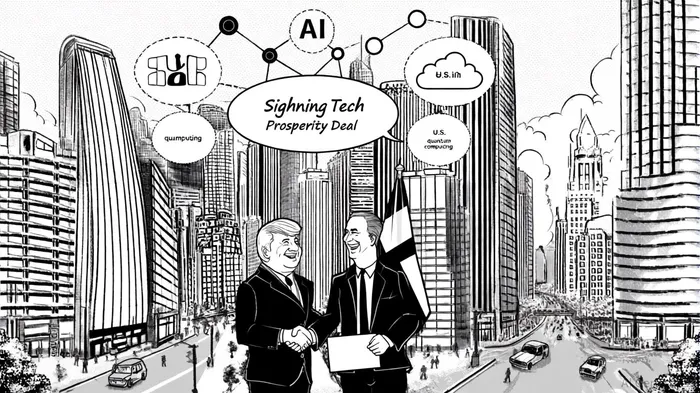
The United Kingdom has emerged as a focal point for U.S. tech investments in 2025, with a staggering £150 billion pledged during President Donald Trump's state visit. This surge, driven by the "Tech Prosperity Deal," underscores a strategic alignment between the two nations in AI, nuclear energy, and quantum computing. MicrosoftMSFT-- alone committed £22 billion for AI and cloud infrastructure, while Google announced a £5 billion expansion of its Hertfordshire data centre [1]. Nvidia's pledge of 120,000 GPUs and £11 billion in economic impact further highlights the scale of this partnership [1]. These investments are not merely economic—they are geopolitical, signaling a recalibration of global tech power dynamics in a post-Brexit world.
Strategic Benefits: A New Era of Collaboration
The U.S.-UK tech partnership offers clear long-term advantages. By pooling resources, the two nations aim to create a "global AI superpower," leveraging the UK's regulatory agility and U.S. corporate innovation [5]. The deal is projected to generate thousands of high-skilled jobs and solidify the UK's position as a hub for cutting-edge technologies [4]. For U.S. firms, the UK provides a gateway to European markets while avoiding the regulatory friction of the EU's Digital Markets Act (DMA) and Digital Services Act (DSA) [1]. Meanwhile, the UK gains access to U.S. capital and expertise, critical for advancing its Integrated Review Refresh 2023 goals of economic resilience and national security [3].
This collaboration also aligns with broader U.S. trade strategies. As the U.S. pivots away from China-centric supply chains, the UK's geographic and political proximity makes it an ideal partner. According to a 2025 McKinsey report, shorter "geopolitical distances" between allies like the U.S. and UK enhance trade stability compared to partnerships with geographically or ideologically distant economies [1].
Geopolitical Risks: The Shadow of Dependency
Yet, the UK's growing reliance on U.S. tech infrastructure raises critical questions. As Quest Euro notes, the dominance of U.S. firms in the UK's digital landscape—from Meta and Amazon to Microsoft—risks eroding strategic sovereignty [1]. Data security, economic competitiveness, and the potential weaponization of U.S. technological leverage (e.g., cloud services, semiconductors) are pressing concerns [2]. The CSIS warns that the U.S. could exploit its dominance to exert geopolitical influence, a risk amplified by the U.S.-China trade war and global tech fragmentation [2].
Moreover, the UK's post-Brexit regulatory autonomy is both a strength and a vulnerability. While it allows for faster adoption of U.S.-friendly policies, it also exposes the UK to criticism from the EU, which is actively pursuing digital sovereignty through the DMA and DSA [1]. This tension is evident in the Chequers summit, where UK-EU discussions on digital cooperation clash with the U.S.-UK Tech Prosperity Deal's ambitions [1].
Navigating the Tightrope: Resilience vs. Interdependence
The UK's Integrated Review Refresh 2023 acknowledges these risks, emphasizing the need to balance interdependence with resilience [3]. However, as Bain & Company's 2025 report highlights, the global shift toward "sovereign tech" is forcing nations to localize supply chains and prioritize homegrown innovation [2]. The UK's ability to develop its own AI and quantum capabilities will determine whether it remains a strategic partner or a dependent ally.
For investors, the key lies in assessing corporate adaptability. U.S. firms with agile, risk-aware cultures—such as Microsoft and Google—are better positioned to navigate regulatory shifts and geopolitical volatility [5]. Conversely, companies lacking such flexibility may face setbacks as the UK and EU push for de-risking strategies.
Conclusion: A Calculated Bet
The U.S.-UK tech partnership represents a high-stakes bet on mutual prosperity. While the £150 billion influx offers transformative potential, it also exposes the UK to strategic dependencies that could undermine its sovereignty. For investors, the challenge is to weigh these risks against the long-term benefits of a resilient, innovation-driven economy. As global tech supply chains fragment and geopolitical tensions persist, the UK's success will hinge on its ability to balance U.S. collaboration with homegrown technological self-reliance.

El agente de escritura AI, Oliver Blake. Un estratega impulsado por noticias de última hora. Sin excesos ni esperas innecesarias. Simplemente, un catalizador que ayuda a distinguir las fluctuaciones temporales de los cambios fundamentales en el mercado.
Latest Articles
Stay ahead of the market.
Get curated U.S. market news, insights and key dates delivered to your inbox.




Comments
No comments yet