
Tech Giants Face Challenges: Alibaba Unveils AI Chip, Trump Warns EU, ByteDance Tops Meta in Revenue.
ByAinvest
Sunday, Aug 31, 2025 10:06 am ET2min read
BABA--
The development of this new AI chip is part of China's broader strategy to build a self-sufficient AI supply chain. This effort is driven by Beijing's desire to reduce its dependence on U.S. technology and mitigate the risks posed by U.S. export restrictions. Alibaba's move follows a trend of Chinese tech companies seeking alternatives to Nvidia's products due to security concerns and regulatory barriers [2].
The new chip is currently in testing and is manufactured by a Chinese company, marking a significant departure from Alibaba's earlier AI processors that were fabricated by Taiwan Semiconductor Manufacturing (TSMC) [2]. This shift is part of a broader trend in China's tech industry, where companies are increasingly looking to domestic suppliers to meet their needs.
Meanwhile, Nvidia ($NVDA) shares slipped 1.7% following the announcement, reflecting the potential impact of Alibaba's new chip on the company's market share in China. Nvidia's H20 chip, which was the most advanced AI processor it was allowed to sell in China, was effectively blocked from sale earlier this year by the Trump administration [2]. However, the U.S. recently allowed Nvidia to resume sales of the H20 to China, but Chinese firms have been working on processors to substitute the H20 [1].
Alibaba's commitment to advancing its technology capabilities and reducing reliance on foreign chip suppliers is further underscored by its recent financial performance. The company reported a 26% year-over-year increase in cloud revenue, fueled by strong demand for AI services. Additionally, Alibaba has committed $53 billion over the next three years to AI and cloud investments [1].
The development of the new AI chip by Alibaba highlights the growing competition in China's AI chip industry. The U.S.-China tech rivalry has intensified, with China's domestic AI chip market projected to grow from 17% to 55% by 2027, despite U.S. export controls and performance gaps in advanced packaging and high-bandwidth memory (HBM) [3]. Companies are adopting hybrid strategies to navigate these risks, emphasizing supply chain diversification and compliance with evolving regulations [3].
Investors must navigate the complex geopolitical landscape and technological challenges posed by the US-China tech rivalry. As the AI chip industry evolves, the ability to manage geopolitical currents and supply chain complexities will define the winners in this new era of tech competition [3].
References:
[1] https://www.barchart.com/story/news/34493204/nvidia-shares-dip-as-alibaba-develops-new-ai-chip-to-reduce-reliance-on-u-s-suppliers
[2] https://www.ainvest.com/news/alibaba-creates-ai-chip-nvidia-absence-china-2508-15/
[3] https://www.ainvest.com/news/navigating-storm-risk-management-china-ai-chip-industry-china-tech-rivalry-2508/
NVDA--
Alibaba Group unveiled a new AI chip to reduce reliance on Nvidia, a favorite export of Washington. Alibaba's chip marks a shift in the US-China tech rivalry. Meanwhile, Nvidia CEO Jensen Huang forecasts AI as a "new industrial revolution." President Trump warned tech giants, threatening tariffs and potential sanctions against EU officials over discriminatory tech regulations. ByteDance, TikTok's parent company, is reportedly preparing a new employee share buyback program, valuing the company at over $330 billion, surpassing Meta Platforms' valuation.
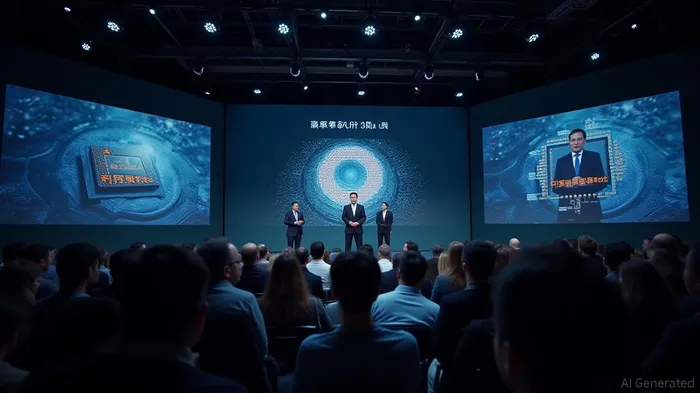
Alibaba Group has announced the development of a new AI chip, marking a significant shift in the ongoing US-China tech rivalry. The move comes amidst ongoing tensions between the two nations and Alibaba's desire to reduce its reliance on U.S. suppliers, particularly Nvidia ($NVDA). The new chip is designed to be more versatile and capable of handling a broader range of AI inference tasks compared to Alibaba's previous models [1].The development of this new AI chip is part of China's broader strategy to build a self-sufficient AI supply chain. This effort is driven by Beijing's desire to reduce its dependence on U.S. technology and mitigate the risks posed by U.S. export restrictions. Alibaba's move follows a trend of Chinese tech companies seeking alternatives to Nvidia's products due to security concerns and regulatory barriers [2].
The new chip is currently in testing and is manufactured by a Chinese company, marking a significant departure from Alibaba's earlier AI processors that were fabricated by Taiwan Semiconductor Manufacturing (TSMC) [2]. This shift is part of a broader trend in China's tech industry, where companies are increasingly looking to domestic suppliers to meet their needs.
Meanwhile, Nvidia ($NVDA) shares slipped 1.7% following the announcement, reflecting the potential impact of Alibaba's new chip on the company's market share in China. Nvidia's H20 chip, which was the most advanced AI processor it was allowed to sell in China, was effectively blocked from sale earlier this year by the Trump administration [2]. However, the U.S. recently allowed Nvidia to resume sales of the H20 to China, but Chinese firms have been working on processors to substitute the H20 [1].
Alibaba's commitment to advancing its technology capabilities and reducing reliance on foreign chip suppliers is further underscored by its recent financial performance. The company reported a 26% year-over-year increase in cloud revenue, fueled by strong demand for AI services. Additionally, Alibaba has committed $53 billion over the next three years to AI and cloud investments [1].
The development of the new AI chip by Alibaba highlights the growing competition in China's AI chip industry. The U.S.-China tech rivalry has intensified, with China's domestic AI chip market projected to grow from 17% to 55% by 2027, despite U.S. export controls and performance gaps in advanced packaging and high-bandwidth memory (HBM) [3]. Companies are adopting hybrid strategies to navigate these risks, emphasizing supply chain diversification and compliance with evolving regulations [3].
Investors must navigate the complex geopolitical landscape and technological challenges posed by the US-China tech rivalry. As the AI chip industry evolves, the ability to manage geopolitical currents and supply chain complexities will define the winners in this new era of tech competition [3].
References:
[1] https://www.barchart.com/story/news/34493204/nvidia-shares-dip-as-alibaba-develops-new-ai-chip-to-reduce-reliance-on-u-s-suppliers
[2] https://www.ainvest.com/news/alibaba-creates-ai-chip-nvidia-absence-china-2508-15/
[3] https://www.ainvest.com/news/navigating-storm-risk-management-china-ai-chip-industry-china-tech-rivalry-2508/
Stay ahead of the market.
Get curated U.S. market news, insights and key dates delivered to your inbox.
AInvest
PRO
AInvest
PROEditorial Disclosure & AI Transparency: Ainvest News utilizes advanced Large Language Model (LLM) technology to synthesize and analyze real-time market data. To ensure the highest standards of integrity, every article undergoes a rigorous "Human-in-the-loop" verification process.
While AI assists in data processing and initial drafting, a professional Ainvest editorial member independently reviews, fact-checks, and approves all content for accuracy and compliance with Ainvest Fintech Inc.’s editorial standards. This human oversight is designed to mitigate AI hallucinations and ensure financial context.
Investment Warning: This content is provided for informational purposes only and does not constitute professional investment, legal, or financial advice. Markets involve inherent risks. Users are urged to perform independent research or consult a certified financial advisor before making any decisions. Ainvest Fintech Inc. disclaims all liability for actions taken based on this information. Found an error?Report an Issue


ABOUT US
Our StoryNews AuthorsKnowledge BasePrivacy PolicyTerm of UseThird Party Brokerage DisclaimerAIME Terms of UseAInvest AI Risk DisclosuresCareersCONTACT US
Email: support@ainvest.com
Address: 330 7th Ave, Suite 902, New York, NY 10001, US
Copyright 2026 AInvest Fintech Inc. All rights reserved.


Comments
No comments yet