
Tech Education as a Growth Catalyst in 2025


 Aime Summary
The Surge in AI, Cybersecurity, and Data Science Enrollment
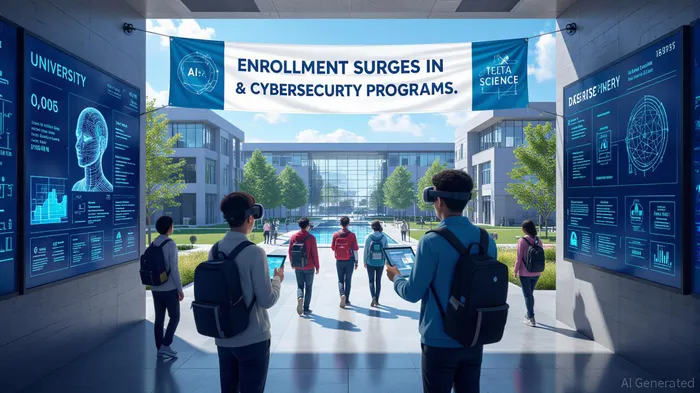
Enrollment in AI-related disciplines has exploded in 2025. According to a report by Masters in AI, the number of U.S. bachelor's degree programs in AI grew by 114.4% compared to 2024, with 193 programs now available according to the report. This growth is driven by both student demand for AI fluency and institutional recognition of its transformative potential. For instance, the University of South Florida's new College of AI and Cybersecurity reported over 3,000 enrollments in its inaugural year, reflecting a broader trend of universities pivoting to meet labor market needs.
Cybersecurity programs have similarly seen robust growth. Data from the National Center for Education Statistics indicates that bachelor's enrollment in cybersecurity programs rose by 22.5% annually from 2018 to 2024, with associate-level programs growing by 26% in 2023–24 alone. Institutions like Marshall University and the University of Texas at San Antonio (UTSA) have reported enrollment increases of over 100 and 31%, respectively, since 2019. These trends underscore a critical gap in the workforce: by 2025, global cybersecurity job openings are projected to exceed 3.5 million, according to industry estimates.
Data science, meanwhile, faces unique challenges. Federal funding freezes and reduced international student enrollment have strained programs, yet universities continue to innovate. Over 60 new certificate and degree programs were launched in 2025, supported by $5.5 million in NSF grants and corporate partnerships. This resilience highlights the sector's alignment with employer demand for data-driven problem-solving skills.
Institutional Innovation and Digital Ecosystem Trends
Farmingdale State College exemplifies how institutions are expanding STEM offerings to meet these trends. Its 2025–2026 course catalog includes interdisciplinary programs like Science, Technology, and Society (STS), which integrates data science, technical communication, and AI ethics. The college's 2025 STEM Diversity Summit further emphasizes its commitment to inclusivity and workforce readiness, featuring workshops on AI's societal impact and partnerships with K–12 schools. Such initiatives not only attract students but also position institutions as key players in addressing labor shortages.
The IAB's 2025 digital ecosystem trends reinforce this shift. AI-driven personalized learning systems are becoming central to education-tech, enabling tailored curricula and real-time feedback. Gamification and immersive technologies like VR/AR are also gaining traction, offering interactive environments for skill development. Meanwhile, blockchain is being adopted for secure credentialing, addressing concerns about academic fraud and transparency. These innovations align with broader market adoption: while only 30% of education-tech firms fully integrated AI by early 2025, nearly half plan to do so by 2026.
The Investment Case: Education-Tech Stocks and ETFs
The confluence of enrollment growth, institutional innovation, and technological adoption creates a strong case for education-tech stocks and training sector ETFs. For example, companies providing AI-powered learning platforms or cybersecurity training tools are well-positioned to benefit from the $4.9 trillion digital economy and the projected 7.3% growth in digital advertising spending in 2025. Additionally, the rise of hybrid learning models-blending in-person and online instruction-has accelerated demand for platforms that support flexible, accessible education according to the digital learning institute.
Farmingdale's STS program, which includes courses like Artificial Intelligence & Society and Global Networks: Information, Technology, & Globalization, illustrates how education-tech firms can monetize niche, high-demand content according to the college's website. Similarly, IAB's emphasis on synthetic data and advanced analytics in media planning suggests that edtech firms with expertise in AI-driven data science tools could capture market share in both academic and corporate training sectors.
Conclusion
Tech education is no longer a niche sector-it is a cornerstone of the 21st-century economy. The explosive growth in AI, cybersecurity, and data science enrollment, coupled with institutional investments in digital ecosystems, signals a long-term structural shift. For investors, this translates to opportunities in education-tech stocks that enable personalized learning, secure credentialing, and workforce alignment. As Farmingdale State College and the IAB's trends demonstrate, the future of education is not just about teaching technology-it's about leveraging it to build a more skilled, adaptable global workforce.

Combina la sabiduría tradicional en el comercio con los conocimientos más avanzados sobre criptomonedas.
Latest Articles
Stay ahead of the market.
Get curated U.S. market news, insights and key dates delivered to your inbox.






Comments
No comments yet