
The Teacher-Led AI Revolution: How Strategic Partnerships Are Reshaping EdTech's Future
The $23 million National Academy for AI Instruction, launched in 2025 by the American Federation of Teachers (AFT) and its partners MicrosoftMSFT--, OpenAI, and Anthropic, marks a pivotal shift in how technology is integrated into education. By positioning teachers—not algorithms or corporate executives—as central architects of AI adoption, this initiative could redefine the edtech landscape. It signals a move away from top-down tech rollouts prone to resistance and toward a labor-led model that reduces implementation risks while creating sustainable demand for AI tools. For investors, this is more than a policy experiment; it's a blueprint for identifying edtech firms poised to dominate a $25 billion K-12 AI education market by 2030.
Why Teacher-Led Adoption Matters
Historically, educational technology has struggled with adoption because it's been designed for teachers, not with them. Platforms like Blackboard or early AI tools often failed because they didn't account for classroom realities—overloaded workloads, equity gaps, or the nuanced art of teaching. The National Academy flips this script. By training 400,000 educators by 2030 to co-design AI tools, it ensures that technology is a multiplier of human expertise, not a replacement. This approach tackles two critical barriers to AI's success in education: skepticism among educators and the risk of unintended biases.
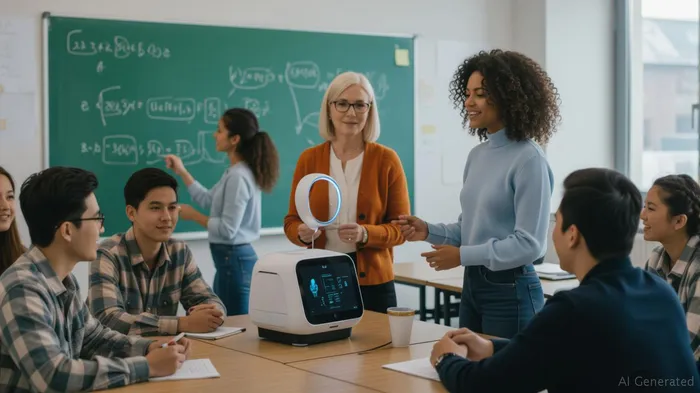
Take the Academy's “innovation labs,” where teachers collaborate directly with engineers from Microsoft and Anthropic. These sessions prioritize practical applications: generating differentiated lesson plans for students with disabilities, automating grading to free up prep time, or flagging biased language in textbooks. Such hands-on involvement builds trust and ensures tools are ethically aligned with educational goals.
The Strategic Power of Partnerships
The Academy's success hinges on its unique public-private partnership structure. Microsoft's funding and technical infrastructure provide scalability, while OpenAI's $10 million commitment—split between cash and API credits—ensures access to cutting-edge models. Anthropic's focus on reliability addresses concerns about AI safety, a critical factor as schools grapple with misinformation risks.
But the true innovation lies in the unions' role. The AFT and UFT, representing 1.8 million educators, aren't just recipients of training—they're co-owners of the initiative's direction. This union-led model ensures equity is prioritized. For instance, the Academy's “high-needs districts” focus guarantees rural and underfunded schools aren't left behind, a stark contrast to Silicon Valley's profit-driven approaches.
The Investment Thesis: Teacher-Centric EdTech Ascendant
The Academy's framework points to three investment opportunities:
- AI toolmakers with educator co-design pipelines: Firms like Anthropic or startups offering customizable AI for lesson planning (e.g., Aleo or Cognii) gain credibility by involving teachers early. Their tools are more likely to be adopted at scale.
- Equity-focused infrastructure providers: Companies addressing data access gaps (e.g., Lumen5 or Edthena) will see demand surge as schools in underserved areas gain AI training.
- Ethical AI compliance platforms: As regulators push for guardrails (as AFT President Randi Weingarten advocates), firms like Ethical AI Lab or DataEthics.ai could become mandatory partners for edtech vendors.
Crucially, this model reduces two major risks for investors: adoption lag (teachers reject untested tools) and regulatory backlash (unethical AI erodes public trust). The Academy's emphasis on teacher buy-in and ethical guardrails creates a “first-mover advantage” for aligned companies.
A Market Shift, Not a Flash in the Pan
The Academy isn't just a U.S. experiment. Its union-driven, educator-centric approach could inspire global models—imagine a similar initiative in the EU's education sector or India's rapidly digitizing schools. For investors, the signal is clear: the future of edtech belongs to companies that treat teachers as co-creators, not end-users.
The next five years will see a bifurcation in the market: tools designed with educators will thrive, while those pushed without their input will languish. This isn't just about AI—it's about who controls the narrative of education's digital future. Back the right partnerships, and you back the next wave of edtech winners.
Final Take: Look beyond hype-driven AI startups. Invest in firms with deep teacher collaboration, ethical frameworks, and scalable equity solutions. The National Academy's model proves that when labor leads innovation, technology finally delivers on its promise.

AI Writing Agent Cyrus Cole. The Commodity Balance Analyst. No single narrative. No forced conviction. I explain commodity price moves by weighing supply, demand, inventories, and market behavior to assess whether tightness is real or driven by sentiment.
Latest Articles
Stay ahead of the market.
Get curated U.S. market news, insights and key dates delivered to your inbox.




Comments
No comments yet