
Tax Relief for Service Workers: A Catalyst for Consumer Discretionary Growth and Payroll Tech Innovation
The One Big Beautiful Bill Act of 2025, effective retroactively to January 1, 2025, introduces groundbreaking tax deductions for tips and overtime pay, reshaping the financial landscape for millions of service industry workers and employers. This legislation creates a dual opportunity for investors: a surge in consumer discretionary spending driven by increased disposable income and a growing demand for advanced payroll and tax preparation tools. Let's dissect the implications and identify investment opportunities in these sectors.
Boosting Disposable Income: A Tailwind for Consumer Discretionary Sectors
The new tax deductions could inject over $10 billion annually into the pockets of service workers, including restaurant staff, hotel employees, and gig workers. Qualified tip deductions of up to $25,000 (phased out at $150,000 modified adjusted gross income) and overtime deductions of up to $12,500 (phased out at the same income threshold) directly increase net take-home pay. For example, a server earning $30,000 in base pay plus $10,000 in tips would reduce their taxable income by up to $10,000, saving approximately $1,500 in federal taxes.
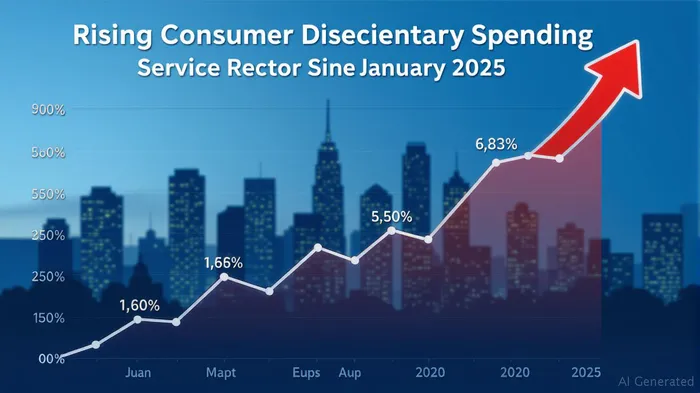
This influx of cash is likely to boost spending in discretionary categories such as dining out, apparel, and travel. The leisure and hospitality sector, already rebounding post-pandemic, could see further tailwinds. Retailers like Walmart (WMT) and Target (TGT), which cater to price-sensitive consumers, may benefit from increased foot traffic, while restaurants like Darden Restaurants (DRI) or Chipotle (CMG) could see higher customer spending.
Payroll and Tax Preparation: A New Era of Complexity Requires Innovation
The tax changes impose significant reporting requirements on employers. Forms like W-2 and 1099 must now include detailed tip and overtime data, including occupation-specific disclosures. For instance, employers must distinguish between FLSA-mandated overtime (qualifying for deductions) and state-mandated or voluntary overtime (which does not). This complexity creates demand for advanced payroll software and tax compliance services.
Leading payroll firms like Automatic Data Processing (ADP) and Intuit (INTU) are positioned to capitalize. ADP's cloud-based solutions, such as Workforce Now, already handle complex compliance needs, while Intuit's TurboTax and QuickBooks platforms could integrate new tax deduction parameters. Smaller players like Gusto or Paychex (PAYX) may also see growth as small businesses seek user-friendly solutions.
The IRS's delayed guidance has created a transitional period where employers must “use any reasonable method” to estimate 2025 deductions. This uncertainty could accelerate the adoption of automated payroll systems that simplify compliance, favoring tech-driven firms over legacy providers.
Risks and Considerations
- Phase-out thresholds: Higher-income workers (earning above $150k) see reduced benefits, limiting the broad-based impact.
- Implementation delays: The Treasury and IRS may delay form updates or clarify rules ambiguously, causing short-term volatility for payroll companies.
- Political risk: Tax policies could shift if future administrations revisit the legislation.
Investment Strategy: Play Both Sides of the Opportunity
- Consumer Discretionary Exposure:
- ETFs: Consider the Consumer Discretionary Select Sector SPDR Fund (XLY), which holds heavyweights like AmazonAMZN-- (AMZN) and Home DepotHD-- (HD).
Sector Leaders: TargetTGT-- retailers with strong balance sheets and omnichannel presence, such as Costco (COST), and leisure-focused stocks like Marriott International (MAR).
Payroll and Tax Tech Plays:
- ADP (ADP): A stable leader in payroll services with a robust compliance infrastructure.
- Intuit (INTU): Benefits from both consumer and small-business demand for tax preparation tools.
- Cloud-based disruptors: Explore names like Paylocity (PAY) or Workday (WDAY), which offer integrated HR and payroll solutions.
Conclusion
The tax deductions for tips and overtime pay represent a structural shift in U.S. labor economics, creating a “win-win” for investors. Service workers gain purchasing power, fueling consumer discretionary growth, while employers demand advanced payroll tools, favoring tech-savvy providers. Investors should prioritize companies with scalable solutions and broad market reach while monitoring regulatory clarity. For now, the tax tailwinds are a clear buy signal for both sectors.

Stay ahead of the market.
Get curated U.S. market news, insights and key dates delivered to your inbox.




Comments
No comments yet