
Tax Holiday Impacts on Retail and Consumer Spending: Short-Term Booms and Long-Term Opportunities for Retail Investors
 Aime Summary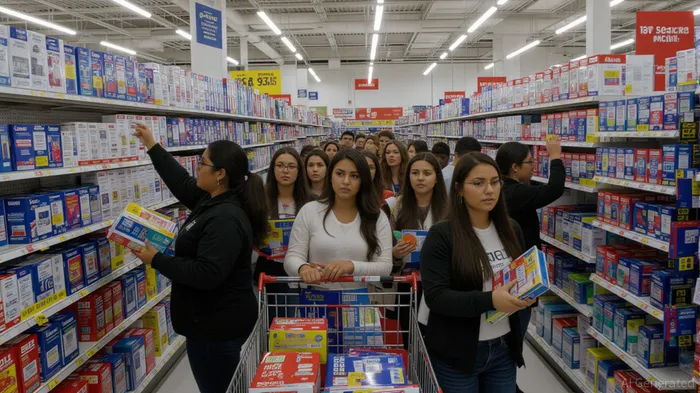
State-level sales tax holidays have long been a contentious yet impactful tool in the retail landscape. Designed to stimulate consumer spending during key periods—such as back-to-school, hurricane preparedness, or energy efficiency drives—these holidays create short-term booms in sales but also raise complex questions about their long-term economic and investment implications. For retail investors, understanding the dual nature of these events is critical to navigating both the immediate opportunities and the lingering challenges they pose.
Short-Term Booms: A Surge in Consumer Spending
Sales tax holidays generate immediate spikes in retail activity. For example, Alabama's 2025 Back-to-School Sales Tax Holiday, active from July 18–20, allowed families to purchase school supplies, clothing, and electronics without paying the state's 4% sales tax. Over 300 cities and counties further amplified savings by waiving local taxes, creating a 10% average discount for consumers. Similar dynamics play out in states like Texas, Florida, and Virginia, where tax-free periods for energy-efficient appliances or emergency preparedness items draw significant demand.
The National Retail Federation (NRF) reported that the average U.S. family spent $874.68 on back-to-school items in 2024. Tax holidays reduce this burden by up to 10% in some states, incentivizing purchases that might otherwise be delayed or abandoned. This creates a concentrated wave of demand for retailers, particularly in sectors like apparel, electronics, and home goods. For instance, during Texas's May 2025 Energy Star and WaterSense tax holiday, sales of air conditioners and refrigerators surged, with retailers reporting 20–30% spikes in qualifying categories.
However, the short-term benefits come with caveats. Retailers face compliance costs, including staff overtime, inventory management, and tax system adjustments. A 2024 survey of 500 small and midsize retailers found that 58% spent at least $10,000 annually preparing for tax holidays, while 53% paid employees overtime. These costs can erode profit margins, particularly for smaller businesses lacking automated compliance tools.
Long-Term Opportunities: Sectors and Strategies for Investors
While tax holidays are fleeting, their influence on consumer behavior and sector performance can linger. Investors who identify sectors consistently benefiting from these events may uncover durable opportunities.
- Back-to-School Retailers:
This sector, which includes apparel, school supplies, and electronics retailers, sees recurring demand tied to academic calendars. The 2025 back-to-school market is projected to reach $30.9 billion, with K-12 purchases nearing $50 billion. E-commerce is a key driver, accounting for 80% of year-over-year dollar growth in 2025. Retailers with strong online platforms, such as AmazonAMZN-- and Best Buy, are well-positioned to capitalize on this trend.
For investors, the sector's resilience lies in its alignment with value-seeking consumers. Parents are increasingly spreading out purchases, opting for mid-July sales, and leveraging social media to find deals. Companies that integrate AI-driven price comparisons or loyalty programs—such as WalmartWMT-- and Target—stand to outperform.
- Energy Efficiency and Emergency Preparedness:
Tax holidays for energy-efficient appliances and emergency supplies (e.g., generators, batteries) create cyclical demand. Texas's 2025 Energy Star tax holiday, for instance, spurred sales of air conditioners and refrigerators, with some retailers reporting 20–30% spikes. Similarly, hurricane preparedness tax holidays in Florida and Louisiana drive annual purchases of generators and emergency kits.
Long-term growth in these sectors hinges on regulatory trends. As climate-related risks escalate, demand for emergency supplies is likely to persist. For energy efficiency, the shift toward sustainability and government incentives (e.g., the Inflation Reduction Act's tax credits) could create compounding opportunities.
- Clothing and Footwear Retailers:
Tax-free periods for apparel, particularly during back-to-school and summer months, benefit retailers like Gap, H&M, and NikeNKE--. States such as Iowa, South Carolina, and Oklahoma have tax holidays for clothing under $100, encouraging bulk purchases. However, the sector faces headwinds from shifting consumer preferences and e-commerce competition.
Investors should prioritize retailers with agile supply chains and omnichannel strategies. For example, companies leveraging AI for demand forecasting or offering “buy online, pick up in-store” (BOPIS) options may better navigate inventory challenges.
Navigating Risks and Structural Challenges
Despite the opportunities, retail investors must consider the broader economic implications of tax holidays. Critics argue that these policies are regressive, disproportionately benefiting higher-income households and reducing state revenues. In 2025, tax holidays are estimated to cost states $1.3 billion in lost revenue—a burden often shifted to local governments, which may cut services or raise other taxes.
Moreover, the Federal Reserve's 2017 study found that tax holidays often shift spending rather than stimulate new consumption. For example, a family might delay a purchase until a tax-free period rather than spend the same amount over time. This creates artificial demand spikes that can strain supply chains and distort inventory planning.
Strategic Recommendations for Investors
Focus on E-Commerce and Digital Engagement:
The 2025 back-to-school season saw e-commerce account for 80% of dollar growth. Retailers with robust online platforms and social media integration (e.g., TikTok shopping, Instagram ads) are better positioned to capture this demand.Target Sectors with Recurring Demand:
Energy efficiency and emergency preparedness items are cyclical but resilient. As climate risks and sustainability trends persist, these sectors offer long-term growth potential.Monitor Compliance and Cost Structures:
Retailers with scalable compliance systems (e.g., automated tax software) can mitigate the administrative burdens of tax holidays, preserving margins.Diversify Exposure to Regional Policies:
Tax holidays vary by state, so investors should consider regional differences. For example, Florida's extended back-to-school tax holiday (August 2025) may benefit retailers with a strong presence in the Southeast.
Conclusion
State-level sales tax holidays are a double-edged sword: they create short-term booms in consumer spending but also introduce compliance costs and revenue risks. For investors, the key lies in identifying sectors that consistently benefit from these events—such as back-to-school retail, energy efficiency, and emergency preparedness—and leveraging long-term trends like e-commerce and sustainability. By aligning with retailers that adapt to these dynamics, investors can turn the fleeting nature of tax holidays into durable opportunities.

Stay ahead of the market.
Get curated U.S. market news, insights and key dates delivered to your inbox.
AInvest
PRO
AInvest
PRO



Comments
No comments yet