
Tax Cut Plan Nears Completion, SALT Deduction Cap Raised to $40,000
President Trump has asserted that the comprehensive tax cut plan is nearing finalization, with an agreement reached on the cap for state and local tax (SALT) deductions. However, the White House has not yet secured the support of the conservative faction demanding further reductions in welfare spending.
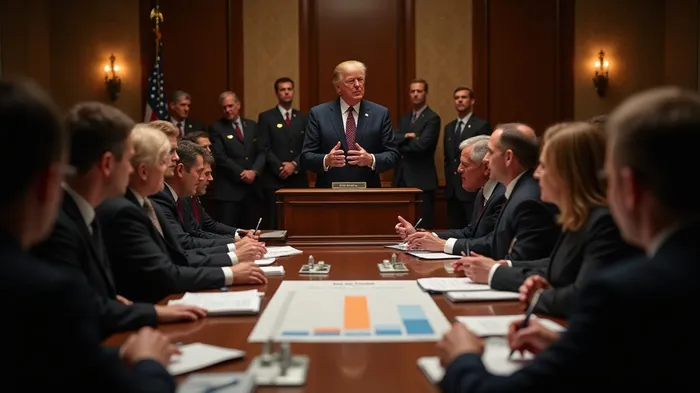
Trump expressed optimism about the progress, stating, "We are making great progress and are very close," during a press conference on Wednesday. House Speaker Mike Johnson announced that an agreement had been reached with representatives from high-tax states to raise the SALT deduction cap to 40,000 dollars. Despite this, hardline conservative representatives continued to voice objections to the tax cut bill.
Several staunch Republican representatives claimed that the House Republican leadership had not fulfilled the concessions promised by the White House. They threatened to veto the bill if their demands were not met. A White House official clarified that no such agreement had been reached with these conservatives, only a list of policy options that the White House could accept had been provided to some opponents.
The official noted that the White House had made it clear to the hardliners that they needed to convince their centrist colleagues to accept these proposals. Given the Republicans' slim majority and deep divisions in the House, this task would be challenging. A source familiar with the matter revealed that Trump and Johnson planned to meet with some extreme conservative representatives at the White House at 3 PM on Wednesday. The official said this meeting would be an opportunity to reach a deal.
Representative Andy HarrisOAKM-- from Maryland claimed that the White House and the conservatives had a "midnight deal" that included deeper cuts to Medicaid and faster elimination of clean energy tax incentives from the previous administration. Harris stated, "The speaker does not have the authority to make such promises."
Harris said that the current bill does not reflect the contents of this agreement, and if the bill is voted on in its current form, the hardliners will block it. Representative Ralph Norman from South Carolina said the bill "lacks sufficient votes, and is far from enough."
Members of the Freedom Caucus stated that they only wanted to further adjust the spending cuts based on the already approved budget outline, not to undermine the overall tax cut goal. They wanted to focus on curbing the "abuse" of Medicaid and immediately eliminating green energy tax breaks.
A legislator familiar with the negotiations revealed that the House Republican leadership also plans to move up the effective date of Medicaid work requirements from the originally scheduled 2029 to December 2026 to meet the demands of the hardliners.
Representative Mike Lawler from New York said in an interview on Wednesday morning that legislators were still dealing with some "details," but he was optimistic about reaching an agreement later that day. Johnson said the bill "has a chance" to be submitted for a vote on Wednesday.
However, several hardline representatives expressed skepticism. Chip Roy, a staunch Republican representative from Texas, said, "It's still too early." For the bill to pass in the House, it must secure the support of the vast majority of Republican representatives.
Moving up the effective date of Medicaid work requirements to the end of 2026 could become a sensitive issue in the midterm elections, and Democrats are sure to seize this opportunity to criticize the Republicans for restricting medical benefits for low-income individuals. Some Republican representatives from swing districts also feel uneasy, and this move could face strong opposition in the Senate.

Stay ahead of the market.
Get curated U.S. market news, insights and key dates delivered to your inbox.






Comments
No comments yet