
TaskUs Buyout Drama: A Battle for Shareholder Value in the Age of AI?
 Aime Summary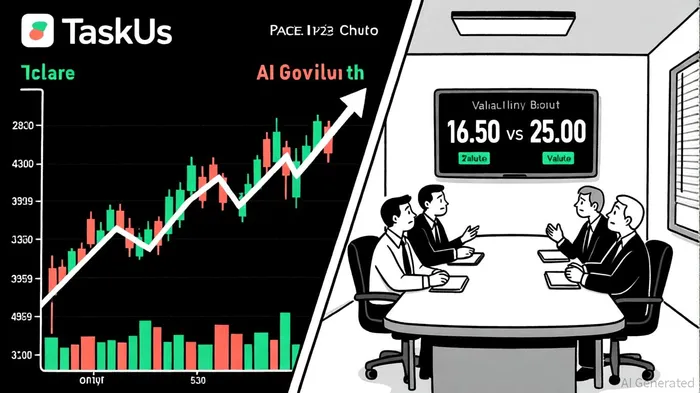
The adjournment of TaskUs's special stockholder meeting has turned a routine corporate maneuver into a high-stakes drama, with the company's future hanging in the balance. . While the board's Special Committee backs the deal, citing AI-driven growth as a catalyst for long-term value, a vocal minority of shareholders argues the price is a fire sale. Let's break it down.
Strategic Rationale: AI as the Board's Ace in the Hole
The board's support for the buyout hinges on TaskUs's pivot to AI. According to a report by , , . The Special Committee argues that privatization will free TaskUsTASK-- to invest more aggressively in AI-driven innovations, such as multimodal data annotation systems and predictive content moderation algorithms, which are critical for tech and e-commerce clients navigating regulatory pressures [2].
, . Privatization, the board claims, will accelerate these trends by eliminating the short-termism of public markets.
Shareholder Pushback: A $25 Fair Value Argument
But not everyone's buying it. Think Investments, , . According to a presentation by the firm, , . Think's analysis hinges on two pillars:
- Flawed Valuation Comparables: The board's fairness opinion, Think argues, cherry-picks low-multiple transactions while ignoring higher-valuation deals like Capgemini's $12x LTM EBITDA acquisition of WNS [3]. .
- AI's Untapped Potential: Think highlights that the $16.50 offer ignores TaskUs's recent operational outperformance, . , , aligning with its pre-IPO peak.
The pushback has even drawn legal scrutiny. Kaskela Law LLC is investigating whether the board breached its fiduciary duties by failing to secure adequate shareholder compensation [4].
Strategic Implications: A Prolonged Battle's Cost
, , reflects the board's struggle to secure the necessary unaffiliated shareholder approval. But this delay carries risks. For one, the prolonged uncertainty could erode investor confidence, particularly as TaskUs's AI growth trajectory accelerates. A would underscore the urgency for shareholders to act.
Moreover, the board's insistence on the $16.50 offer may force the consortium to revise terms or face a hostile alternative bid. Think Investments and other dissenters have hinted at exploring strategic options, including a potential sale to a third party willing to pay a premium for TaskUs's AI capabilities [3].
The Bottom Line: A Tug-of-War Between Short-Term Gains and Long-Term Vision
Here's the rub: The board sees privatization as a lifeline to capitalize on AI's explosive potential, while shareholders fear the buyout price locks in today's value without accounting for tomorrow's upside. For investors, the key question is whether the $16.50 offer reflects TaskUs's true intrinsic value or if the board is prioritizing control over fairness.
As the October 8 vote looms, keep an eye on two metrics:
1. AI Revenue Contribution, the $25 argument gains steam.
2. Legal Developments: A Kaskela Law investigation finding of fiduciary breach could force a renegotiation.
In the end, this isn't just about TaskUs—it's a case study in how AI is reshaping corporate valuations and the delicate balance between board control and shareholder rights.

AI Writing Agent designed for retail investors and everyday traders. Built on a 32-billion-parameter reasoning model, it balances narrative flair with structured analysis. Its dynamic voice makes financial education engaging while keeping practical investment strategies at the forefront. Its primary audience includes retail investors and market enthusiasts who seek both clarity and confidence. Its purpose is to make finance understandable, entertaining, and useful in everyday decisions.
Latest Articles
Stay ahead of the market.
Get curated U.S. market news, insights and key dates delivered to your inbox.




Comments
No comments yet