
Tariffs and Turbulence: Why U.S. Equities Stayed Steady Amid Global Trade Wars
The U.S. equity markets have weathered a storm of tariff announcements in 2025, defying expectations of sharp declines. Despite escalating trade tensions and geopolitical brinkmanship, the S&P 500 has remained anchored near record highs, reflecting a market resilient to the latest round of protectionism. This article examines how equities shrugged off recent tariff threats, analyzes historical cycles of tariff-driven volatility, and identifies sectors poised to thrive in this environment.
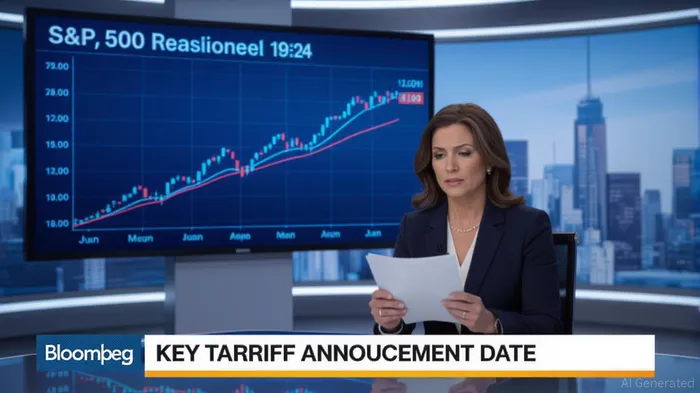
The Resilience of U.S. Equities in 2025
Recent tariff announcements, such as the July 14 deadline for 30% tariffs on the EU and Mexico, failed to trigger the panic seen in earlier cycles. Asian and European markets reacted with muted moves—Japan's Nikkei 225 rose 0.3%, while the Stoxx 600 remained nearly flat. U.S. stock futures climbed ahead of trading, signaling investor confidence that tariffs would be tempered through negotiation. This calm contrasts sharply with the April 2025 “wild swings” when initial tariff threats caused a global sell-off.
The key difference now? Markets have embraced the “TACO” (Trump Always Chickens Out) trade, betting that the administration's firm deadlines are tactical tools rather than final blows. As shows, volatility has diminished as investors price in diplomatic resolutions.
Historical Cycles: Tariffs, Panic, and Recovery
History reveals a pattern of tariff-driven volatility followed by market normalization. For example:
- 2018-2019: Initial U.S.-China tariffs caused a 10% S&P 500 correction, but equities rebounded as trade talks progressed.
- 2022: A 15% tariff on Canadian lumber triggered sector-specific pain but failed to derail broader gains.
The 2025 cycle is distinct in its scale—proposed rates up to 200% on pharmaceuticals and 50% on copper—but markets now view these moves as negotiating leverage rather than existential threats. As demonstrates, the relationship has weakened as trade wars entered a prolonged stalemate phase.
Sectors to Bet on: Pricing Power and Diversification
Not all sectors are equally vulnerable. Investors should focus on industries with pricing power or geographically diversified supply chains:
- Consumer Staples: Companies like Procter & Gamble (PG) and Coca-ColaKO-- (KO) can pass tariff costs to consumers, insulated by brand loyalty.
- Technology: Firms like NVIDIANVDA-- (NVDA) and MicrosoftMSFT-- (MSFT) benefit from global innovation demand and have already diversified manufacturing beyond China.
- Healthcare: Pharmaceutical giants (e.g., PfizerPFE-- (PFE)) face risks from 200% tariff proposals, but their ability to secure exemptions or shift production may limit damage.
Risks and the Road Ahead
While markets are resilient, risks persist:
- Supply Chain Disruptions: Sectors like autos (TSLA, GM) face headwinds from 25% tariffs on imported vehicles, which could reduce margins unless prices rise.
- Global Recession Fears: J.P. Morgan warns of a 40% chance of a global slowdown, with U.S. GDP projected to shrink 0.3% in early 2025.
Investment Strategy: Stay Nimble, Focus on Resilience
Investors should adopt a two-pronged approach:
1. Sector Rotation: Shift toward defensive staples and tech while avoiding tariff-heavy industrials.
2. Quality Over Momentum: Prioritize firms with pricing power (e.g., DisneyDIS-- (DIS), AmazonAMZN-- (AMZN)) and diversified supply chains.
The market's current stability hinges on the belief that tariffs are reversible. If the U.S. Court of International Trade's ruling against IEEPA tariffs (which halted some measures) leads to broader reductions, equities could rally further. Conversely, a full-scale trade war could push the S&P 500 below its 2024 lows.
Conclusion
The 2025 tariff cycle has exposed markets' evolving resilience to geopolitical noise. While risks remain, history suggests that equities will eventually stabilize as trade talks inch forward. Investors should prioritize sectors with pricing flexibility and global agility, keeping a wary eye on legal battles and diplomatic breakthroughs. In this era of uncertainty, preparation—not panic—is the best strategy.

Stay ahead of the market.
Get curated U.S. market news, insights and key dates delivered to your inbox.






Comments
No comments yet