
Tariffs and Trade Tensions: The New Supply Chain War and How to Profit
The U.S.-EU tariff standoff is no longer just a political squabble—it's a full-blown supply chain war that's rattling markets and reshaping industries. With reciprocal tariffs on the brink of hitting 20% or higher, investors are scrambling to decode the chaos. Let's break down what's happening, why it matters, and where to find the next big winners.
The Immediate Fallout: Markets in Freefall
The recent tariff announcements sent shockwaves through global markets. The S&P 500 futures tumbled over 3% as investors priced in the economic drag of a potential trade war. European stocks fared worse: the Stoxx 600 index plunged 2.7%, with luxury goods and shipping companies leading the rout.
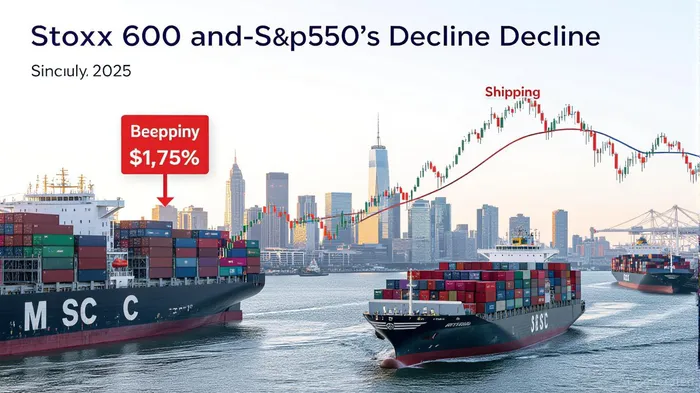
Luxury stocks like LVMH and Swatch Group saw double-digit drops, as fears of reduced U.S. demand for European exports took hold. Meanwhile, shipping giants like Maersk plummeted 7.5%, signaling concerns over collapsing global trade volumes. Even automakers like Volvo and Puma felt the pinch, their shares dropping 9% as tariffs on steel, aluminum, and finished goods crimped profit margins.
The Long Game: Supply Chains in Flux
This isn't just a short-term panic—it's a seismic shift in how goods move across borders. Companies that rely on European imports for critical materials (like semiconductors or pharmaceuticals) are now scrambling to diversify their supply chains. The result? A race to build redundancy into every link of the production chain.
Take the automotive sector: U.S. automakers face 25% tariffs on EU-sourced parts. Companies like Ford and General MotorsGM-- that can source components domestically or in untariffed regions (like Mexico under USMCA) will thrive. Meanwhile, European rivals like BMW and Volkswagen must pivot to U.S. factories or risk losing market share.
Tech and energy sectors are equally vulnerable. The U.S. has threatened 25% tariffs on EU semiconductors, pushing firms like IntelINTC-- and Texas InstrumentsTXN-- to accelerate domestic manufacturing. In energy, companies with U.S. shale exposure (e.g., Pioneer Natural Resources) gain an edge over those reliant on European oil imports.
The Hidden Opportunities: Play the Supply Chain Reboot
The real money will be made not in the sectors under fire, but in those quietly positioning for this new reality. Here's where to look:
Logistics and Transportation Leaders
Companies like C.H. Robinson (CHRW) and JB Hunt (JBHT) are already benefiting as businesses seek flexible shipping routes to bypass tariffs. These firms are experts at rerouting goods through untariffed corridors, a skill that's now a profit driver.Domestic Energy and Materials
U.S. energy firms like Marathon Oil (MRO) and EOG ResourcesEOG-- (EOG) are insulated from EU energy tariffs. Meanwhile, metals producers like NucorNUE-- (NUE) and Allegheny Technologies (ATI) are cashing in as tariffs on imported steel push buyers toward domestic suppliers.Tech with Localized Production
Semiconductor firms like Lam ResearchLRCX-- (LRCX) and Applied MaterialsAMAT-- (AMAT) are ramping up U.S. factories to avoid future tariffs. Their stocks are primed to outperform if trade tensions ease, as their supply chains are already “friend-shored.”Pharma's Quiet Win
While biotechs like PfizerPFE-- (PFE) and MerckMRK-- (MRK) face no immediate tariffs, their ability to source active pharmaceutical ingredients (APIs) domestically or in untariffed regions (e.g., Canada) gives them a long-term edge.
The Playbook: Build Resilience, Not Speculation
Investors shouldn't bet on a quick resolution. The legal battles (like the pending tariff injunction appeal) and geopolitical posturing mean volatility will linger. Instead, focus on companies with:
- Diversified supply chains (e.g., Apple's shift to Vietnam for iPhone assembly).
- Exposure to tariff-resistant sectors (e.g., renewable energy, which is largely untariffed due to climate priorities).
- Domestic or regional dominance (e.g., Canadian National RailwayCNI-- (CNI), which avoids EU-U.S. crossfire).
Avoid companies overly reliant on European exports—luxury stocks and auto parts manufacturers are still on the chopping block until tariffs are resolved.
Final Take: Stay Nervous, Stay Smart
The U.S.-EU tariff war isn't just about tariffs—it's a warning shot that globalization as we knew it is over. The winners will be the companies that can pivot fastest to this “friend-shored” world. My advice? Load up on logistics titans, U.S. energy producers, and tech firms with domestic roots. And keep a close eye on the Fed—they'll be forced to cut rates if GDP tanks, which could spark a rally in beaten-down stocks.
This isn't a time to panic—it's a time to profit from chaos.
Stay aggressive, stay diversified, and stay tuned. The supply chain war is just heating up.

Delivering real-time insights and analysis on emerging financial trends and market movements.
Latest Articles
Stay ahead of the market.
Get curated U.S. market news, insights and key dates delivered to your inbox.




Comments
No comments yet