
Tariffs, Stagflation, and the Resilience of Earnings: Preparing for a New Era of Geopolitical Risk in 2025
 Aime Summary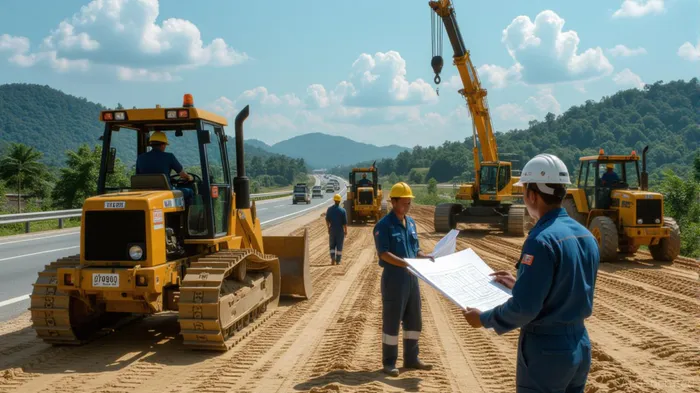
As 2025 unfolds under the weight of escalating global tariffs, the specter of stagflation, and geopolitical tensions, investors are once again grappling with the question of how to navigate a world where economic and political uncertainty are not anomalies but constants. History offers a blueprint for survival—and even prosperity—in such environments. The story of Hyundai Motor Group under the leadership of Chung Ju-Yung, a titan of 20th-century industry, provides a compelling case study in resilience. By dissecting how historically resilient, value-driven companies navigated crises, we can identify actionable strategies for today's investors.
The Chung Ju-Yung Paradigm: Vision, Frugality, and Global Diversification
Chung Ju-Yung's Hyundai was not built in a vacuum. Emerging from post-war South Korea, the company faced a landscape of scarce resources, political instability, and global skepticism about its ability to compete. Yet, under Chung's stewardship, Hyundai transformed into a global industrial861072-- powerhouse. His approach was rooted in three pillars: visionary leadership, operational frugality, and strategic diversification.
- Operational Discipline in Times of Crisis
During the 1997 Asian Financial Crisis, when liquidity dried up and markets collapsed, Chung's emphasis on cost control and capital preservation proved critical. Unlike rivals that slashed R&D or abandoned long-term projects, Hyundai maintained its focus on core competencies while trimming non-essential expenditures. For example, Chung mandated the reuse of paper and maximized the lifespan of machinery, ensuring that every resource was leveraged to its fullest. This frugality allowed Hyundai to retain its balance sheet strength, a stark contrast to companies that overleveraged during expansionary periods.
Diversification as a Hedge Against Geopolitical Risk
Chung's foresight in diversifying Hyundai's operations across sectors and geographies insulated the company from regional downturns. By the 1980s, Hyundai had expanded into construction, automotive, and even renewable energy, creating a portfolio that mitigated sector-specific risks. Notably, its early investments in overseas infrastructure projects, such as the Pattani Narathiwat Highway in Thailand, provided a buffer against domestic economic shocks. This model mirrors the modern investor's need to allocate capital across geographies and industries to avoid overexposure to any single risk.Ethical Governance and Reputation as a Strategic Asset
Chung's insistence on fulfilling contracts to the highest standard—even at the cost of short-term profits—cultivated a reputation for reliability. In an era where supply chains are increasingly politicized, this emphasis on ethical execution and long-term trust-building is invaluable. Companies that prioritize integrity over expediency often emerge stronger in post-crisis environments, as stakeholders gravitate toward reliable partners.
Lessons for 2025: Navigating Tariffs and Stagflation
The parallels between the 1990s and today are striking. Rising interest rates, supply chain disruptions, and a fragmented global trade system are creating conditions ripe for stagflation—a blend of inflation and stagnant growth. Tariffs, meanwhile, are reshaping trade dynamics, favoring companies with diversified supply chains and operational flexibility.
1. Seek Out Companies with Strong Balance Sheets and Frugal Cultures
Hyundai's survival in 1997 was predicated on its ability to maintain a robust balance sheet. For 2025, investors should prioritize firms with low debt loads and a history of disciplined capital allocation. These companies are better positioned to withstand margin pressures and reinvest during downturns.
2. Diversify Exposure Across Sectors and Geographies
The 1997 crisis underscored the dangers of overreliance on a single market or sector. Today, investors should favor companies with cross-border operations and diversified revenue streams. For example, firms involved in renewable energy, industrial manufacturing, and infrastructure development are likely to benefit from global trends such as decarbonization and urbanization, even amid trade tensions.
3. Value Ethical Governance and ESG Commitments
In a world where geopolitical risks are increasingly tied to regulatory and reputational challenges, companies with strong ESG (Environmental, Social, and Governance) practices will have a competitive edge. These firms are better equipped to navigate regulatory shifts, attract talent, and maintain stakeholder trust—a critical asset in volatile markets.
The Path Forward: Investing in Resilience
As we approach 2025, the key to navigating geopolitical and economic uncertainty lies in identifying companies that embody the principles that made Hyundai a success: vision, frugality, and adaptability. These firms are not merely survivors—they are builders of long-term value.
For investors, this means:
- Prioritizing companies with low debt and high operational efficiency (e.g., those with strong free cash flow margins).
- Avoiding speculative bets that thrive in low-interest environments but falter when rates rise.
- Embracing a global, diversified portfolio that includes sectors poised to benefit from decarbonization and infrastructure spending.
The next decade will test the resilience of both markets and management. By studying the playbook of resilient leaders like Chung Ju-Yung, investors can position themselves to not just endure but thrive in an era of persistent uncertainty.
In the end, as Chung often said, “Quitting is not an option.” For investors, the same principle applies: adapt, endure, and invest in the architects of resilience.

Stay ahead of the market.
Get curated U.S. market news, insights and key dates delivered to your inbox.






Comments
No comments yet