
U.S. Tariffs Spark Historic 9% Market Sell-Off
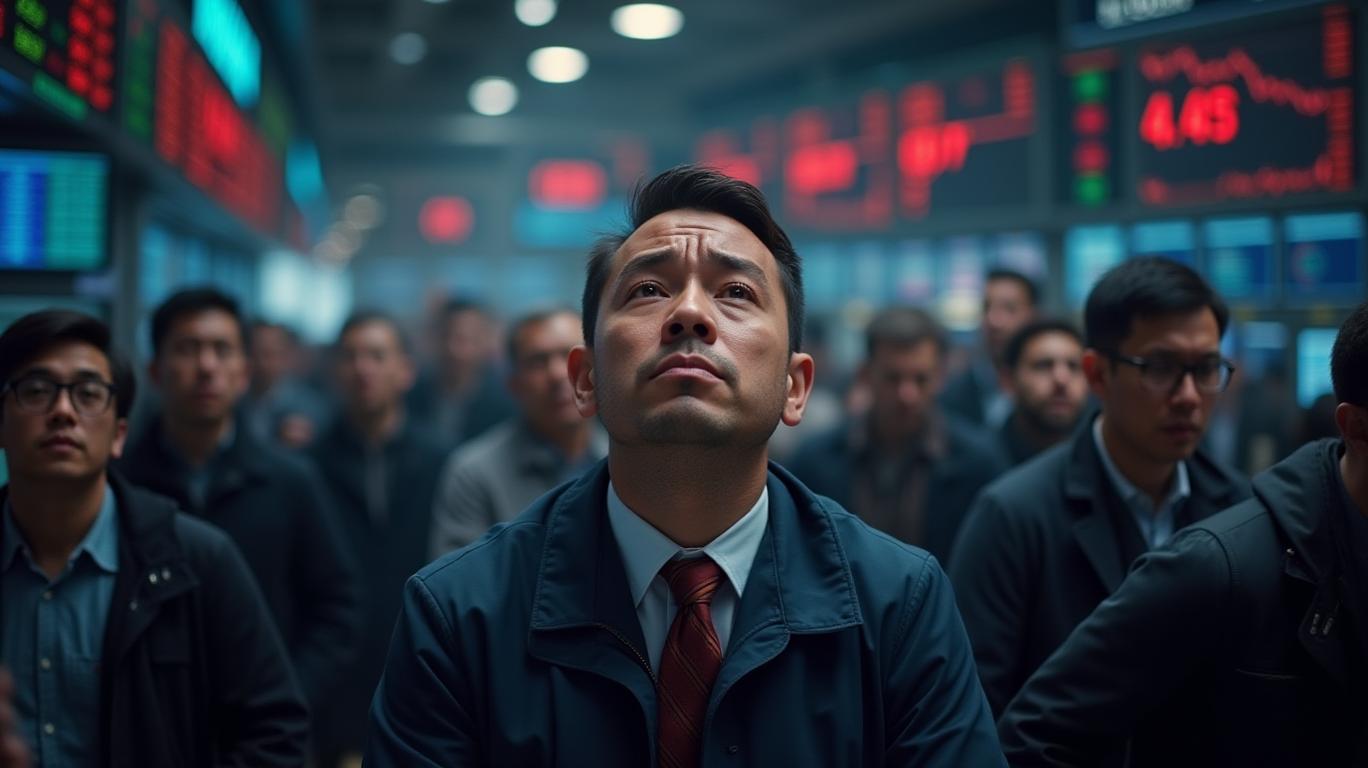
This past week has been a tumultuous one for global financial markets, with a historic sell-off that has left investors reeling. The catalyst for this market turmoil was the unexpected and severe tariff policies announced by the United States government. The impact was immediate and widespread, affecting not only stock markets but also various asset classes, including bonds, commodities, and currencies.
The sell-off was particularly pronounced in the stock market, with major indices experiencing their worst performance since the onset of the COVID-19 pandemic in March 2020. The Dow Jones Industrial Average plummeted by approximately 2,200 points in a single day, marking the largest single-day point decline in history. The tech-heavy Nasdaq Composite and the small-cap Russell 2000 index both entered bear market territory, defined as a decline of more than 20% from recent highs. The market's panic was evident in the surge of the VIX index, which measures market volatility and is often referred to as the "fear gauge." The VIX recorded its largest single-week absolute increase since February 2020, reaching levels not seen since the pandemic began.
The sell-off was not limited to equities. The high-yield (junk) bond market in the United States saw a significant widening of credit spreads, indicating increased risk. The spread between high-yield bonds and risk-free government bonds expanded by over 70 basis points, the worst performance since the early days of the COVID-19 crisis in April 2020. This was even more severe than the spread widening during the Silicon Valley Bank (SVB) crisis in March 2023. Bond market volatility also surged to its highest level since November 2023.
In the currency markets, the U.S. dollar experienced a sharp decline mid-week before rebounding on Friday. Traditional safe-haven currencies like the Japanese yen strengthened, while commodity currencies like the Australian dollar faced heavy selling pressure. The Australian dollar hit its lowest level against the U.S. dollar since the COVID-19 crisis in March 2020, with its single-day decline on Friday being the largest since the 2008 global financial crisis.
The commodity markets also faced a "catastrophic" blow, with overall price indices experiencing their largest two-day decline since September 2011. International oilIGIC-- prices plummeted from a five-week high to a four-year low, with a weekly decline of 11%. This was the worst single-week performance since the SVB crisis in March 2023 raised growth concerns. Gold, which is often seen as a safe haven, also experienced a significant decline, recording its second weekly loss of the year and its worst single-day performance since November 2024. Copper prices, which had previously reached record highs, also saw a sharp correction, falling to a two-month low with a single-day decline not seen since the Lehman Brothers collapse in October 2008.
Despite the widespread sell-off, Bitcoin, the leading cryptocurrency, showed relative resilience, with its price remaining largely unchanged for the week. This could indicate that participants in the crypto market are anticipating potential liquidity changes in the future.
The tariff policies announced by the U.S. government were the direct trigger for the market turmoil. Following the announcement, major U.S. stock indices experienced cumulative declines of 9% to 10% over the subsequent trading days. Despite the market panic, the Federal Reserve showed no immediate intention to intervene. This stance was based on several factors, including the mixed economic data that showed a divergence between "soft" data, which reflects market sentiment and expectations, and "hard" data, which reflects actual economic activity. The strong performance of hard data supported the Fed's assessment that the U.S. economy remains on solid footing.
Federal Reserve Chairman Jerome Powell maintained a relatively hawkish tone, stating that there was no immediate need for action. Market participants interpreted this as a signal that neither the "Trump put" nor the "Fed put" was in effect, meaning that investors could not rely on government intervention to adjust tariff policies or on the Fed to lower interest rates to stabilize the market.
Looking ahead, the market outlook remains cautious. While there are potential positive factors, such as the possibility of government intervention to stabilize the market or adjustments to tariff policies, there are also significant risks. These include the potential for retaliatory tariffs from other countries, the acceleration of new trade agreements that bypass the U.S., and the possibility of other unexpected negative events. Investors are advised to remain cautious and be prepared to quickly liquidate long positions and establish short positions if necessary.

Stay ahead of the market.
Get curated U.S. market news, insights and key dates delivered to your inbox.






Comments
No comments yet