
Tariffs Spark 6-Month Low in U.S. Hiring, Port Chaos, Price Surges
In April, the United States experienced a slowdown in hiring, largely due to concerns over tariffs. A monthly index indicated that economic uncertainty had risen, leading to a decrease in hiring activities to the lowest level in six months. The Employment Trends Index (ETI) from the Conference Board fell from 108.41 in March to 107.57 in April. This index suggests that when it rises, employment numbers may also increase, while a turning point in the index could indicate changes in employment in the short term.
Economist Mitchell Barnes noted that this was the lowest level for the ETI since October of the previous year. Barnes explained, "While the private sector employment indicators in the U.S. remained relatively stable in April, consumers and businesses are beginning to anticipate the impact of tariffs and reduced imports, which may become apparent in the coming month." This report comes after President Trump announced a comprehensive import tariff plan in early April.
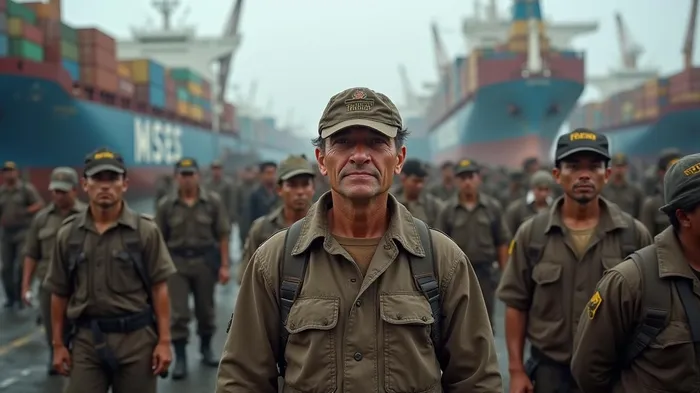
The impact of tariffs has been widespread, affecting supply chains, consumer prices, and the operations of small and medium-sized enterprises. Mario Cordero, the CEO of the Port of Long Beach, one of the major ports on the U.S. Pacific coast, reported a significant drop in cargo volume, describing the situation as worse than during the COVID-19 pandemic. Cordero stated that 34 June voyages had been canceled, surpassing the number of cancellations during the pandemic, which was the most critical period for the supply chain. He added that the company might face additional costs of $100 million to $300 million due to the tariffs.
The situation at the Port of Los Angeles, the largest container port in the U.S., is similarly dire. In May, 17 voyages and 224,000 containers were canceled due to tariffs. By June, 12 more voyages had been canceled. Gene Seroka, the executive director of the Port of Los Angeles, warned that consumers would be affected. He stated, "Over the next two weeks, our import business will decrease by about one-third, and the following week, the decrease could be as high as 40%. Most U.S. importers have stopped shipping from China because they cannot accept the doubling of product costs." Seroka emphasized the uncertainty, saying, "The situation is: stop and wait. From a retail perspective, the current inventory in the U.S. can last for six to eight weeks, after which 'the shelves will be empty.'"
The transportation industry has also been hit hard. Matt Schrap, the CEO of the Harbor Trucking Association, warned that if the tariff policy continues, it will severely impact the entire logistics industry. "Trucking companies will lose business, warehouses will have no storage business, and even dock workers will have less work," he said.
The economic shockwaves from the tariffs have begun to affect consumers. Personal consumption expenditures in the U.S. grew at a significantly slower pace in the first quarter of 2025. For ordinary Americans, the most direct impact of the tariffs is on the prices of everyday consumer goods, particularly clothing and footwear, which are heavily reliant on imports. The Yale Budget Lab predicted that clothing prices in the U.S. could rise by 65% and footwear prices by 87% over the next year.
On May 2, the U.S. government officially ended the tax exemption for small packages from China. Some e-commerce platforms had to reorganize their logistics systems, and the prices of some products doubled. Some foreign brands have stopped shipping to the U.S., and some small businesses have even chosen to exit the U.S. market. Author Laurie Larocco, who wrote "Trade War: Containers Don't Lie," warned that U.S. consumers would face more widespread price increases and shortages in the coming months. She noted that the impact would be particularly severe during the back-to-school season in July, affecting the prices of school supplies and other items.
Retail and consumer goods markets have already sounded the alarm. Executives from major retailers like WalmartWMT-- and Target have urged the U.S. government to reach a tariff agreement quickly, warning of potential empty shelves or skyrocketing prices. Industry-wide, tariffs have not brought manufacturing back to the U.S. but have instead increased the survival pressure on industries dependent on imported raw materials. For example, 30% of U.S. pharmaceutical ingredients are imported, and industry leaders have expressed difficulty in finding domestic alternatives for products like stationery, clothing, and electronics.
In the pharmaceutical industry, industry insider Carl Rizzuto noted that the supposed "return" of manufacturing is unrealistic because the U.S. currently lacks the capability to develop and manufacture pharmaceuticals domestically. The financial burden on small and medium-sized enterprises has been severe, with many struggling to survive the "short-term pain" promised by the government. The ability of businesses to maintain operations and investments during this turmoil will directly affect the medium-term stability and long-term vitality of the U.S. economy. As a result, U.S. citizens will continue to face a "triple whammy" of rising consumption costs, reduced services, and increased employment pressure.
Economist Justin Wolfers from the University of Michigan warned that continued tariff policies would create an uncertain future for the U.S. economy, fundamentally altering the economic lives of Americans. He stated, "The higher the tariffs, the less trade we will have with other countries. The pain from the new tariff policy will be 50 times greater than during Trump's previous term because these tariffs are not only higher but also apply to all goods from all countries, meaning every aspect of your life will be affected."

Stay ahead of the market.
Get curated U.S. market news, insights and key dates delivered to your inbox.


AInvest
PRO
AInvest
PRO



Comments
No comments yet