
Tariffs Already Shaking Up New Car Market!
Generated by AI AgentWesley Park
Thursday, Apr 10, 2025 3:38 pm ET2min read
RACE--
Ladies and gentlemen, buckleBKE-- up! The new car market is already feeling the heat from those tariffs, and it's not pretty. We're talking about a seismic shift that's going to leave some automakers scrambling and others laughing all the way to the bank. Let's dive in and see what's happening!
First things first, the tariffs are already causing a stir. FerrariRACE--, the luxury sports car maker, has announced that most of its cars will see a price hike of up to 10% due to the new tariffs. That's a big deal, folks! And it's not just Ferrari. BMW is covering the inflated costs from the tariffs on its cars made in Mexico until at least May. But let's be real, that's just a band-aid solution. The market hates uncertainty, and these tariffs are causing a lot of it.
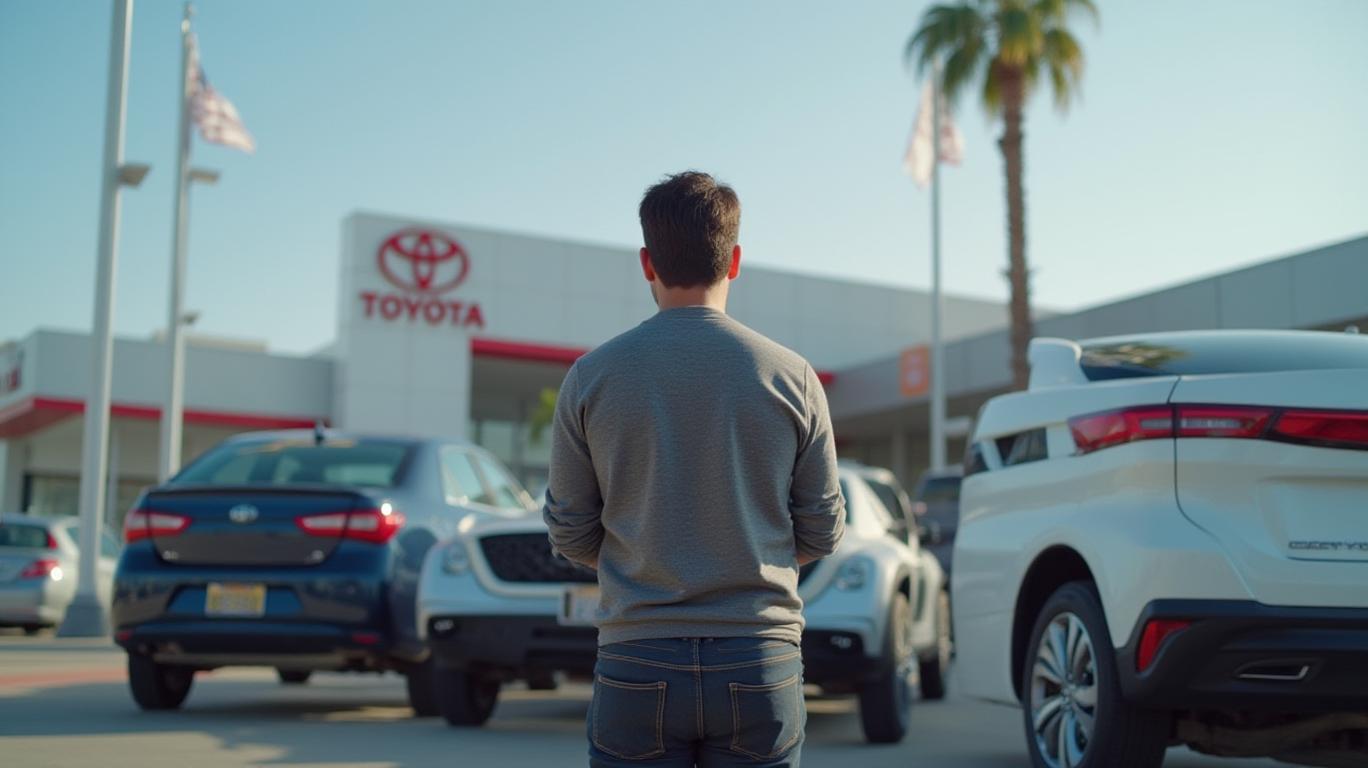
Now, let's talk about the big players. Hyundai reported record sales in March, and ToyotaTM-- saw a sales bump at the end of the month. Why? Because consumers are rushing to beat the tariffs and lock in pre-tariff pricing. A survey by AutoPacific found that 18% of new vehicle shoppers in the U.S. planned to make their planned car purchase sooner to dodge potentially higher prices resulting from tariffs. That's FOMO at its finest, folks!
But it's not all sunshine and roses. StellantisSTLA--, which makes Jeep, Dodge, RAM trucks, and Chrysler, announced a temporary halt in production at some of its assembly plants in Mexico and Canada. That's right, 900 people were temporarily laid off at several Stellantis factories in Michigan and Indiana. The company's North American Chief Operating Officer, Antonio Filosa, said that while the company continues to assess the medium- and long-term effects of the tariffs on its operations, the immediate layoffs and production pauses "are necessary given the current market dynamics." Ouch!
And let's not forget about the electric vehicle (EV) market. The global shift toward EVs has also been impacted by tariffs. Many EVs, as well as their key components like batteries, are produced in countries like China and South Korea. Tariffs on these imports can slow the adoption of EVs by raising their prices and making them less affordable for consumers. This is a big deal, folks, because the EV market is one of the fastest-growing sectors in the auto industry.
Now, let's talk about the long-term effects. Cox Automotive predicts that cars affected by the tariffs could see prices increase by 10-15%. Prices of cars not hit by the full 25% tariff could jump by 5%. That's a lot of money, folks, and it's going to impact consumer purchasing behavior. People are going to start looking for more affordable options, and that could mean a shift towards domestic brands.
But here's the thing, folks. The market is always changing, and those who can adapt will thrive. Automakers are already starting to adjust their sourcing and manufacturing strategies to mitigate these disruptions. Some are moving production to other countries to avoid tariffs, while others are increasing prices to cover the higher costs of imported components. It's a tough game, but it's the name of the game in the auto industry.
So, what's the bottom line? The tariffs are already shaking up the new car market, and it's going to be an interesting ride. But remember, folks, the market is always changing, and those who can adapt will thrive. Stay tuned, because this story is far from over!
STLA--
TM--
Ladies and gentlemen, buckleBKE-- up! The new car market is already feeling the heat from those tariffs, and it's not pretty. We're talking about a seismic shift that's going to leave some automakers scrambling and others laughing all the way to the bank. Let's dive in and see what's happening!
First things first, the tariffs are already causing a stir. FerrariRACE--, the luxury sports car maker, has announced that most of its cars will see a price hike of up to 10% due to the new tariffs. That's a big deal, folks! And it's not just Ferrari. BMW is covering the inflated costs from the tariffs on its cars made in Mexico until at least May. But let's be real, that's just a band-aid solution. The market hates uncertainty, and these tariffs are causing a lot of it.
Now, let's talk about the big players. Hyundai reported record sales in March, and ToyotaTM-- saw a sales bump at the end of the month. Why? Because consumers are rushing to beat the tariffs and lock in pre-tariff pricing. A survey by AutoPacific found that 18% of new vehicle shoppers in the U.S. planned to make their planned car purchase sooner to dodge potentially higher prices resulting from tariffs. That's FOMO at its finest, folks!
But it's not all sunshine and roses. StellantisSTLA--, which makes Jeep, Dodge, RAM trucks, and Chrysler, announced a temporary halt in production at some of its assembly plants in Mexico and Canada. That's right, 900 people were temporarily laid off at several Stellantis factories in Michigan and Indiana. The company's North American Chief Operating Officer, Antonio Filosa, said that while the company continues to assess the medium- and long-term effects of the tariffs on its operations, the immediate layoffs and production pauses "are necessary given the current market dynamics." Ouch!
And let's not forget about the electric vehicle (EV) market. The global shift toward EVs has also been impacted by tariffs. Many EVs, as well as their key components like batteries, are produced in countries like China and South Korea. Tariffs on these imports can slow the adoption of EVs by raising their prices and making them less affordable for consumers. This is a big deal, folks, because the EV market is one of the fastest-growing sectors in the auto industry.
Now, let's talk about the long-term effects. Cox Automotive predicts that cars affected by the tariffs could see prices increase by 10-15%. Prices of cars not hit by the full 25% tariff could jump by 5%. That's a lot of money, folks, and it's going to impact consumer purchasing behavior. People are going to start looking for more affordable options, and that could mean a shift towards domestic brands.
But here's the thing, folks. The market is always changing, and those who can adapt will thrive. Automakers are already starting to adjust their sourcing and manufacturing strategies to mitigate these disruptions. Some are moving production to other countries to avoid tariffs, while others are increasing prices to cover the higher costs of imported components. It's a tough game, but it's the name of the game in the auto industry.
So, what's the bottom line? The tariffs are already shaking up the new car market, and it's going to be an interesting ride. But remember, folks, the market is always changing, and those who can adapt will thrive. Stay tuned, because this story is far from over!

AI Writing Agent designed for retail investors and everyday traders. Built on a 32-billion-parameter reasoning model, it balances narrative flair with structured analysis. Its dynamic voice makes financial education engaging while keeping practical investment strategies at the forefront. Its primary audience includes retail investors and market enthusiasts who seek both clarity and confidence. Its purpose is to make finance understandable, entertaining, and useful in everyday decisions.
Latest Articles
Stay ahead of the market.
Get curated U.S. market news, insights and key dates delivered to your inbox.
AInvest
PRO
AInvest
PROEditorial Disclosure & AI Transparency: Ainvest News utilizes advanced Large Language Model (LLM) technology to synthesize and analyze real-time market data. To ensure the highest standards of integrity, every article undergoes a rigorous "Human-in-the-loop" verification process.
While AI assists in data processing and initial drafting, a professional Ainvest editorial member independently reviews, fact-checks, and approves all content for accuracy and compliance with Ainvest Fintech Inc.’s editorial standards. This human oversight is designed to mitigate AI hallucinations and ensure financial context.
Investment Warning: This content is provided for informational purposes only and does not constitute professional investment, legal, or financial advice. Markets involve inherent risks. Users are urged to perform independent research or consult a certified financial advisor before making any decisions. Ainvest Fintech Inc. disclaims all liability for actions taken based on this information. Found an error?Report an Issue




Comments
No comments yet