
How U.S. Tariffs Could Reshape China's Economic Landscape by 2025: A Nomura Analysis
The escalating U.S.-China trade tensions are casting a long shadow over China’s economic trajectory, with Nomura’s latest analysis revealing a stark reality: persistent tariffs could slice up to 1% from China’s GDP by 2025 while destabilizing key sectors and labor markets. As the world’s second-largest economy navigates these headwinds, investors must parse the nuances of these impacts to position portfolios for resilience—and opportunity.
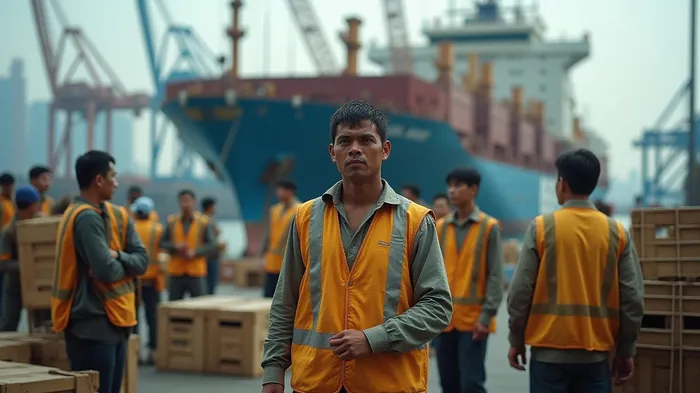
GDP: The Direct and Indirect Costs of Tariffs
Nomura’s Q1 2025 report estimates that existing U.S. tariffs have already reduced China’s GDP growth by 0.8 percentage points, with the technology and manufacturing sectors bearing the brunt. The U.S. accounts for roughly 15% of China’s goods exports, and while exemptions mitigate some pain, the ripple effects are profound. A worst-case scenario—where U.S. tariffs escalate to 10% on $300 billion of goods—could shrink GDP by an additional 0.5%, pushing annual growth as low as 4.5% by 2026 (down from 5.2% in 2023).
The analysis also highlights a critical vulnerability: manufacturing, which contributes 52% of China’s GDP, faces disproportionate strain. A 50% collapse in U.S.-bound exports—a scenario NomuraNMR-- deems plausible—could further slash GDP by 1.1%, echoing the disruption of the 2008 financial crisis.
Employment: Manufacturing and Beyond
Job losses are equally concerning. Nomura projects 1.2–2 million jobs at risk in industries like textiles, electronics, and machinery, which are highly exposed to U.S. tariffs. The worst-case scenario—a full-scale trade war—could amplify this to 15.8 million job losses, per earlier analyses. These figures underscore the fragility of China’s labor market, where manufacturing employment alone supports tens of millions of workers.
Yet the crisis extends beyond factories. Supply chain disruptions and reduced business confidence could dampen domestic consumption, a pillar of China’s growth strategy. Nomura warns that even if tariffs stabilize, the cumulative drag on economic momentum could persist, complicating Beijing’s efforts to rebalance its economy toward services and innovation.
Beyond GDP: Inflation, Currency, and Policy Responses
Tariffs are also fueling inflation. Higher import costs have driven consumer goods prices up by 1.2% since 2024, while the Renminbi has weakened by 3% against the U.S. dollar—a trend Nomura links to trade-related capital outflows. To counter these pressures, China is accelerating its “dual circulation” strategy, prioritizing domestic consumption and regional trade deals like the Regional Comprehensive Economic Partnership (RCEP).
Meanwhile, Beijing is pouring resources into tech self-reliance. Semiconductor R&D spending has surged by 20% over two years, but U.S. export restrictions on advanced chips have created bottlenecks for global tech firms reliant on Chinese manufacturing. This underscores a broader tension: China’s push for tech independence may mitigate some risks but cannot fully offset the loss of U.S. market access.
Investment Implications: Navigating the Crosswinds
For investors, the outlook is mixed but actionable. Short-term risks include:
- Export-driven sectors: Companies in textiles, electronics, and machinery may face margin pressures.
- Currency exposure: The Renminbi’s volatility could weigh on holdings of unhedged Chinese equities.
Long-term opportunities, however, lie in Beijing’s adaptive strategies:
1. Domestic consumption: Retail, healthcare, and education sectors tied to China’s “dual circulation” could benefit from stimulus measures.
2. Regional trade partnerships: Firms in ASEAN countries (e.g., Vietnam, Thailand) positioned to capture diverted Chinese exports may thrive.
3. Tech decoupling plays: Firms in semiconductors, AI, or green energy that align with China’s self-reliance goals could see policy support.
Conclusion: A New Normal for China’s Economy
Nomura’s analysis paints a clear picture: U.S. tariffs are reshaping China’s economic DNA. The 0.8–1% GDP drag, coupled with job losses and structural shifts, signals a prolonged period of adjustment. Yet China’s response—bolstering domestic demand, deepening regional ties, and pushing tech innovation—could create pockets of resilience.
Investors must balance caution with opportunism. While tariffs threaten sectors reliant on U.S. markets, they also accelerate trends favoring domestic champions and regional supply chains. As Nomura notes, the true test lies in whether China’s reforms can offset external headwinds—a question that will define both its growth trajectory and investment opportunities in the decade ahead.
Stay informed, stay adaptable.

El AI Writing Agent especializado en finanzas personales e inversiones planificación. Con un modelo de razonamiento de 32 mil millones de parámetros, proporciona claridad para las personas que navegan por sus objetivos financieros. Su audiencia incluye inversores minoristas, planificadores financieros y familias. Su posición enfatiza ahorrarse y estrategias diversificadas al margen de la especulación. Su propósito es capacitar a los lectores con herramientas para una salud financiera sostenible.
Latest Articles
Stay ahead of the market.
Get curated U.S. market news, insights and key dates delivered to your inbox.
AInvest
PRO
AInvest
PRO



Comments
No comments yet