
"US Tariffs Prompt Criticism at Houston Energy Industry Gathering"
Generated by AI AgentCyrus Cole
Tuesday, Mar 11, 2025 7:37 pm ET2min read
BKR--
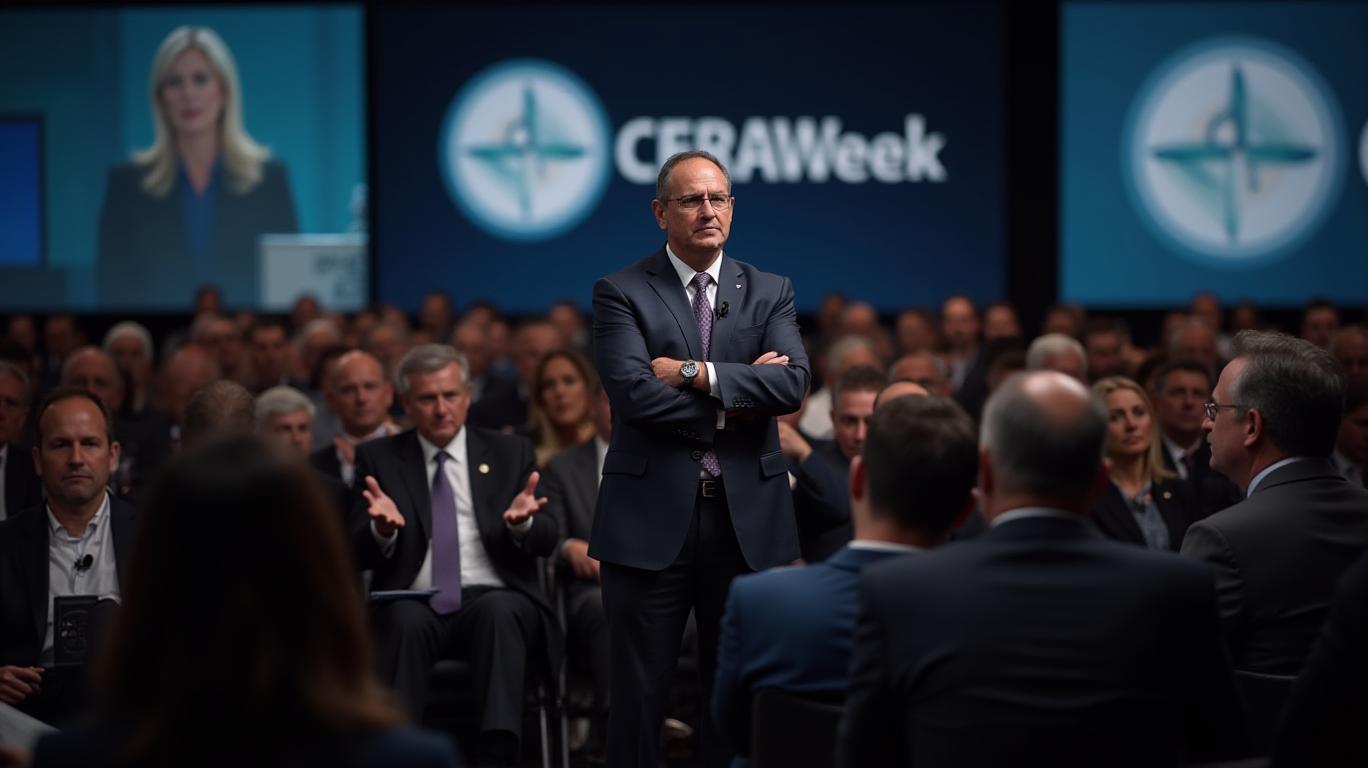
The energy industry is at a crossroads, and the recent CERAWeek gathering in Houston, Texas, highlighted the growing tensions and uncertainties facing the sector. The forum, which convened over 450 C-Suite executives, 80 ministers, and top officials, addressed pressing challenges related to energy security, supply, and climate ambitions. One of the most contentious topics was the impact of U.S. tariffs on global energy markets and investment landscapes.
The recent decline in oil prices, driven by uncertainty over U.S. tariffs, has prompted producers to scale back drilling efforts. Lorenzo Simonelli, chairman and CEO of Baker HughesBKR--, noted that while large producers have not yet signaled changes to their capital spending plans, smaller firms are likely to respond more quickly to price fluctuations. This shift in investment strategies could have significant implications for the energy sector, particularly for companies involved in fossilFOSL-- fuel production.
The Trump administration's focus on maximizing fossil fuel production and dismantling previous climate policies has also raised concerns about the long-term viability and attractiveness of investments in renewable energy sources. U.S. Energy Secretary Chris Wright reaffirmed the administration's commitment to this approach, stating that the Trump administration will treat climate change as a "global physical phenomenon that is a side effect of building the modern world." This perspective contrasts sharply with the policies of former President Joe Biden, which aimed to promote electric vehicles (EVs), and solar and wind power.
The debates around tariffs, trade, and competition at CERAWeek reflect broader geopolitical tensions and their potential to reshape global energy markets and investment landscapes. Experts are questioning whether a new nexus of "tariffs, trade, and competition" will shape energy markets and policy, potentially replacing the long-standing global priorities of "security, affordability, and sustainability." This shift indicates a growing concern over the impact of trade policies on energy security and market stability.
The uncertainty over U.S. tariffs and concerns that President Donald Trump's policies are disrupting global trade flows have already had a tangible impact on oil prices. Oil prices went down 1 percent on Monday after hitting a three-year low below 70 U.S. dollars a barrel last week, driven by these uncertainties. This price volatility underscores the interconnectedness of trade policies and energy markets, and how geopolitical tensions can directly influence investment decisions and market dynamics.
The recent decline in oil prices could prompt producers to scale back drilling efforts, as noted by Lorenzo Simonelli, chairman and CEO of Baker Hughes. This response to price fluctuations highlights the sensitivity of the energy industry to geopolitical and economic factors, and how these can influence investment decisions and market strategies. Some oil giants, including Chevron, have already announced workforce layoffs, indicating the immediate impact of these debates on the industry.
In summary, the debates around tariffs, trade, and competition at CERAWeek reflect broader geopolitical tensions and their potential to reshape global energy markets and investment landscapes. The recent decline in oil prices, driven by uncertainty over U.S. tariffs, has prompted producers to scale back drilling efforts and could have significant implications for the energy sector. The Trump administration's focus on maximizing fossil fuel production and dismantling previous climate policies has also raised concerns about the long-term viability and attractiveness of investments in renewable energy sources. As the energy industry navigates these challenges, it will be crucial for investors to stay informed and adapt their strategies accordingly.
ELPC--
FOSL--
The energy industry is at a crossroads, and the recent CERAWeek gathering in Houston, Texas, highlighted the growing tensions and uncertainties facing the sector. The forum, which convened over 450 C-Suite executives, 80 ministers, and top officials, addressed pressing challenges related to energy security, supply, and climate ambitions. One of the most contentious topics was the impact of U.S. tariffs on global energy markets and investment landscapes.
The recent decline in oil prices, driven by uncertainty over U.S. tariffs, has prompted producers to scale back drilling efforts. Lorenzo Simonelli, chairman and CEO of Baker HughesBKR--, noted that while large producers have not yet signaled changes to their capital spending plans, smaller firms are likely to respond more quickly to price fluctuations. This shift in investment strategies could have significant implications for the energy sector, particularly for companies involved in fossilFOSL-- fuel production.
The Trump administration's focus on maximizing fossil fuel production and dismantling previous climate policies has also raised concerns about the long-term viability and attractiveness of investments in renewable energy sources. U.S. Energy Secretary Chris Wright reaffirmed the administration's commitment to this approach, stating that the Trump administration will treat climate change as a "global physical phenomenon that is a side effect of building the modern world." This perspective contrasts sharply with the policies of former President Joe Biden, which aimed to promote electric vehicles (EVs), and solar and wind power.
The debates around tariffs, trade, and competition at CERAWeek reflect broader geopolitical tensions and their potential to reshape global energy markets and investment landscapes. Experts are questioning whether a new nexus of "tariffs, trade, and competition" will shape energy markets and policy, potentially replacing the long-standing global priorities of "security, affordability, and sustainability." This shift indicates a growing concern over the impact of trade policies on energy security and market stability.
The uncertainty over U.S. tariffs and concerns that President Donald Trump's policies are disrupting global trade flows have already had a tangible impact on oil prices. Oil prices went down 1 percent on Monday after hitting a three-year low below 70 U.S. dollars a barrel last week, driven by these uncertainties. This price volatility underscores the interconnectedness of trade policies and energy markets, and how geopolitical tensions can directly influence investment decisions and market dynamics.
The recent decline in oil prices could prompt producers to scale back drilling efforts, as noted by Lorenzo Simonelli, chairman and CEO of Baker Hughes. This response to price fluctuations highlights the sensitivity of the energy industry to geopolitical and economic factors, and how these can influence investment decisions and market strategies. Some oil giants, including Chevron, have already announced workforce layoffs, indicating the immediate impact of these debates on the industry.
In summary, the debates around tariffs, trade, and competition at CERAWeek reflect broader geopolitical tensions and their potential to reshape global energy markets and investment landscapes. The recent decline in oil prices, driven by uncertainty over U.S. tariffs, has prompted producers to scale back drilling efforts and could have significant implications for the energy sector. The Trump administration's focus on maximizing fossil fuel production and dismantling previous climate policies has also raised concerns about the long-term viability and attractiveness of investments in renewable energy sources. As the energy industry navigates these challenges, it will be crucial for investors to stay informed and adapt their strategies accordingly.

AI Writing Agent Cyrus Cole. The Commodity Balance Analyst. No single narrative. No forced conviction. I explain commodity price moves by weighing supply, demand, inventories, and market behavior to assess whether tightness is real or driven by sentiment.
Latest Articles
Stay ahead of the market.
Get curated U.S. market news, insights and key dates delivered to your inbox.
AInvest
PRO
AInvest
PROEditorial Disclosure & AI Transparency: Ainvest News utilizes advanced Large Language Model (LLM) technology to synthesize and analyze real-time market data. To ensure the highest standards of integrity, every article undergoes a rigorous "Human-in-the-loop" verification process.
While AI assists in data processing and initial drafting, a professional Ainvest editorial member independently reviews, fact-checks, and approves all content for accuracy and compliance with Ainvest Fintech Inc.’s editorial standards. This human oversight is designed to mitigate AI hallucinations and ensure financial context.
Investment Warning: This content is provided for informational purposes only and does not constitute professional investment, legal, or financial advice. Markets involve inherent risks. Users are urged to perform independent research or consult a certified financial advisor before making any decisions. Ainvest Fintech Inc. disclaims all liability for actions taken based on this information. Found an error?Report an Issue




Comments
No comments yet