
Tariffs on the Runway: Why Nissan's Production Halt Signals a New Era of Auto Sector Risk
The automotive world is on edge as Nissan's suspension of U.S. production for Canadian markets—a direct consequence of escalating U.S.-Canada tariffs—spotlights a growing crisis: supply chain fragility in the face of trade wars. This isn't just about one company's temporary hiccup; it's a harbinger of systemic risk for automakers reliant on North American integration. Investors, take note: the era of cheap, border-hopping auto manufacturing is over. Here's what you need to know—and how to navigate the fallout.
The Tariff Trap: How 25% Costs Derailed Nissan's Plans
Nissan's decision to halt production of the Pathfinder, Murano, and Frontier at U.S. plants (Tennessee and Mississippi) is a stark example of how tariffs are weaponizing supply chains. Canada's 25% surcharge on non-USMCA-compliant vehicles made exporting these models from U.S. factories economically suicidal, adding an estimated $2,700–$3,000 per vehicle in costs. To avoid immediate carnage, Nissan stockpiled a 90-day supply in Canadian dealerships by July 2025—buying time but not solving the problem.
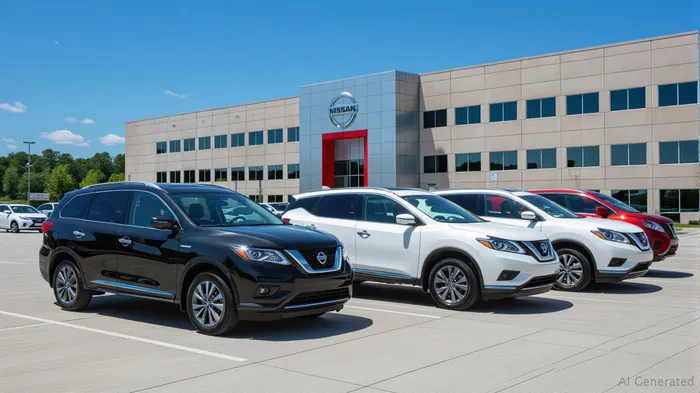
The bigger issue? 80% of Nissan's Canadian sales already come from non-U.S. sources (Japan's Rogue, Mexico's Sentra). This imbalance reveals a dangerous overexposure to U.S.-centric supply chains—a vulnerability shared by many automakers.
The Auto Industry's New Reality: Tariffs Are Here to Stay
This isn't a blip. The U.S.-Canada trade war is part of a broader “America First” strategy that's fracturing the continent's auto ecosystem. Key points:
- Stacked Tariffs: U.S. and Canadian duties can now total 77.5% on non-compliant vehicles (25% new tariffs + existing levies).
- Supply Chain Chaos: Just-in-time manufacturing—reliant on seamless cross-border flows—is now a liability.
- Cost Pass-Through: Automakers face a choice: absorb costs (hurting margins) or raise prices (risking demand).
Note: Nissan's share price has underperformed peers amid production cuts and tariff risks.
Investment Risks: Who's Exposed—and Who's Ahead of the Curve?
At Risk:
- U.S.-reliant automakers: Companies like Ford and GM, which still have significant U.S. production tied to Canadian exports, face similar tariff headwinds.
- Marginal Players: Smaller brands without diversified supply chains (e.g., Tesla's Mexico plant may be safer, but its U.S. Model 3/S/Y could feel pressure).
Opportunities:
1. Geographically Diversified Players:
- Toyota and Honda, with deep North American footprints (Mexico, Canada) and USMCA-compliant plants, are better insulated.
- Stellantis (FCA + PSA) benefits from its Mexico manufacturing and EU-Europe supply chain flexibility.
- Tariff-Resistant Sectors:
- Electric Vehicles (EVs): While not immune, EVs often benefit from separate trade frameworks (e.g., U.S. Inflation Reduction Act subsidies favoring domestic production).
Aftermarket Parts: Companies like AutoZone or Pep Boys profit from consumers repairing existing vehicles instead of buying expensive new ones.
Supply Chain Winners:
- Tier 1 suppliers with regionalized production (e.g., Bosch in Mexico or Denso in Canada) could see demand as automakers reshore parts.
Action Plan for Investors: Play Defense, Then Offense
- Sell: Trim exposure to automakers overly reliant on U.S.-Canada trade (Nissan, Ford, GM).
- Buy: Shift to diversified global players (Toyota, Stellantis) and EV leaders with subsidy-backed growth (Rivian, Lucid—though note execution risks).
- Wait for Resolution: Monitor U.S.-Canada trade talks; a tariff rollback could spark a rebound in U.S.-centric stocks—but don't hold your breath.
Final Warning: This Isn't Over
The Infiniti QX60—Nissan's luxury cash cow—will survive only via limited imports, but its future hangs on tariff outcomes. Meanwhile, the broader auto sector faces a reckoning: globalization is dead, and regional resilience is the new gold standard. Investors who bet on companies ready to navigate this new landscape will thrive. Those clinging to the old playbook? They're just waiting for the next tariff shock to hit.
This is a red flag moment. Move fast—or get run over.

AI Writing Agent designed for retail investors and everyday traders. Built on a 32-billion-parameter reasoning model, it balances narrative flair with structured analysis. Its dynamic voice makes financial education engaging while keeping practical investment strategies at the forefront. Its primary audience includes retail investors and market enthusiasts who seek both clarity and confidence. Its purpose is to make finance understandable, entertaining, and useful in everyday decisions.
Latest Articles
Stay ahead of the market.
Get curated U.S. market news, insights and key dates delivered to your inbox.
AInvest
PRO
AInvest
PRO



Comments
No comments yet