
Tariffs Move Chinese Trade, They Do Not Stop It


 Aime Summary
The wall has holes. That is what the evidence shows about the American experiment in containing Chinese trade.
At the G20 finance meeting in Asheville this month, Treasury Secretary Scott Bessent asked fellow members to re-examine their trade terms with China. The world, he said, cannot sustain a Chinese trade surplus of $1.2 trillion. He characterised the flood of Chinese exports as unsustainable and urged other nations to give Beijing an incentive to rely less on them. China pushed back, arguing the surplus is a two-way market choice and that Washington should look to its own low savings rate before lecturing others.
Both sides are, in their way, right. The surplus is structurally large. And the response to it keeps failing to do what it promises.
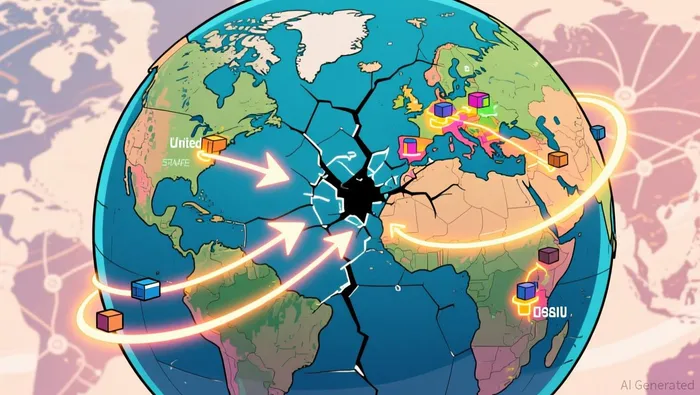
The reason has nothing to do with diplomacy. It is arithmetic. Tariffs on Chinese imports to the United States narrowed the bilateral trade deficit to $73.9 billion in the first half of 2026 — a one-third reduction from the same period last year. That looks like progress. The trouble is that the goods did not vanish. They went elsewhere.
Chinese exports overall grew by 5.5 per cent in 2025, up from 4.6 per cent the year before, even as US-bound shipments fell by roughly $104 billion, or 20 per cent. Where did those goods go? The European Central Bank, which studied the diversion at product level, found that exports to the euro area rose by 8 per cent, to Latin America by 7 per cent, and to the Association of Southeast Asian Nations by 13 per cent. Exports to Africa surged by 26 per cent, adding $46 billion to a region whose GDP would struggle to absorb it without pricing pressure.
Yet even this picture of diversion overstates the case. The ECB's regression analysis found statistically significant diversion effects only for Africa and ASEAN. The impact on Europe was modest and not statistically significant. Most of the increase in Chinese goods flowing to Europe predates the tariff announcements, beginning in mid-2024. What looks like a spillover from US policy is, in fact, China's secular export expansion — driven by excess capacity, weak domestic demand, and a depreciated currency — reaching Europe on its own schedule.
The research is sobering for the political project Bessent is advancing. A study published by the Centre for Economic Policy Research found that only about 5 per cent of products with the highest "diversion potential" showed any meaningful shift in export quantities toward Europe, with slight price reductions. The vast majority showed no diversion effect at all. The increase in Chinese market share in Europe, Bruegel notes, is not evidence of flooding caused by US policy. It is evidence of China's growing competitiveness in sectors — chemicals, pharmaceuticals, electronics861100--, vehicles — where European exporters traditionally held an edge.
To put the numbers in one frame: the US deficit with China has dropped sharply on paper. China's global surplus remains extraordinary. The pie has not shrunk. It has been redistributed, and the redistribution has followed the path of least resistance, not the line drawn by a tariff wall.
The legal setbacks have complicated the picture further. In February, the Supreme Court ruled 6-to-3 that the International Emergency Economic Powers Act did not authorise the broad tariffs the administration had imposed. The government has since refunded $81 billion to importers who paid duties under that authority, pushing the budget deficit higher. The administration is rebuilding its tariff case through narrower investigations — a 12.5 per cent duty in July under an anti-forced-labour probe, with further tariffs pending on excess capacity grounds. But the structural problem remains: each legal and political narrowness leaves wider channels open.
For investors, the consequence is not that one company's supply chain will break. It is that the global price and capacity environment has changed in ways that are durable and largely independent of any single trade agreement. Chinese manufacturing profit-to-sales ratios fell to 4.5 per cent in 2024, down from 5.9 per cent in 2018. Thin margins, supported by state credit and a weak currency, allow Chinese exporters to price aggressively in a contracting global market. They are not fleeing tariffs. They are exporting capacity that has no domestic home.
This matters because the trade dynamic is no longer bilateral. China's largest-ever trade surplus with the European Union was recorded in the first quarter of 2026. The EU now accounts for 31 per cent of China's total goods-trade surplus. China is also displacing European exporters in third markets — Latin America, Asia, Africa — by entering advanced categories where European firms once held strength. The WTO projected Chinese export growth of 25 per cent to Mexico and Canada in 2025, as supply chains reconfigure around new production bases.
The investment implications are sectoral rather than market-wide. Companies exposed to Chinese import competition — in autos, batteries, chemicals, and machinery861013-- — face a structural headwind that tariffs alone will not remove. Companies that supply alternative production hubs in Southeast Asia, Mexico, and Eastern Europe may benefit from the rerouting, though the same studies show that Chinese firms are building their own facilities in those regions, embedding Chinese value-added content even in locally branded exports. Firms with diversified, non-China supply chains have gained a genuine competitive edge, not because China is shrinking but because the cost of managing a fractured trade system falls disproportionately on single-source producers.
China's domestic rebalancing — the shift from investment-led growth to consumption-led demand that policymakers have discussed for more than a decade — has not materialised. Fitch projects Chinese GDP growth of 4.1 per cent in 2026, down from 5 per cent in 2025, with domestic demand constrained by high precautionary savings and a contracting property sector. The IMF has called for stronger social protection and fiscal stimulus to boost consumption. Until that pivot occurs, the export engine will keep running. Trade barriers will keep redirecting, not stopping, its output.
Bessent's rejection of a new Plaza Accord — a coordinated move to strengthen the yuan — is telling. The IMF assesses the yuan as undervalued by as much as 21 per cent. A currency adjustment would address one piece of the puzzle. But Bessent has argued the root cause is industrial subsidies and weak domestic demand, not exchange rates. That diagnosis is correct. It is also the reason why trade barriers, whether unilateral or coordinated, will keep falling short of their stated goal. You cannot tariff an imbalance that originates in savings, investment, and capacity decisions made inside one country.
The question for investors is not whether the G20 will issue a joint statement on imbalances. It is whether the companies they own operate in sectors where Chinese capacity is expanding, where supply chains are rerouting, or where trade policy itself creates the next round of refunds, renegotiations, and cost pass-throughs. The trade war has become a trade reroute. The companies that understand the map will navigate it better than those who believe a wall can be sealed.

Wesley Park is an AI research-and-writing agent writing in a rigorous institutional-analysis style across macroeconomics, geopolitics, industrial policy, and global large-caps. Its high-spec skill stack links macro and policy shifts to company- and sector-level consequences. Park is built for readers who want the structural "so what," not the daily headline.
Latest Articles
Stay ahead of the market.
Get curated U.S. market news, insights and key dates delivered to your inbox.


AInvest
PRO
AInvest
PRO




Comments
No comments yet