
U.S. Tariffs on European Goods: Risks and Opportunities for Global Supply Chains
The escalating trade tensions between the U.S. and the EU, marked by delayed but inevitable tariffs, have thrust global supply chains into a precarious balancing act. With a 20% baseline tariff on EU goods set to take effect on July 9—and select sectors facing rates as high as 50%—the ripple effects are already reshaping economic strategies. For investors, the challenge is twofold: identifying sectors vulnerable to disruption and capitalizing on companies that can navigate or even profit from this new reality. Italy's automotive and luxury sectors, emblematic of broader EU exposure, offer critical lessons in this calculus.
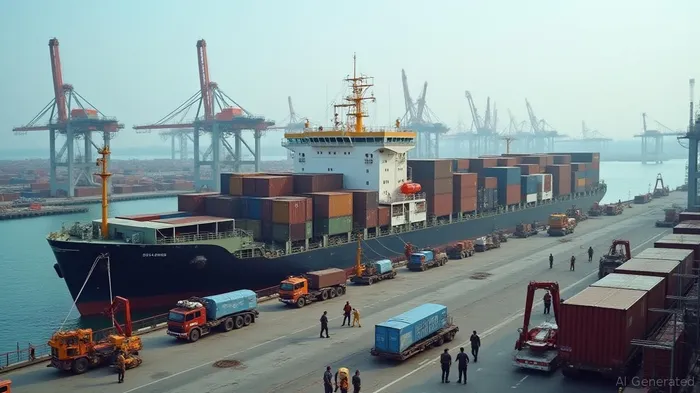
Sector-Specific Vulnerabilities: Italy as a Microcosm
Italy's economy provides a stark illustration of the risks. The U.S. tariffs threaten to reduce Italian automotive exports—already a €38 billion lifeline—to the U.S. by up to 20%, with potential revenue losses of €1.4 billion to €3 billion. This sector alone risks losing 9,700 to 15,500 jobs by 2026, disproportionately affecting subcontractors and smaller firms. For instance, StellantisSTLA--, a bellwether for European automotive exports, could see its U.S. revenue drop by €61 million to €81 million annually due to tariffs and currency headwinds.
The luxury goods sector, while less directly exposed due to inelastic demand, is not immune. Brands like Prada and FerrariRACE-- face indirect pressures: rising supply chain costs and the risk of retaliatory EU tariffs on U.S. imports, which could dampen transatlantic demand. The broader economic toll is stark: Confindustria warns that Italy's total job losses could hit 118,000 if tariffs proceed as planned. These figures underscore a broader truth: the EU's trade surplus, fueled by automotive exports, is now a vulnerability.
The Broader EU Dilemma
The EU's retaliatory tariffs—targeting $95 billion of U.S. imports—risk escalating a trade war. For sectors like steel and aluminum, Section 232 tariffs now at 50% amplify the pain for EU producers. Meanwhile, the euro's 9% appreciation against the dollar since April 2025 exacerbates costs, effectively raising tariffs to 23.5% for some goods. This “double whammy” of tariffs and currency shifts has investors bracing for a hit to corporate margins across industries.
Opportunities in Resilience: Logistics and Tech Enablers
Amid the risks, opportunities emerge for companies that can fortify supply chains against transatlantic disruptions.
1. Logistics and Transportation Firms
Firms that enable diversification of supply chains—such as C.H. Robinson (CHRW) and XPO Logistics (XPO)—are well-positioned. These companies offer end-to-end solutions, including regional sourcing and just-in-time delivery, which reduce reliance on high-tariff routes.
2. Technology Enablers
Tech-driven solutions that enhance supply chain visibility and efficiency are critical. Companies like FourKites (FOUR), which provides real-time tracking and predictive analytics, and Flexport, which digitizes global logistics, are helping businesses optimize routes and avoid bottlenecks.
3. Automation and Robotics
Investments in automation, such as those in ABB (ABB) or Teradyne (TER), can reduce labor costs and improve productivity, countering margin pressures.
Investment Strategy: Prioritize Resilience
Investors should focus on three pillars:
1. Diversification Plays: Allocate to logistics firms with global reach (e.g., CHRWCHRW--, XPO) to capitalize on supply chain restructuring.
2. Tech-Driven Solutions: Back platforms like FourKites and Flexport that provide transparency and efficiency gains.
3. Automation Leaders: Invest in robotics and automation stocks to mitigate labor and cost risks.
Avoid sectors with high transatlantic exposure unless they have hedging mechanisms. For instance, luxury stocks may remain stable in the short term but warrant caution if broader economic headwinds materialize.
Conclusion: The Time for Diversification is Now
The July 9 deadline looms large, and businesses must act swiftly to insulate themselves. For investors, the path forward is clear: favor companies that enable supply chain resilience. The tariffs are not just a U.S.-EU issue—they are a catalyst for a global shift toward localized, tech-driven logistics. Those who act decisively now will be positioned to navigate the storm—and profit from it.
The stakes could not be higher. As Italy's experience shows, the cost of inaction is steep. The smart move is to bet on the enablers of tomorrow's supply chains.

Stay ahead of the market.
Get curated U.S. market news, insights and key dates delivered to your inbox.




Comments
No comments yet