
Tariffs in the Crosshairs: Navigating Copper and Pharma Risks in a Trade-War World
As President Trump's trade agenda hurtles toward implementation, the specter of a 50% copper tariff and 200% pharmaceutical tariffs looms over global markets. While neither has yet taken effect, their mere threat has already sent shockwaves through industries and supply chains. For investors, this is no time for complacency. The coming months will test the resilience of sectors from construction to healthcare—and offer opportunities to profit from the chaos.
Copper's Crucible: A Tax on Everything That Wires, Builds, or Runs
The 50% copper tariff, delayed but not dead, has already driven futures prices to historic highs. Copper is the lifeblood of modern infrastructure: it wires homes, powers electric vehicles, and underpins machinery. The tariff's delayed rollout has created a perverse incentive—industries are stockpiling now to avoid future costs, pushing prices to $5.68/lb, a 15% jump year-to-date.
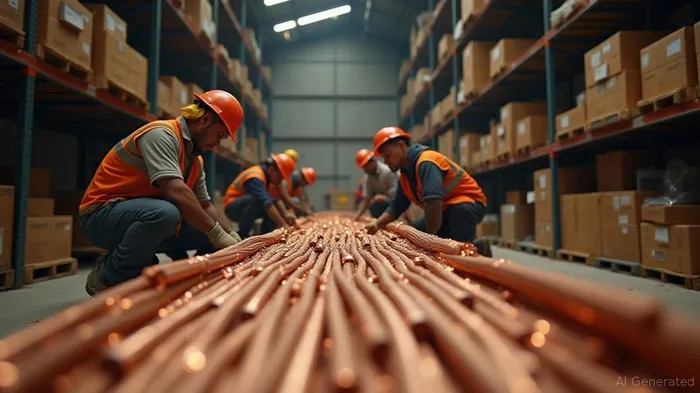
The math is simple: higher copper prices translate to higher costs for industries like construction, auto manufacturing, and electronics. The U.S. imported $17 billion of copper in 2024, with Chile as the top supplier. But the tariff's ripple effects won't stop at borders. Global supply chains, already strained by post-pandemic demand, face a new stress test.
Investment Play: Short positions in copper-intensive industries like utilities (e.g., NextEra Energy) or automakers (e.g., Ford) could hedge against margin squeezes. Meanwhile, U.S. copper producers like Freeport-McMoRanFCX-- (FCX) stand to gain as domestic demand outpaces imports.
Pharma's Precipice: A 200% Gamble on U.S. Manufacturing
The pharmaceutical tariff, if enacted, would mark a radical escalation of Trump's “America First” agenda. At 200%, it's not a tax—it's a scorched-earth policy designed to force drugmakers to reshore production. Australia, which exported $3 billion in pharmaceuticals to the U.S. last year, is already scrambling.
The goal is clear: reduce reliance on foreign manufacturers by making imports prohibitively expensive. But the path is fraught. Companies like PfizerPFE-- (PFE) and MerckMRK-- (MRK) have announced U.S. plant expansions, though some projects predate the tariff talk. The question remains: Will these moves be enough to offset the cost of tariffs, or will drug prices spike for consumers?
Investment Play: Long positions in U.S. pharma manufacturers with domestic production capacity (e.g., Pfizer, Amgen) could benefit as they capture market share. Avoid exporters like Australia's Aspen Industries (ASX:ASX) or Swiss giants like NovartisNVS--, which rely on U.S. sales.
The Broader Tariff Landscape: A Minefield for Global Supply Chains
Trump's tariff regime extends far beyond copper and pharma. A 10% baseline reciprocal tariff applies to most countries, with country-specific rates spiking as high as 34% for China. Meanwhile, ongoing Section 232 investigations into pharmaceuticals mirror past actions on steel and aluminum—prolonging uncertainty for industries.
Legal challenges add another layer of risk. Courts have already enjoined fentanyl and reciprocal tariffs, though stays keep them in effect. Investors should prepare for volatility as rulings unfold.
Regional Winners/Losers:
- Winners: U.S. manufacturers with domestic supply chains, Canadian copper miners (e.g., First Quantum Minerals), and European pharma firms diversifying production.
- Losers: Chilean copper exporters, Australian drugmakers, and industries (autos, machinery) reliant on imported components.
Hedging Strategies for the Trade-War Era
- Diversify Geographically: Shift exposure toward companies with supply chains insulated from U.S. tariffs, such as Canadian or Latin American miners.
- Short Volatility: Use inverse ETFs (e.g., ProShares Short Basic Materials) to bet against sectors like industrials (XLI) if tariffs trigger a price spiral.
- Play the Dollar: A stronger U.S. dollar could exacerbate trade tensions—invest in dollar-hedged ETFs (e.g., UUP) if the greenback rises.
Final Take: Navigating the New Trade Reality
The coming months will reveal whether these tariffs are a blip or a blueprint for U.S. trade policy. For now, investors must treat them as a permanent feature of the economic landscape. The sectors to watch are clear: copper is a double-edged sword (profitable for producers, painful for users), while pharma's reshoring gamble favors U.S. incumbents.
As Trump's team tightens the screws, the best plays are those that benefit from localization or insulation. Ignore the noise—focus on the supply chains that survive.

Stay ahead of the market.
Get curated U.S. market news, insights and key dates delivered to your inbox.




Comments
No comments yet