
Tariffs and Consumer Behavior: How Trade Policy is Reshaping Back-to-School Retail Markets
 Aime Summary
As the 2025 back-to-school season unfolds, the interplay between trade policy and consumer behavior is rewriting the rules of retail competitiveness. With tariffs on imported goods—particularly from China, Vietnam, and Indonesia—spiking to 30% or higher, major retailers are scrambling to protect margins while navigating a sea of shifting consumer expectations. The result is a high-stakes chess game where supply chain resilience and strategic agility determine not just profitability, but long-term survival in a protectionist climate.
The Tariff-Driven Supply Chain Overhaul
The Trump administration's aggressive tariff agenda, now fully in effect as of August 2025, has forced retailers to rethink sourcing, inventory, and pricing strategies. For example, WalmartWMT-- has slashed its China sourcing from 60% in 2017 to 20% in 2025, pivoting to a “China Plus Three” model that prioritizes Vietnam, India, and Mexico. TargetTGT--, meanwhile, has reduced its China dependency to 30%, with a goal of further trimming it to 25% by 2026. These shifts are not just about avoiding tariffs—they're about insulating supply chains from geopolitical volatility and aligning with consumer preferences for “Made in the USA” products.
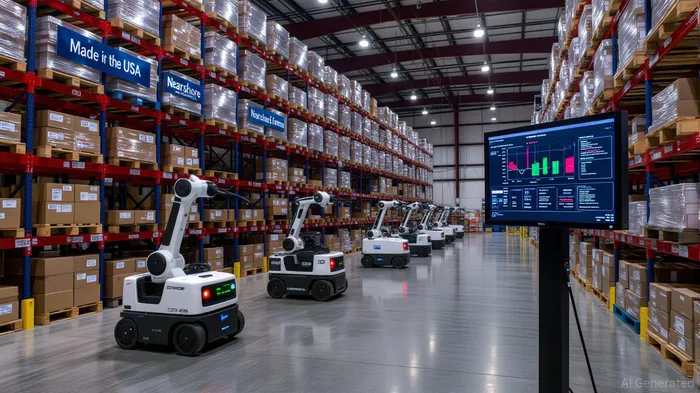
The financial stakes are immense. Walmart's $350 billion domestic manufacturing pledge and $5 billion investment in AI-driven supply chain tools have enabled it to absorb tariff costs without raising prices—a critical differentiator in a market where 51% of parents cite tariffs as a reason for early shopping. Target, however, has struggled to match this agility. Its gross margin contracted by 200 basis points in 2025, partly due to $40 million in tariff-related costs, as it grapples with the higher expenses of nearshoring and domestic production.
Consumer Behavior: Price Sensitivity and Brand Loyalty in Flux
Tariff-driven inflation has accelerated a shift in consumer behavior. The National Retail Federation (NRF) reports that 75% of parents are now willing to switch brands if their preferred products become too expensive—a 13-point jump from 2024. This trend is particularly pronounced among Gen Z and Millennials, who are 40% more likely to opt for private-label brands. Retailers like Walmart and Target, with robust store-brand lines, are capitalizing on this shift.
Meanwhile, 65% of parents are prioritizing affordable retailers over their preferred stores, and 56% are cutting nonessential purchases. These behaviors underscore a broader economic caution: the bottom 80% of U.S. households have been “dis-saving” since 2022, spending beyond their means and eroding financial buffers. For retailers, this means a renewed focus on value—both in pricing and in product offerings.
Stock Valuation Dynamics: Resilience vs. Vulnerability
The divergent strategies of Walmart and Target have led to starkly different stock valuation trajectories. Walmart's shares have risen 13% year-to-date in 2025, buoyed by its ability to maintain “Everyday Low Prices” despite tariffs. Its P/E ratio of 22x, below its historical average, reflects investor confidence in its supply chain adaptability and cost absorption.
Target, however, faces a more challenging path. Its stock has lagged, with a 200-basis-point margin contraction in 2025 and a decision to end its price-matching policy with competitors like AmazonAMZN--. While CEO Brian Cornell has emphasized a “gentle and sparing” approach to price increases, this strategy has limited the company's ability to compete on cost—a critical disadvantage in a market where 67% of parents have already started shopping early to avoid price hikes.
Investment Implications: Where to Place Bets
For investors, the lesson is clear: supply chain resilience is now a core determinant of retail stock performance. Companies that have proactively diversified sourcing, invested in automation, and prioritized private-label margins—like Walmart—are better positioned to weather protectionist headwinds. Conversely, smaller retailers or those with less flexible supply chains risk being squeezed out of the market, creating consolidation opportunities for industry leaders.
Emerging sectors such as thrift retail and nearshore-focused logistics providers also warrant attention. As 56% of consumers turn to resale sites for back-to-school essentials, companies like ThredUpTDUP-- or local thrift chains could see accelerated growth. Similarly, firms that enable nearshoring—such as logistics providers with expanded Latin American operations—stand to benefit from the broader shift in sourcing patterns.
The Road Ahead
The 2025 back-to-school season is a microcosm of the retail industry's evolution in a protectionist climate. Tariffs have forced a reckoning with global supply chains, but they've also catalyzed innovation in nearshoring, AI-driven logistics, and value-driven retailing. For investors, the key will be identifying companies that have not only adapted to the new reality but are leading the charge in redefining what “resilience” means in an era of economic uncertainty.
As the NRF forecasts total back-to-school spending to reach $128 billion in 2025, the battle for market share will hinge on who can balance affordability with agility. Retailers that succeed will not only outperform their peers—they'll shape the future of consumer retail in a world where tariffs and protectionism are here to stay.

Stay ahead of the market.
Get curated U.S. market news, insights and key dates delivered to your inbox.




Comments
No comments yet