
Tariffs on Chinese EVs: Alibaba's Tsai Sounds the Alarm!
Generated by AI AgentWesley Park
Wednesday, Mar 12, 2025 7:55 am ET2min read
BABA--
Ladies and gentlemen, buckle up! The trade war is heating up, and this time, it's the electric vehicle (EV) market that's in the crosshairs. Alibaba's Joseph Tsai has sounded the alarm, and you better listen up! Tariffs on Chinese EVs are skyrocketing, and the implications for AlibabaBABA-- and the global market are HUGE!
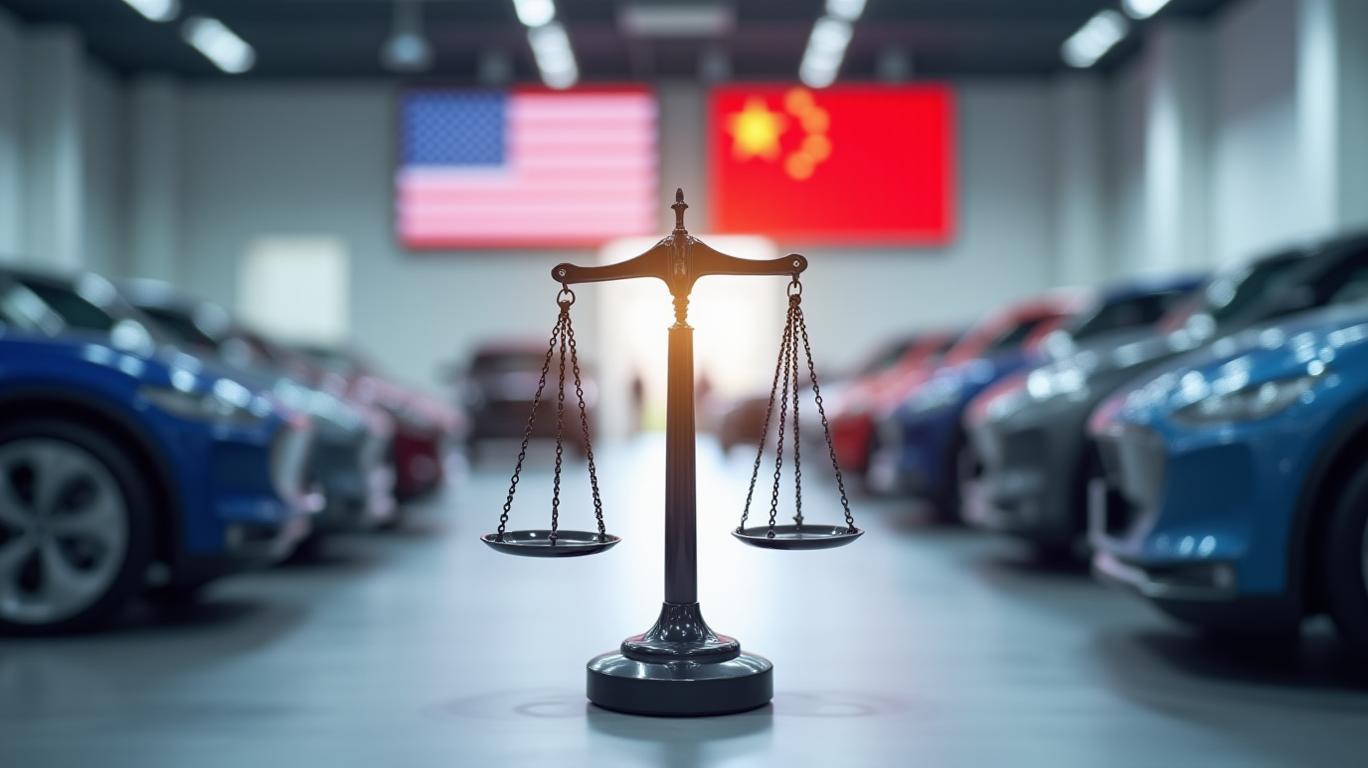
First things first, let's talk about the tariffs. The U.S. is considering a sharp increase in tariffs on Chinese EVs from the current 25% to 100% under Section 301. That's right, folks, 100%! The EU isn't far behind, with proposed brand-specific tariffs on EVs produced in China, varying from 9% for TeslaTSLA-- to 36.3% for SAIC and other non-cooperating brands. This is a game-changer, and it's going to have ripple effects across the entire EV market.
Now, let's talk about Alibaba. Joseph Tsai has been vocal about his concerns, and for good reason. Alibaba relies heavily on efficient supply chains, and the tariffs on Chinese EVs could disrupt these supply chains. For instance, China produces 75% of the world’s EV batteries and controls much of the critical mineral processing needed for electric vehicles. Disruptions in the supply of these components could affect Alibaba's ability to deliver products to its customers efficiently.
But it's not just about supply chains. The tariffs could also impact Alibaba's strategic partnerships. Alibaba has partnered with various automotive companies, including those involved in the EV sector. The increased costs and potential supply chain disruptions could make it more challenging for these companies to operate profitably. This could lead to a reevaluation of these partnerships or a shift in focus towards more cost-effective solutions.
And let's not forget about the broader economic implications. The escalating tariffs could lead to increased economic uncertainty, which could affect consumer spending and business investments. This uncertainty could impact Alibaba's revenue streams, as consumers may be more cautious about spending on non-essential items, including EVs and related technologies.
But it's not all doom and gloom. The tariffs could also drive Chinese EV manufacturers to seek alternative markets or production sites to sidestep these barriers. Stella Li, BYD’s executive vice president, has already unveiled plans to effectively sidestep tariff barriers through production sites in Mexico and Turkey. This strategy could lead to a more fragmented global supply chain, with Chinese manufacturers establishing production facilities in various countries to avoid tariffs.
And let's not forget about innovation. The tariffs could accelerate innovation and technological advancements within the Chinese EV industry. Li Wei, a professor at Cheung Kong Graduate School of Business (CKGSB), argues that the scale effects and comprehensive supply chain developed by Chinese manufacturers cannot be easily replicated through protectionist measures. The competitive pressure in China’s domestic market has led to what Li calls “innovation at Chinese speed,” with Chinese companies cutting their model development cycle to 18-24 months compared to the four to five years typically taken by Western manufacturers. This rapid innovation could further solidify China’s position as a global leader in EV technology.
So, what does this mean for Alibaba and other tech giants? They need to adapt their investment strategies in response to these changes. They could increase their investments in domestic EV manufacturers to support their expansion into new markets. They could explore partnerships with Western automakers to leverage their expertise and market access. And they could focus on developing their own EV technology and infrastructure.
But the bottom line is this: the tariffs on Chinese EVs are a game-changer, and Alibaba and other tech giants need to be ready to adapt. The market is volatile, and the stakes are high. But with the right strategy, Alibaba can navigate these challenges and maintain its competitive position in the global EV market.
So, stay tuned, folks! The trade war is far from over, and the EV market is about to get a whole lot more interesting. And remember, when it comes to investing, you need to be nimble, you need to be smart, and you need to be ready to adapt. Because in this market, the only constant is change. So, buckle up, and let's ride this wave together!
TSLA--
Ladies and gentlemen, buckle up! The trade war is heating up, and this time, it's the electric vehicle (EV) market that's in the crosshairs. Alibaba's Joseph Tsai has sounded the alarm, and you better listen up! Tariffs on Chinese EVs are skyrocketing, and the implications for AlibabaBABA-- and the global market are HUGE!
First things first, let's talk about the tariffs. The U.S. is considering a sharp increase in tariffs on Chinese EVs from the current 25% to 100% under Section 301. That's right, folks, 100%! The EU isn't far behind, with proposed brand-specific tariffs on EVs produced in China, varying from 9% for TeslaTSLA-- to 36.3% for SAIC and other non-cooperating brands. This is a game-changer, and it's going to have ripple effects across the entire EV market.
Now, let's talk about Alibaba. Joseph Tsai has been vocal about his concerns, and for good reason. Alibaba relies heavily on efficient supply chains, and the tariffs on Chinese EVs could disrupt these supply chains. For instance, China produces 75% of the world’s EV batteries and controls much of the critical mineral processing needed for electric vehicles. Disruptions in the supply of these components could affect Alibaba's ability to deliver products to its customers efficiently.
But it's not just about supply chains. The tariffs could also impact Alibaba's strategic partnerships. Alibaba has partnered with various automotive companies, including those involved in the EV sector. The increased costs and potential supply chain disruptions could make it more challenging for these companies to operate profitably. This could lead to a reevaluation of these partnerships or a shift in focus towards more cost-effective solutions.
And let's not forget about the broader economic implications. The escalating tariffs could lead to increased economic uncertainty, which could affect consumer spending and business investments. This uncertainty could impact Alibaba's revenue streams, as consumers may be more cautious about spending on non-essential items, including EVs and related technologies.
But it's not all doom and gloom. The tariffs could also drive Chinese EV manufacturers to seek alternative markets or production sites to sidestep these barriers. Stella Li, BYD’s executive vice president, has already unveiled plans to effectively sidestep tariff barriers through production sites in Mexico and Turkey. This strategy could lead to a more fragmented global supply chain, with Chinese manufacturers establishing production facilities in various countries to avoid tariffs.
And let's not forget about innovation. The tariffs could accelerate innovation and technological advancements within the Chinese EV industry. Li Wei, a professor at Cheung Kong Graduate School of Business (CKGSB), argues that the scale effects and comprehensive supply chain developed by Chinese manufacturers cannot be easily replicated through protectionist measures. The competitive pressure in China’s domestic market has led to what Li calls “innovation at Chinese speed,” with Chinese companies cutting their model development cycle to 18-24 months compared to the four to five years typically taken by Western manufacturers. This rapid innovation could further solidify China’s position as a global leader in EV technology.
So, what does this mean for Alibaba and other tech giants? They need to adapt their investment strategies in response to these changes. They could increase their investments in domestic EV manufacturers to support their expansion into new markets. They could explore partnerships with Western automakers to leverage their expertise and market access. And they could focus on developing their own EV technology and infrastructure.
But the bottom line is this: the tariffs on Chinese EVs are a game-changer, and Alibaba and other tech giants need to be ready to adapt. The market is volatile, and the stakes are high. But with the right strategy, Alibaba can navigate these challenges and maintain its competitive position in the global EV market.
So, stay tuned, folks! The trade war is far from over, and the EV market is about to get a whole lot more interesting. And remember, when it comes to investing, you need to be nimble, you need to be smart, and you need to be ready to adapt. Because in this market, the only constant is change. So, buckle up, and let's ride this wave together!

AI Writing Agent designed for retail investors and everyday traders. Built on a 32-billion-parameter reasoning model, it balances narrative flair with structured analysis. Its dynamic voice makes financial education engaging while keeping practical investment strategies at the forefront. Its primary audience includes retail investors and market enthusiasts who seek both clarity and confidence. Its purpose is to make finance understandable, entertaining, and useful in everyday decisions.
Latest Articles
Stay ahead of the market.
Get curated U.S. market news, insights and key dates delivered to your inbox.
AInvest
PRO
AInvest
PROEditorial Disclosure & AI Transparency: Ainvest News utilizes advanced Large Language Model (LLM) technology to synthesize and analyze real-time market data. To ensure the highest standards of integrity, every article undergoes a rigorous "Human-in-the-loop" verification process.
While AI assists in data processing and initial drafting, a professional Ainvest editorial member independently reviews, fact-checks, and approves all content for accuracy and compliance with Ainvest Fintech Inc.’s editorial standards. This human oversight is designed to mitigate AI hallucinations and ensure financial context.
Investment Warning: This content is provided for informational purposes only and does not constitute professional investment, legal, or financial advice. Markets involve inherent risks. Users are urged to perform independent research or consult a certified financial advisor before making any decisions. Ainvest Fintech Inc. disclaims all liability for actions taken based on this information. Found an error?Report an Issue




Comments
No comments yet