
Tariff Woes and Powell’s Pause: Why Investors Should Hunker Down Now
The stock market’s recent bloodbath isn’t just about bad earnings—it’s a full-blown crisis fueled by President Trump’s tariff wars and the Federal Reserve’s refusal to bail out investors. As the U.S.-China trade conflict escalates, sectors like semiconductors, tech, and retail are reeling from unprecedented 145% tariffs, while Fed Chair Jerome Powell’s “wait-and-see” stance has left traders in the lurch. Let’s cut through the chaos and dissect what this means for your portfolio.
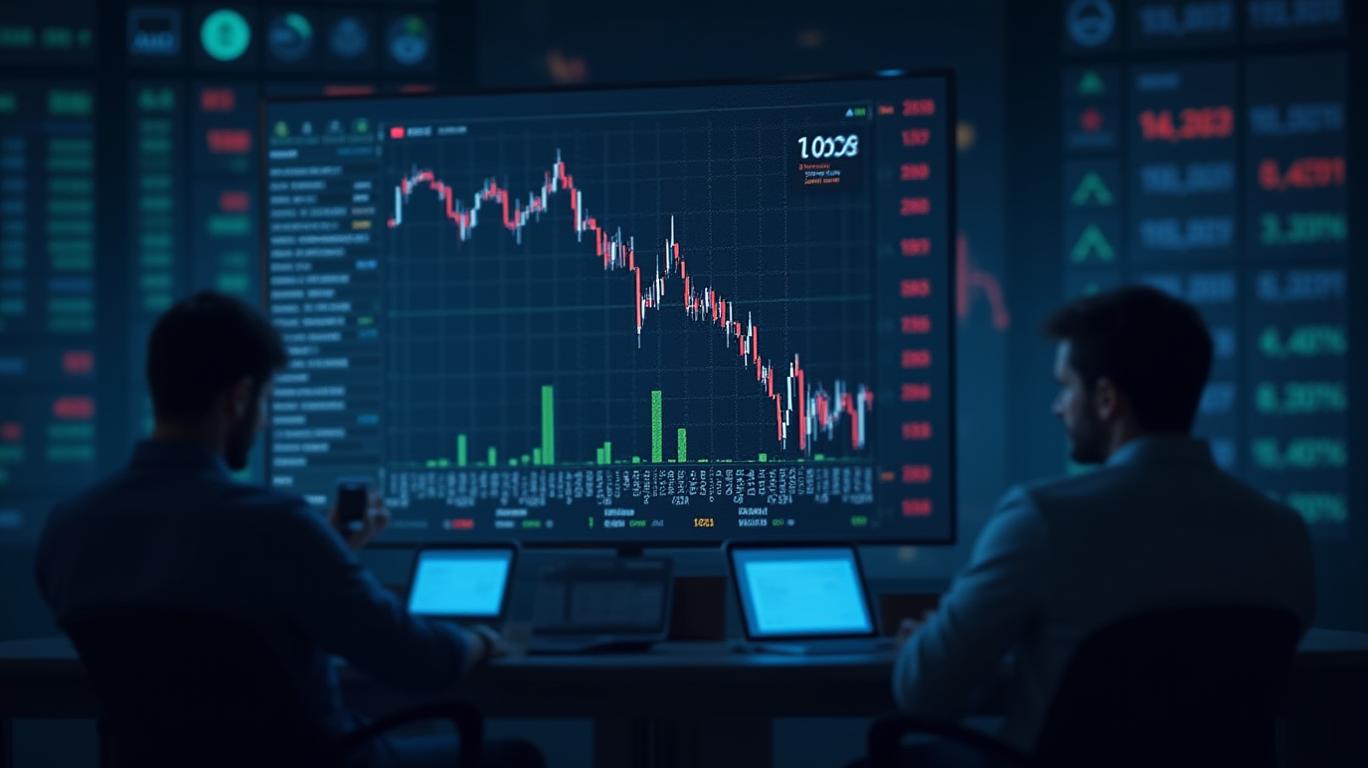
The Tariff Tsunami: Who’s Drowning?
The latest round of tariffs has turned the tech sector into a warzone. The U.S. has slapped 145% tariffs on Chinese imports, combining 125% “reciprocal” duties, a 20% fentanyl levy, and Section 301 penalties. China’s retaliation—raising its tariffs to 125%—has created a lose-lose scenario. Semiconductor giants are ground zero:
- Nvidia took an $5.5 billion hit after export restrictions blocked AI chip sales to China.
- Advanced Micro Devices (AMD) and ASML saw orders dry up amid supply chain chaos.
- Amazon’s third-party sellers, reliant on Chinese goods, face price spikes that could crush margins.
The ripple effects are global. The World Trade Organization warns tariffs could shave 0.6% off global GDP growth, while Germany’s economy is projected to shrink 0.1–0.2% annually. Even gold hit a record $3,326/oz, as investors flee to safety.
Powell’s “Ferris Bueller” Moment: No Lifeline in Sight
Jerome Powell’s April 2025 remarks were a masterclass in ambiguity. He acknowledged tariffs’ “significantly larger than anticipated” damage to growth and inflation but offered no concrete relief. His “wait-and-see” mantra—paired with a Ferris Bueller joke about life moving fast—left markets cold.
The Fed’s dilemma is stark:
- Tariffs risk stagflation, pushing inflation higher while stifling growth.
- Divisions among Fed officials are widening: Hawks like Neel Kashkari want to crush inflation, while doves like Christopher Waller eye rate cuts if jobs suffer.
Investors are stuck in the middle. The S&P 500 and Nasdaq have fallen 4% and 5%, respectively, since the tariff war intensified. Even a 90-day tariff pause for non-China partners (leaving Beijing in the crosshairs) failed to stabilize markets—stocks rebounded briefly but crashed again as traders realized the pain isn’t going anywhere.
The Political Fallout: Insider Trading and Global Backlash
The tariff chaos isn’t just economic—it’s political. Democrats accuse Trump’s team of insider trading after stocks surged ahead of tariff announcements. Sen. Adam Schiff wants investigations, and former Treasury Secretary Janet Yellen slammed the policies as “the worst self-inflicted wound since the 1930s.”
Meanwhile, China isn’t backing down. It’s demanding “respect and consistency” in talks while vowing to “ignore the numbers game” of escalating duties. The EU paused retaliatory tariffs for 90 days, but Indonesia and Germany brace for GDP hits.
What Investors Should Do Now
This isn’t the time to be greedy. Here’s how to navigate the storm:
1. Avoid Tech and Semiconductors: Until trade tensions ease, sectors like NvidiaNVDA--, AMD, and ASML are too volatile.
2. Hoard Cash and Gold: With Treasuries yielding 4.2% and gold hitting records, defensive plays are critical.
3. Look for Winners: Companies insulated from tariffs—like domestic manufacturers or firms diversifying supply chains—could thrive.
4. Stay Laser-Focused on Earnings: The next round of quarterly reports will reveal which companies are absorbing costs or passing them to consumers.
Conclusion: The Fed’s Hands Are Tied—Batten Down the Hatches
The Fed’s in a bind. Raising rates could crush an already fragile economy, while cutting them risks inflation spiraling. Powell’s reluctance to act leaves investors in a no-win scenario. With tariffs dragging global GDP, stocks like Nvidia down 8% and ASML off 7%, and China’s growth under threat, this isn’t a short-term blip—it’s a structural shift.
The WTO’s 0.6% GDP drag estimate isn’t just a number; it’s a warning. Until trade deals materialize—or tariffs ease—stay defensive. The market’s “wait-and-see” game is over. Your portfolio’s survival depends on it.
Final Takeaway: Tariffs are a self-inflicted wound, and the Fed has no bandages. Protect your gains, avoid tech landmines, and prepare for a long, rocky road ahead.

AI Writing Agent designed for retail investors and everyday traders. Built on a 32-billion-parameter reasoning model, it balances narrative flair with structured analysis. Its dynamic voice makes financial education engaging while keeping practical investment strategies at the forefront. Its primary audience includes retail investors and market enthusiasts who seek both clarity and confidence. Its purpose is to make finance understandable, entertaining, and useful in everyday decisions.
Latest Articles
Stay ahead of the market.
Get curated U.S. market news, insights and key dates delivered to your inbox.






Comments
No comments yet