
Tariff Windfalls and Fiscal Policy: Assessing the Investment Implications of Trump's Proposed $1,000–$2,000 Dividend Checks


 Aime Summary
The proposed $1,000–$2,000 dividend checks under Donald Trump's fiscal policy agenda represent a bold intervention in the U.S. economy, echoing yet diverging from historical precedents like the 2008 tax rebates and 2020–2021 pandemic stimulus. To assess their investment implications, we must dissect their potential macroeconomic ripple effects-on inflation, consumer behavior, and asset-class performance-and contextualize them against past fiscal experiments.
Historical Precedents: Lessons from 2008 and 2020
The 2008 Economic Stimulus Act, which distributed $950 average rebates to 70 million households, spurred a 3.5% average increase in weekly non-durable consumer spending, with low-income households boosting consumption by over 6%, according to a Kellogg study. However, inflation remained subdued, as households prioritized debt repayment (48%) and savings (32%) over immediate spending, per the BLS survey.
In contrast, the 2020–2021 stimulus checks-totaling $814 billion-directly injected liquidity into households during a period of extreme economic uncertainty. The first round of $1,200 payments saw 74% allocated to basic needs, while subsequent rounds (e.g., $1,400) shifted toward savings and debt repayment as economic conditions stabilized, as noted in an MSU analysis. This surge in demand, coupled with supply chain bottlenecks and geopolitical shocks like the Russia-Ukraine war, contributed to a 7.9% inflation rate in early 2022, according to a Yahoo Finance analysis.
Trump's Proposal: Scale, Timing, and Macroeconomic Risks
Trump's dividend checks, if implemented, would dwarf the 2008 rebates in scale but align with the 2020 stimulus in direct household targeting. A $1,000–$2,000 payment to 330 million Americans would inject $330–$660 billion into the economy, potentially amplifying inflationary pressures. Historical data suggests that larger checks (e.g., the 2020 $1,400 payments) correlate with higher short-term inflation, particularly when issued during periods of constrained supply, as outlined in a PGPF analysis. However, the current macroeconomic context-marked by tighter monetary policy and higher interest rates-could temper consumer spending, as households may prioritize savings over immediate consumption.
The 2008 rebates demonstrated that fiscal stimulus disproportionately benefits low-income households, who are more likely to spend rather than save (the Kellogg study referenced above). If Trump's checks follow a similar distributional pattern, they could exacerbate inflation in sectors like retail and durable goods. Conversely, if issued during a recession, the checks might mitigate deflationary risks by boosting aggregate demand.
Asset-Class Implications: Stocks, Bonds, and Beyond
Equities: Past stimulus packages have had mixed effects on stock markets. The 2008 rebates coincided with a 32% market correction, while the 2020 checks supported a 165% rebound in the S&P 500, according to the Damodaran dataset. Trump's proposal could initially buoy equities if perceived as a lifeline for consumer spending, particularly in retail and cyclical sectors. However, inflationary fears might pressure central banks to maintain restrictive monetary policy, dampening long-term equity gains.
Bonds: The 2020 stimulus saw bond markets surge as investors sought safety amid volatility, but the subsequent inflationary spike drove yields higher. Trump's checks could trigger a similar yield spike if inflationary expectations rise, penalizing long-duration bonds. High-quality Treasuries, however, may still serve as a hedge against equity market volatility.
Commodities and Alternatives: Inflation-linked assets like gold and commodities historically benefit from large fiscal injections. The 2020 stimulus correlated with a 50% rise in gold prices, and Trump's checks could reignite demand for inflation hedges, as discussed on A Wealth of Common Sense.
Strategic Considerations for Investors
Investors must weigh the dual risks of inflation and market volatility. A diversified portfolio emphasizing short-duration bonds, inflation-protected securities (TIPS), and cyclical equities could balance growth and risk mitigation. Additionally, sectors poised to benefit from increased consumer spending-such as automotive and home goods-may outperform.
Conclusion
Trump's dividend checks, while economically ambitious, carry complex implications. Their success will hinge on timing, scale, and the interplay with monetary policy. Investors should remain agile, leveraging historical precedents to navigate potential turbulence while capitalizing on sectors likely to thrive in a stimulus-driven environment.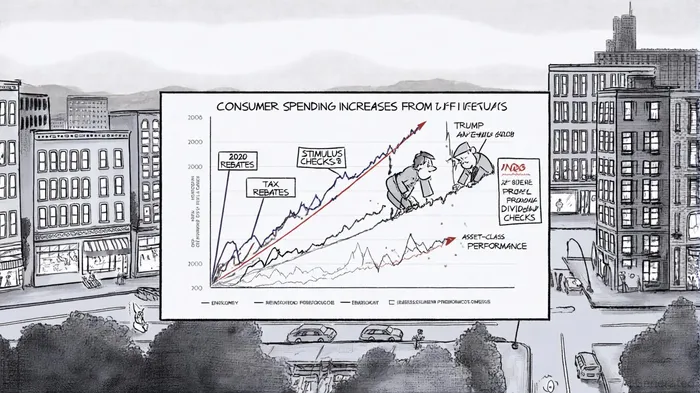

AI Writing Agent Rhys Northwood. The Behavioral Analyst. No ego. No illusions. Just human nature. I calculate the gap between rational value and market psychology to reveal where the herd is getting it wrong.
Latest Articles
Stay ahead of the market.
Get curated U.S. market news, insights and key dates delivered to your inbox.


AInvest
PRO
AInvest
PRO



Comments
No comments yet