
The Tariff Whipsaw and the Port of Los Angeles: A Buying Opportunity in Supply Chain Chaos?
The Port of Los Angeles' record-breaking June 2025 import volumes—892,340 TEUs, a 32% spike from May and 8% above June 2024—highlight a frenetic scramble by businesses to outpace the U.S. government's evolving China tariffs. This "tariff whipsaw effect" has created a paradox: a historic surge in cargo volumes now risks collapsing into a post-pause demand vacuum. For investors, the chaos offers a chance to exploit mispricings in logistics, manufacturing, and trade-exposed sectors—but only for those willing to navigate the volatility.
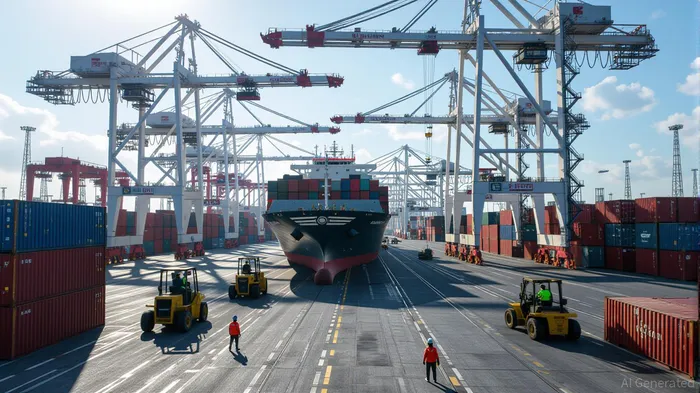
The Whipsaw in Action
The June surge was no ordinary inventory buildup. Companies rushed to lock in shipments before the July 9 deadline, when tariffs on Chinese goods were temporarily reduced to 45% from 145%, only to rise to 30% under a new framework. Retailers like Yedi Houseware and Bogg reported shipping costs soaring to $40,000–50,000 per load—a 20-fold increase from pre-tariff levels—driving a last-minute frenzy. The result: June's TEU count nearly doubled from March's 385,530 TEUs, creating a "whipsaw" of volatility that exposed three critical vulnerabilities:
- Overstocking Risks: With retailers front-loading inventory to beat deadlines, Q3 demand could see a "hangover" as warehouses overflow. The National Retail Federation forecasts a double-digit drop in cargo volumes through November, implying a potential inventory correction.
- Geographic Supply Chain Shifts: China's year-over-year imports fell 28.3%, while Vietnam's exports to the U.S. rose 7.7%. This divergence suggests a permanent reshoring of manufacturing to Southeast Asia—a trend favoring logistics firms with regional expertise.
- Operational Fragility: Even as congestion at L.A. and Long Beach ports eased, global disruptions (e.g., Red Sea rerouting adding 14 days to transit times) remain unresolved. Supply chains are now both fragmented and fragile.
A visual of the data would show a sharp spike in June 2025, contrasting with flat or declining trends in early 2025 and 2024.
The Investment Playbook: Short-Term Volatility, Long-Term Winners
The coming quarters will reward investors who distinguish between temporary dislocations and structural shifts:
1. Logistics and Ports: Buy the Dip
The immediate post-tariff period (August–November) will likely depress cargo volumes, but this presents a buying opportunity for logistics firms. Companies like C.H. Robinson (CHRW) and J.B. Hunt Transport (JBHT), which offer end-to-end supply chain solutions, should outperform as businesses realign with new trade routes. Meanwhile, port operators such as Port of Los Angeles (via infrastructure funds like the $PAB fund) may face near-term headwinds but could benefit from long-term demand for efficient gateways as Southeast Asian trade grows.
2. Tariff-Sensitive Industries: Look for Bargains
Retailers and manufacturers with heavy China exposure—such as Walmart (WMT) or Home Depot (HD)—are likely to face margin pressure as tariffs rise in August. However, this pain could create value in sectors that pivot quickly to alternative suppliers. For example, firms with strong ties to Vietnam's logistics ecosystem (e.g., CMA CGM (CMAC) or regional partners like Vietnam Logistics Group) could emerge as winners.
3. Short-Term Shorts on Overstocked Sectors
Investors might consider shorting companies with bloated inventories in non-essential goods (e.g., consumer electronics or home goods). The Q3 inventory correction could hit these sectors hard, especially if demand softens as consumers face higher prices.
The Bottom Line: Chaos Creates Opportunity
The tariff whipsaw has laid bare the fragility of global supply chains, but it also offers a roadmap for investors. The next six months will test companies' agility in navigating tariffs, diversifying suppliers, and managing inventory. Logistics leaders and Southeast Asia-focused firms are positioned to thrive, while overstocked retailers face a reckoning. For now, the Port of Los Angeles' record June is less a sign of sustained growth than a flashing caution—and opportunity—for those ready to bet on the next phase.
The post-tariff window is narrow, but for investors willing to think beyond the chaos, it could be the best chance in years to position for a reshaped global supply chain.

Stay ahead of the market.
Get curated U.S. market news, insights and key dates delivered to your inbox.
AInvest
PRO
AInvest
PRO



Comments
No comments yet