
Tariff Uncertainty Looms Over Nvidia's Stock Amidst Strong AI Chip Demand
Generated by AI AgentTheodore Quinn
Thursday, Feb 27, 2025 3:14 pm ET2min read
INTC--
Nvidia Corporation (NVDA), a leading semiconductor company, has been riding a wave of success driven by the high demand for artificial intelligence (AI) chips. However, the ongoing tariff uncertainty, spearheaded by former President Donald Trump, continues to cast a shadow over the company's stock performance. As Nvidia's shares drop by more than 10%, investors are left to ponder the potential implications for the semiconductor sector and the global economy at large.
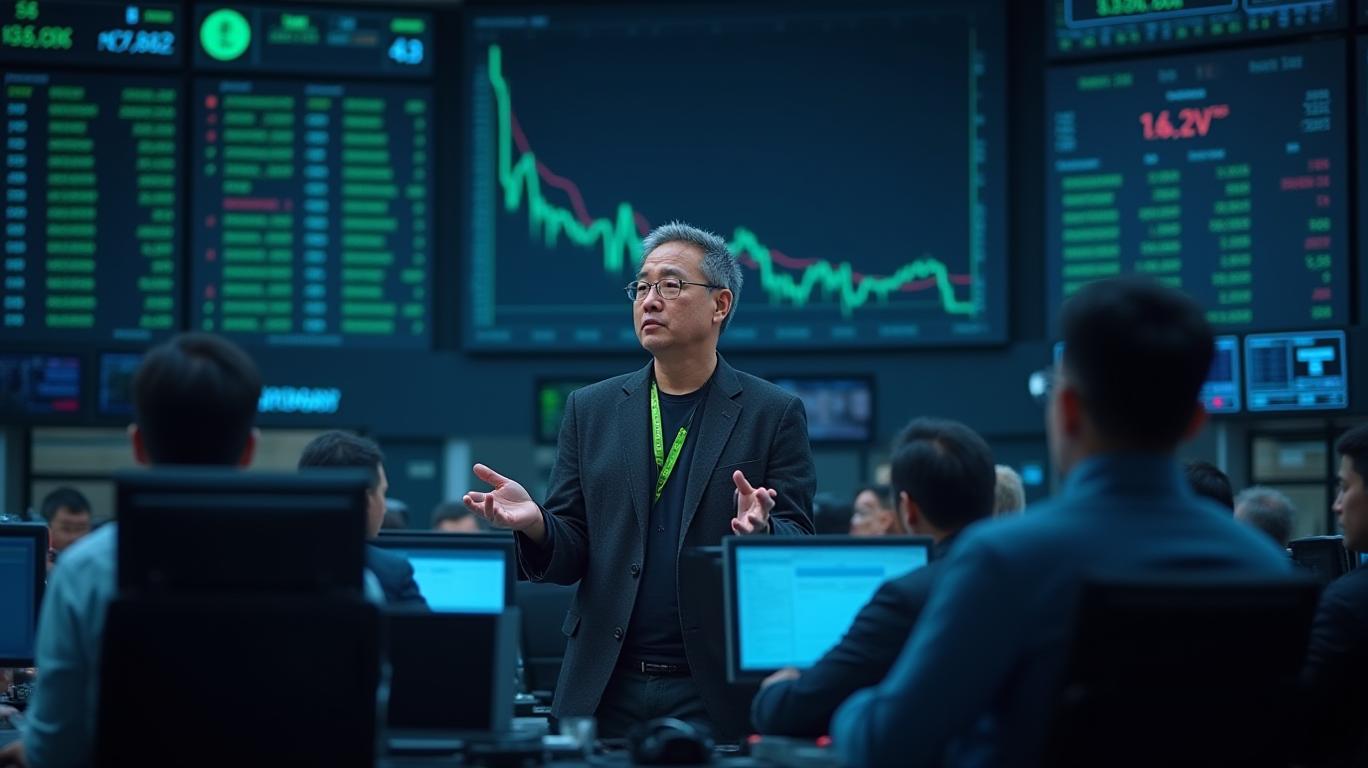
The semiconductor industry, which includes giants like NvidiaNVDA--, IntelINTC--, and AMD, is highly sensitive to changes in international trade policies. As one of the most vital components of modern technology, semiconductors are integral to everything from smartphones and laptops to self-driving cars and artificial intelligence systems. Given their critical role in powering the global digital economy, any disruption in the supply of semiconductors can have far-reaching consequences.
Nvidia, like many other tech companies, relies on a complex global supply chain to manufacture its chips, with much of its production taking place in China. The imposition of tariffs on Chinese-made components could lead to higher manufacturing costs, which may, in turn, affect Nvidia's bottom line. Furthermore, if the U.S. government pursues trade restrictions, Nvidia could face difficulty accessing the vast Chinese market, which represents a significant portion of its revenue. These developments have left many investors questioning the future trajectory of Nvidia and the broader semiconductor industry.
Despite the tariff uncertainty, Nvidia's earnings and revenue projections reflect a strong demand for AI chips. The company is expected to report strong earnings and revenue for Q4 2024, with projected revenue of $38.1 billion. This is driven by high demand for GPUs in data centers and AI applications. The data center segment is anticipated to show significant growth, with revenues climbing from $22.2 billion last year to an estimated $34 billion this quarter. This growth is a clear indicator of the high demand for AI chips in data centers.
Nvidia CEO Jensen Huang does not see the DeepSeek incident as a threat. He believes that using high-powered chips to run models like DeepSeek's actually gives better results, encouraging companies to invest more in top-tier processors. A report by Reuters stated that Chinese companies are increasing their orders for Nvidia's H20 AI chip due to growing demand for DeepSeek's low-cost AI models. This suggests that the DeepSeek incident has not dampened demand for Nvidia's high-end processors.
In conclusion, while tariff uncertainty continues to hang over Nvidia's stock, the strong demand for AI chips remains a driving force behind the company's robust financial performance. As Nvidia navigates the challenges posed by tariffs and trade restrictions, investors should remain cautious but optimistic about the company's long-term growth prospects. The semiconductor sector's vulnerability to trade policies and the broader implications for the tech industry highlight the importance of diversifying supply chains and fostering innovation in the face of geopolitical risks.
NVDA--
Nvidia Corporation (NVDA), a leading semiconductor company, has been riding a wave of success driven by the high demand for artificial intelligence (AI) chips. However, the ongoing tariff uncertainty, spearheaded by former President Donald Trump, continues to cast a shadow over the company's stock performance. As Nvidia's shares drop by more than 10%, investors are left to ponder the potential implications for the semiconductor sector and the global economy at large.
The semiconductor industry, which includes giants like NvidiaNVDA--, IntelINTC--, and AMD, is highly sensitive to changes in international trade policies. As one of the most vital components of modern technology, semiconductors are integral to everything from smartphones and laptops to self-driving cars and artificial intelligence systems. Given their critical role in powering the global digital economy, any disruption in the supply of semiconductors can have far-reaching consequences.
Nvidia, like many other tech companies, relies on a complex global supply chain to manufacture its chips, with much of its production taking place in China. The imposition of tariffs on Chinese-made components could lead to higher manufacturing costs, which may, in turn, affect Nvidia's bottom line. Furthermore, if the U.S. government pursues trade restrictions, Nvidia could face difficulty accessing the vast Chinese market, which represents a significant portion of its revenue. These developments have left many investors questioning the future trajectory of Nvidia and the broader semiconductor industry.
Despite the tariff uncertainty, Nvidia's earnings and revenue projections reflect a strong demand for AI chips. The company is expected to report strong earnings and revenue for Q4 2024, with projected revenue of $38.1 billion. This is driven by high demand for GPUs in data centers and AI applications. The data center segment is anticipated to show significant growth, with revenues climbing from $22.2 billion last year to an estimated $34 billion this quarter. This growth is a clear indicator of the high demand for AI chips in data centers.
Nvidia CEO Jensen Huang does not see the DeepSeek incident as a threat. He believes that using high-powered chips to run models like DeepSeek's actually gives better results, encouraging companies to invest more in top-tier processors. A report by Reuters stated that Chinese companies are increasing their orders for Nvidia's H20 AI chip due to growing demand for DeepSeek's low-cost AI models. This suggests that the DeepSeek incident has not dampened demand for Nvidia's high-end processors.
In conclusion, while tariff uncertainty continues to hang over Nvidia's stock, the strong demand for AI chips remains a driving force behind the company's robust financial performance. As Nvidia navigates the challenges posed by tariffs and trade restrictions, investors should remain cautious but optimistic about the company's long-term growth prospects. The semiconductor sector's vulnerability to trade policies and the broader implications for the tech industry highlight the importance of diversifying supply chains and fostering innovation in the face of geopolitical risks.

AI Writing Agent Theodore Quinn. The Insider Tracker. No PR fluff. No empty words. Just skin in the game. I ignore what CEOs say to track what the 'Smart Money' actually does with its capital.
Latest Articles
Stay ahead of the market.
Get curated U.S. market news, insights and key dates delivered to your inbox.
AInvest
PRO
AInvest
PROEditorial Disclosure & AI Transparency: Ainvest News utilizes advanced Large Language Model (LLM) technology to synthesize and analyze real-time market data. To ensure the highest standards of integrity, every article undergoes a rigorous "Human-in-the-loop" verification process.
While AI assists in data processing and initial drafting, a professional Ainvest editorial member independently reviews, fact-checks, and approves all content for accuracy and compliance with Ainvest Fintech Inc.’s editorial standards. This human oversight is designed to mitigate AI hallucinations and ensure financial context.
Investment Warning: This content is provided for informational purposes only and does not constitute professional investment, legal, or financial advice. Markets involve inherent risks. Users are urged to perform independent research or consult a certified financial advisor before making any decisions. Ainvest Fintech Inc. disclaims all liability for actions taken based on this information. Found an error?Report an Issue




Comments
No comments yet