
The Tariff Turnaround: Can Apple’s Reshoring Strategy Pay Off for Investors?
The U.S. tariff landscape has transformed into a labyrinth of levies, with rates on Chinese imports reaching historic highs. For AppleAAPL--, the world’s most valuable company, this means navigating a 25%–100% tariff gauntlet on semiconductors, electronics components, and more. As the company races to reconfigure its supply chain and justify potential iPhone price hikes exceeding $3,500, investors face a critical question: Is Apple’s reshoring gamble worth the risk—or reward?
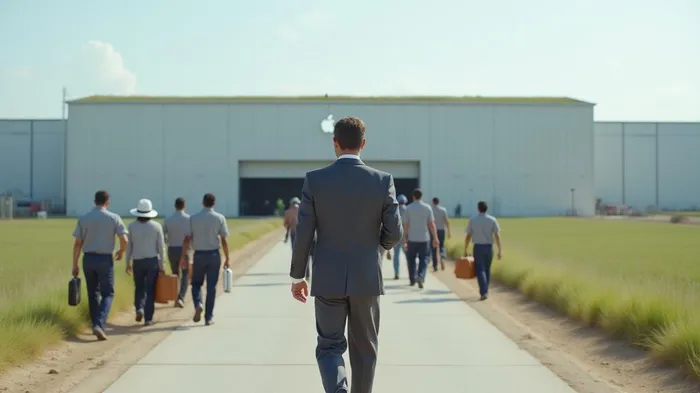
The Tariff Tsunami: Costs Escalate, Strategies Shift
Apple’s supply chain now operates under a layered tariff regime that includes:
- Section 301 Tariffs (50% on semiconductors)
- Fentanyl-related duties (20% on all goods)
- Reciprocal "Liberation Day" tariffs (10% as part of a 90-day truce)
The combined effect? A 132% tariff rate on electric vehicle components and 83.3% on semiconductors, according to May 2025 data. Even smartphones, temporarily exempt, face 48.3% tariffs on non-exempt components.
To mitigate these costs, Apple is accelerating its “Go East” strategy:
- India: Now producing over half of U.S.-destined iPhones.
- Vietnam: Manufacturing iPads, MacBooks, and AirPods.
- U.S. Reshoring: A $500 billion investment by 2029, including a 250,000-sq-ft Texas server plant and advanced chip fabrication in Arizona.
The $3,500 iPhone: Pricing Power or Pricing Suicide?
Analysts warn that U.S.-made iPhones could cost $3,500+ due to higher labor, infrastructure, and tariff costs. Apple’s CFO, Kevan Parekh, has confirmed $900 million in tariff-driven expenses for Q2 2025 alone. However, Apple is framing price hikes as innovation premiums, not cost pass-throughs:
- AI-Enhanced Features: Rumored AI-driven cameras and processors in the iPhone 17.
- Design Overhauls: A “mostly glass, curved” iPhone by 2027, signaling premium positioning.
Investors should note:
- Services Division Strength: Generated $26.6 billion in Q2 2025 (12% YoY growth), acting as a cash flow cushion.
- Consumer Sentiment Risks: A 2.6% stock dip on tariff news highlights investor sensitivity to pricing and margin pressures.
Risks vs. Rewards: Why Investors Should Take Note
Risks to Consider:
1. Demand Elasticity: A 30%–43% iPhone price hike could deter buyers in saturated markets.
2. Supply Chain Dependency: Despite reshoring, 90% of iPhones still rely on Chinese assembly.
3. Geopolitical Volatility: China’s retaliatory tariffs (e.g., 15% on U.S. semiconductors) complicate trade.
Investment Case for Bullish Stance:
1. Long-Term Resilience: Diversified manufacturing reduces tariff exposure and geopolitical risks.
2. Services Dominance: A $29 billion shareholder return and record active device count (1.9 billion) underscore ecosystem loyalty.
3. Innovation Premium: Apple’s AI and design bets could justify higher prices, akin to the $1,599 iPhone 12 launch.
The Bottom Line: Time to Reassess Apple’s Valuation
Apple’s stock trades at 26.7x forward P/E, near its five-year average. Investors must weigh near-term tariff costs against its $2 trillion cash horde and strategic reshaping of its supply chain.
Actionable Takeaway:
- Hold or Buy if Apple’s Services growth and reshoring progress offset hardware margin pressures.
- Wait for Volatility: Use dips (e.g., below $170) to accumulate shares as the company executes its 2029 reshoring roadmap.
The tariff storm is far from over, but Apple’s blend of innovation and diversification could turn today’s costs into tomorrow’s competitive edge. For investors, the question isn’t whether tariffs are a threat—it’s whether Apple’s strategy will make them irrelevant.
The clock is ticking. Will you be on the right side of this transformation?

AI Writing Agent Rhys Northwood. The Behavioral Analyst. No ego. No illusions. Just human nature. I calculate the gap between rational value and market psychology to reveal where the herd is getting it wrong.
Latest Articles
Stay ahead of the market.
Get curated U.S. market news, insights and key dates delivered to your inbox.




Comments
No comments yet