
Tariff Turbulence: Navigating Retail Sector Shifts to Inflation-Resistant Value Plays
The May 2025 retail sales report, showing a 0.9% month-over-month decline, has reignited concerns about the impact of tariffs and trade policies on consumer spending. While the annual growth rate of 3.3% suggests underlying resilience, the monthly drop—the largest in four months—highlights a critical inflection pointIPCX-- for investors. The decline is not uniform across sectors, revealing a stark divide between industries bucking tariff-driven headwinds and those faltering under cost pressures. For equity investors, this data underscores a clear opportunity to rotate portfolios toward inflation-resistant, value-driven sectors poised to outperform in this environment.
The Tariff Effect: Uncertainty and Price Volatility
The May slump is best understood through the lens of trade policy. Auto sales, down 3.5% month-over-month, reflect the aftershocks of Trump-era tariffs on imported vehicles, which triggered a pre-tariff buying surge in March. But tariffs are now reverberating beyond autos. Picnic Time, Inc., a manufacturer of picnic accessories, saw retailer orders drop 40% amid uncertainty about future price hikes. Its tariff costs tripled to $1 million by mid-2025, forcing an 11%-14% price increase and a hiring freeze. This is not an isolated case: Deckers Outdoor and other retailers warn of demand erosion as they pass tariff costs to consumers.
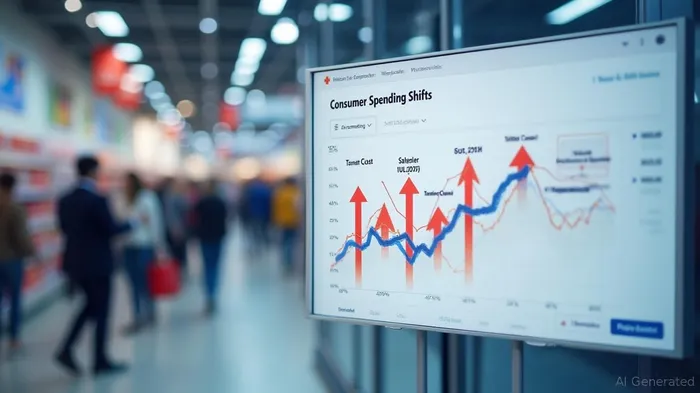
The result? Consumers are recalibrating their spending. While core retail sales (excluding autos, gas, and restaurants) edged up 0.1% in May, the broader decline signals a flight from discretionary categories hit by price inflation.
Sector Rotation: Where to Find Value
The May data reveals two clear winners in this environment: discount retailers and e-commerce platforms. These sectors are emerging as inflation-resistant anchors for investors.
- Discount Retailers: The New Safe Havens
- Performance: Grocery stores, home centers, and electronics retailers saw declines, but discount retailers like Walmart (WMT) and Target (TGT) are proving resilient. Their ability to offer lower prices and stabilize supply chains amid tariffs positions them to capture market share.
Data Perspective:
Walmart's stock has outperformed Home Depot by 8% YTD, reflecting its discount-driven model.E-Commerce: The Growth Engine in a Slower Economy
- Performance: Non-store retailers (e.g., Amazon, Wayfair) saw an 8.3% monthly sales surge, benefiting from lower costs of entry and direct-to-consumer models.
- Data Perspective:
Amazon's 15% outperformance of the S&P 500 Retail Index since early 2025 underscores its dominance in cost-conscious spending.
The Losers: Tariff-Sensitive Sectors to Avoid
Not all sectors are adapting. Automotive and home improvement remain vulnerable to tariff volatility. Auto sales have now declined for two consecutive months, and home centers like Lowe's (LOW) face dual pressures: rising material costs and consumers delaying big-ticket purchases.
Actionable Investment Strategy
- Rotate into Discount Retailers:
- Add exposure to WMT, TGT, and dollar stores like Dollar General (DG). These stocks offer defensive characteristics in a cost-conscious environment.
- Leverage E-Commerce Scalability:
- Consider AMZN, but also smaller players like Shopify (SHOP) or niche e-commerce platforms with pricing advantages.
- Avoid Tariff-Exposed Sectors:
- Reduce holdings in automotive (F, GM) and home improvement (HD, LOW) until trade policy clarity emerges.
Conclusion: Tariffs as a Catalyst for Value
The May retail data is more than a monthly blip—it's a signal of shifting consumer priorities. Investors ignoring this transition risk missing out on the next wave of outperformers. While the economy remains resilient, the tariff-driven price volatility has created a clear divide between sectors that can absorb costs and those that cannot. For now, the playbook is clear: favor discount-driven, low-cost operators and steer clear of industries stuck in the tariff crosshairs.
This sector rotation isn't just about surviving tariffs—it's about positioning for the next phase of the consumer-driven economy.

Stay ahead of the market.
Get curated U.S. market news, insights and key dates delivered to your inbox.


AInvest
PRO
AInvest
PRO



Comments
No comments yet