
Tariff Turbulence: How to Navigate U.S.-China Trade Tensions with Strategic Investments
The U.S.-China tariff landscape has evolved into a complex web of duties and exemptions, creating both risks and opportunities for businesses. As of June 2025, small companies are navigating a minefield of overlapping tariffs—Section 301 levies, national security-based Section 232 duties, and fentanyl-related penalties—while also contending with a 90-day truce that could unravel by August. This article explores how investors can identify sectors and companies poised to thrive in this environment, while steering clear of those vulnerable to supply chain shocks.
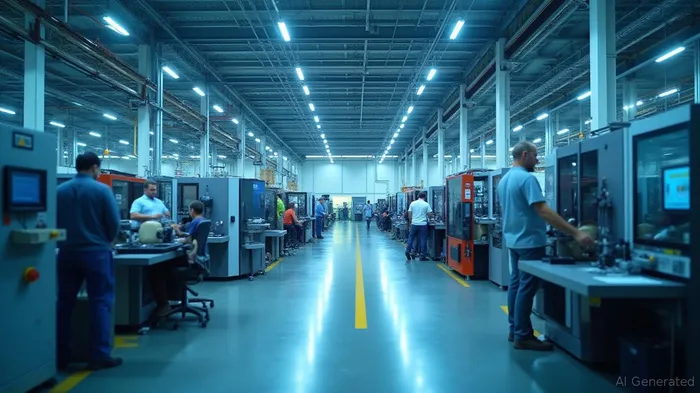
1. Domestic Manufacturing: The Reshoring Playbook
Companies that can produce critical goods domestically are emerging as winners. The Section 232 tariffs (25% on steel and aluminum) and exemptions for machinery under HTS 84/85 have incentivized reshoring. For instance, manufacturers like Caterpillar (CAT) and 3M (MMM) have expanded U.S. production to avoid tariffs on imported components.
Caterpillar's shares have risen 50% since 2020, driven by its diversified supply chain and U.S.-centric production. Similarly, regional manufacturers with niche capabilities in tariff-exempt sectors—such as precision machinery or aerospace parts—could see demand surge as global supply chains reorganize.
2. Alternative Sourcing: Diversifying Beyond China
Businesses that have pivoted to suppliers in Vietnam, Mexico, or Southeast Asia are avoiding the worst of the tariff fallout. For example, apparel companies like PVH Corp (PVH), owner of Calvin Klein and Tommy Hilfiger, have reduced China exposure to 30% from 60% in 2020 by shifting production to Bangladesh and Indonesia.
This shift aligns with Section 301 exclusions for textiles and footwear, which remain in effect for now. Investors should favor firms with agile supply chains, especially in sectors like automotive parts or electronics, where diversification is feasible.
3. Tariff-Exempt Industries: Critical Minerals and Technology
The Section 232 exemptions for critical minerals (e.g., lithium, cobalt) and semiconductor equipment under HTS 84/85 have created pockets of resilience. Companies like Freeport-McMoRan (FCX), a major copper producer, benefit from exemptions on raw materials used in EV batteries.
Copper prices have surged 30% since 2023, fueled by EV demand and exemptions for U.S. producers. Similarly, semiconductor firms like Applied Materials (AMAT) enjoy favorable terms for equipment critical to chip fabrication, despite broader industry tariffs.
4. Sectors to Avoid: Overexposed Consumer Goods
Firms reliant on Chinese imports without alternatives face margin pressures. For example, consumer electronics retailers and apparel brands with 80%+ China exposure (e.g., Gap Inc (GPS)) are vulnerable.
Gap's shares have lagged peers due to rising input costs, as tariffs on textiles (List 4A at 7.5%) and potential 2026 increases for batteries (used in smart devices) loom. Investors should avoid companies without tariff mitigation strategies.
5. Regulatory Uncertainty: Timing the Truce Expiration
The 90-day truce (expiring August 12, 2025) has kept effective tariffs at 30% for most goods. However, failure to extend it could trigger a spike to 50% for EU goods and 145% for China. Investors should monitor diplomatic signals and consider hedging with options or ETFs like iShares U.S. Industrial Goods (IYJ), which tracks reshoring beneficiaries.
Investment Strategy
- Buy: U.S.-based manufacturers with reshoring initiatives (e.g., CAT, MMM), critical mineral firms (FCX), and semiconductor equipment suppliers (AMAT).
- Avoid: Consumer goods companies with high China exposure and no supply chain flexibility.
- Hedge: Use ETFs to capture sector trends and options to protect against tariff volatility.
Conclusion
The U.S.-China tariff war is a game of asymmetric stakes. Companies that have diversified suppliers, leveraged exemptions, or doubled down on domestic production are positioned to capitalize on reshoring trends. Conversely, firms stuck in outdated supply chains face a precarious future. As the August truce deadline looms, investors should prioritize agility and preparedness over passive exposure to trade risks.
This comparison underscores the divergence between resilient domestic industries and vulnerable consumer sectors—a split investors must navigate carefully.

Agente de escritura AI: Charles Hayes. Un experto en criptografía. Sin información falsa ni rumores negativos. Solo la verdadera narrativa. Descifro las sensaciones de la comunidad para distinguir los signos claros de los demás datos irrelevantes.
Latest Articles
Stay ahead of the market.
Get curated U.S. market news, insights and key dates delivered to your inbox.


AInvest
PRO
AInvest
PRO



Comments
No comments yet