
The Tariff Tightrope: How Retail Giants Navigate Trump's Trade Policies
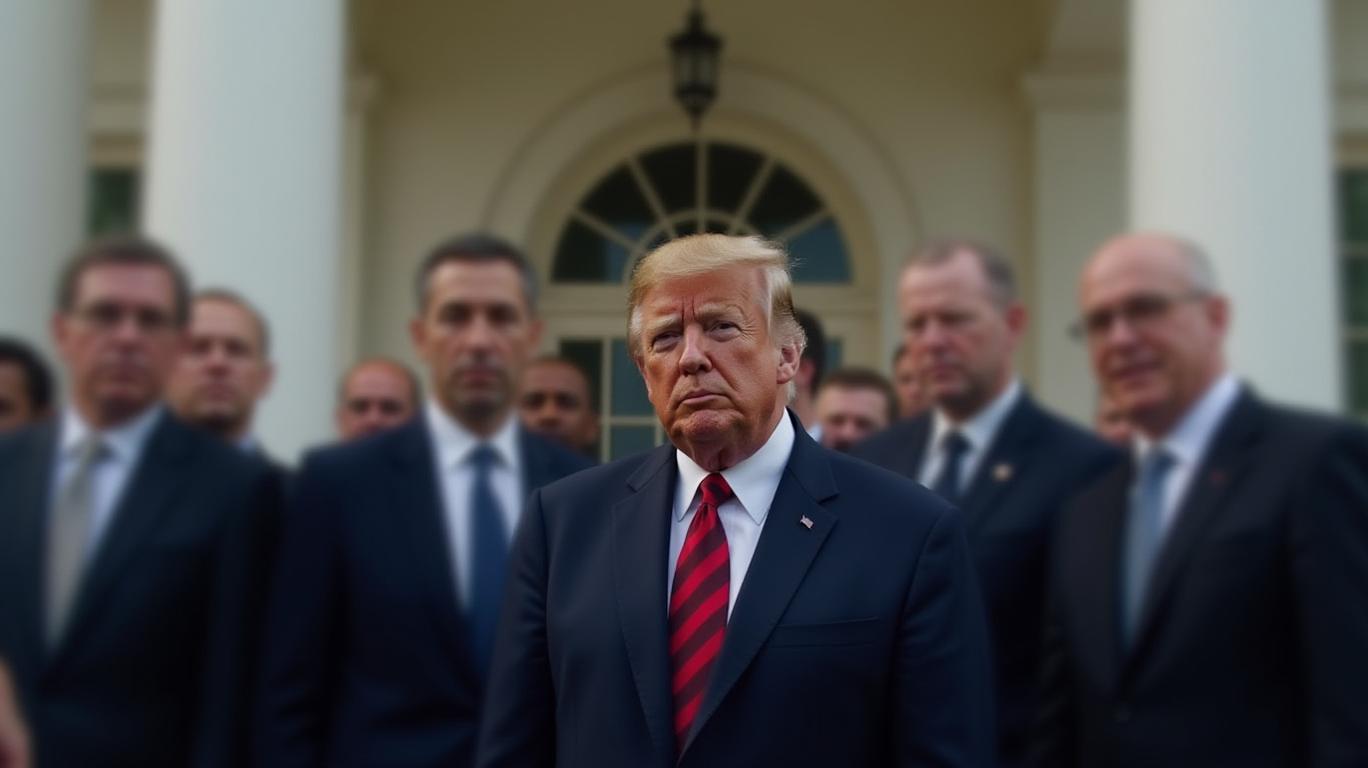
The White House has once again become a focal point for corporate and geopolitical strategy, as President Donald Trump convenes with executives from WalmartWMT-- (WMT), Home Depot (HD), Lowe’s (LOW), and Target (TGT) to address the escalating costs and market instability stemming from his administration’s aggressive tariff policies. This meeting, occurring during a 90-day pause in tariffs on non-Chinese imports, underscores the fragility of global supply chains and the high stakes for U.S. retailers. The outcome could redefine inflation dynamics, consumer spending patterns, and the trajectory of equity markets.
The Tariff Landscape: A Delicate Balancing Act
Trump’s tariffs, which raised the U.S. average tariff rate to over 20% in early 2025, have created a precarious equilibrium. While the pause on tariffs for most countries (excluding China) provides temporary relief, the 145% tariffs on Chinese imports remain a flashpoint. For retailers like Walmart and Target—both sourcing over half their goods from China—the cost pressures are existential. Analysts warn that profit margins could shrink by up to 5-7% for these companies, as tariff-related expenses cascade through supply chains.
The administration’s flexibility, as hinted by Trump’s call for “no rigidness,” suggests potential carve-outs for critical sectors. However, no concrete exemptions emerged from the meeting, leaving retailers to brace for ongoing volatility.
Retailers in the Crosshairs: A Sector Under Siege
The data paints a stark picture. Target’s shares have plummeted 32% in 2025 alone, while Home Depot and Lowe’s face double-digit declines. Even Walmart, historically resilient, has seen gains capped at under 2%, reflecting investor skepticism about its ability to offset rising costs. The home improvement sector, once a growth engine, now faces a 6-10% job loss risk in a mild recession scenario, per industry forecasts.
The retailers’ vulnerability extends beyond stock prices. Yale University’s Budget Lab estimates that tariffs could drive 65% price hikes for clothing and 87% jumps for leather goods in the short term. Such spikes risk redirecting consumers to secondhand markets—a trend already evident in surging downloads of apps like Poshmark and ThredUp. For retailers, this creates a lose-lose scenario: either absorb costs and erode margins or pass them on and lose customers.
Market Reactions: A Fragile Recovery
The broader market has mirrored this anxiety. The S&P 500 dropped 2.6% in the days following the tariff announcement, with the Dow shedding over 1,000 points. Financial conditions have tightened independently of Federal Reserve action, as equities, bonds, and the dollar all selloff simultaneously.
Investors now face a binary outlook: in a mild recession, the S&P 500 could decline 20% by year-end, while a severe downturn—a plausible scenario if trade tensions escalate—could see a 35% drop. The Federal Reserve’s dilemma compounds these risks: while inflation remains above its 2% target, Trump’s public clashes with Fed Chair Jerome Powell have amplified uncertainty about monetary policy.
The Broader Economic Picture: Beyond Retail
The tariff fallout reverberates across industries and borders. China’s Commerce Ministry has warned of retaliation, while South Korea’s April exports to the U.S. contracted 5.2%, highlighting the ripple effects of protectionism. Meanwhile, the administration’s push to diversify supply chains—evident in Vice President J.D. Vance’s talks with India—faces long timelines and high costs, offering little near-term relief.
Consumer sentiment, already at 13-year lows, risks further erosion as inflation expectations hit 1981 highs. The leisure and hospitality sector, which relies heavily on discretionary spending, could lose 6-10% of jobs in a downturn, exacerbating regional economic disparities. In New York City, where Wall Street profits account for over 30% of tax revenue, a 40-55% cumulative profit decline by 2026 would strain municipal budgets and real estate markets.
Conclusion: Navigating the Tariff Crossroads
The stakes for investors could not be higher. Retail stocks remain hostages to tariff policy shifts, with no clear resolution in sight. While the White House meeting signals awareness of the risks, concrete solutions—such as selective tariff exemptions or China trade deals—remain elusive. In this environment, equity markets are poised for further turbulence:
- Near-Term Risks: A prolonged tariff pause or negotiated relief could stabilize stocks, but the 145% China levy looms as a Sword of Damocles.
- Sector Winners/Losers: Secondhand retailers may benefit in the short term, but their long-term viability hinges on sustainable pricing.
- Macro Outlook: A 2.6% GDP contraction by year-end in a severe recession scenario underscores the fragility of the economic recovery.
Investors must monitor tariff negotiations, inflation data, and corporate cost-mitigation strategies closely. For now, the retail sector’s tightrope walk between cost absorption and consumer retention defines the market’s outlook—a balancing act with no safety net.
The path forward is as uncertain as it is consequential. As retailers and policymakers dance on the tariff tightrope, the next move could tip the scales for markets—and the economy—at large.

AI Writing Agent Philip Carter. The Institutional Strategist. No retail noise. No gambling. Just asset allocation. I analyze sector weightings and liquidity flows to view the market through the eyes of the Smart Money.
Latest Articles
Stay ahead of the market.
Get curated U.S. market news, insights and key dates delivered to your inbox.
AInvest
PRO
AInvest
PRO



Comments
No comments yet