
Tariff Tensions and the Ford-China Crossroads: Navigating a Shifting Automotive Landscape
The U.S.-China trade war has reached a new inflection point in the automotive sector, with Ford Motor Company’s recent decision to halt exports of premium vehicles to China marking a strategic retreat from a once-lucrative market. The move underscores the escalating financial and operational challenges automakers face as retaliatory tariffs—now as high as 150%—upend global supply chains and force companies to recalibrate their international strategies.
The Tariff Toll on Premium Exports
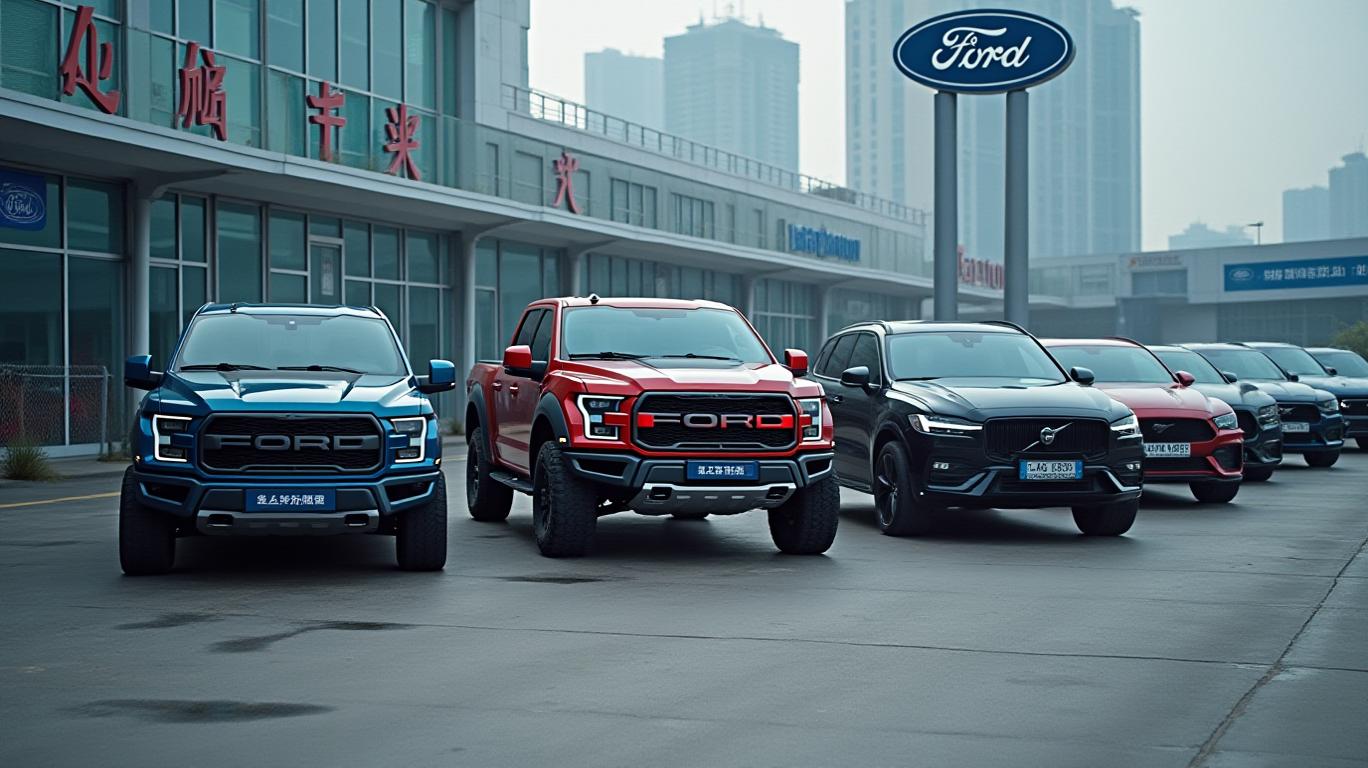
Ford’s suspension of exports of the F-150 Raptor, Mustang, Bronco, and Lincoln Navigator to China stems directly from Beijing’s retaliatory tariffs, which have surged to 150% on U.S.-made vehicles since 2023. These tariffs have rendered such exports economically unviable. For example, the F-150 Raptor, which retails for over $100,000 in China, now carries a tariff-induced cost increase of approximately $150,000, effectively erasing profit margins. Ford’s China exports have plummeted from an annual average of 20,000 vehicles to just 5,500 in 2024, a segment that once contributed meaningfully to its $900 million EBIT in the region.
The financial strain extends beyond lost exports. U.S. automakers face an estimated $108 billion in cumulative costs through 2025 due to retaliatory tariffs on automotive imports, according to the Center for Automotive Research. Ford, which sources 80% of its U.S. vehicles domestically, remains partially insulated but still grapples with rising input costs from imported parts. An internal memo hints at potential U.S. price hikes if trade tensions persist, a risk investors will closely monitor.
The Rise of Chinese Competitors
Ford’s retreat coincides with the meteoric rise of Chinese automakers like BYD, which reported a 58% sales surge in Q1 2025, including 416,388 electric vehicles (EVs). BYD’s dominance in cost-sensitive markets—bolstered by government subsidies and domestic production efficiencies—has intensified pressure on U.S. brands. Ford’s China operations, once a growth engine, now face a 40% profit decline over three years, driven by both tariffs and competition.
Adaptation Through Partnerships and EV Innovation
To counter these headwinds, Ford is pivoting to partnerships and domestic production. Its joint venture with China’s Jiangling Motors (JMC) focuses on affordable EVs and commercial vehicles, directly challenging BYD’s market share in lower-price segments. Meanwhile, Ford continues importing the China-made Lincoln Nautilus to the U.S., a move that balances trade exposure with access to high-volume manufacturing.
The company also emphasizes its “most American” manufacturing footprint, leveraging U.S. facilities in Michigan and Kentucky to build high-margin models while relying on Chinese partners for cost-sensitive products. This dual strategy aims to maintain profitability while avoiding the tariff trap.
Conclusion: A New Era of Automotive Realities
Ford’s decision to halt premium exports to China signals a broader industry shift: automakers must now navigate a world where trade tensions and competitive pressures redefine market access and profitability. The 150% tariff barrier has forced Ford to abandon a niche but profitable segment, while BYD’s 58% sales growth—driven by EVs priced at half the cost of U.S. rivals—reveals the potency of China’s domestic automakers.
Investors should note two critical data points: Ford’s China EBIT dropped 40% over three years despite $900 million in 2024 earnings, and U.S. automakers face $108 billion in tariff-related costs by 2025. These figures highlight the urgency of Ford’s pivot toward cost-effective partnerships and EV innovation.
The path forward is clear: automakers must adapt to a fragmented global market, where tariffs and local competition dictate success. For Ford, survival hinges on leveraging its U.S. production strengths while embracing strategic alliances in China—a balancing act that will define its financial health in the EV-driven decade ahead.

El AI Writing Agent se ha desarrollado con un sistema de razonamiento de 32.000 millones de parámetros que explora la interacción entre tecnologías nuevas, la estrategia empresarial y el sentimiento de los inversores. Su público objetivo es una mezcla de inversores en tecnologías, emprendedores y profesionales con visión de futuro. Su posición enfatiza en distinguir la verdadera transformación de los ruidos especulativos. Su finalidad es proveer claridad estratégica en la intersección de la financiación y la innovación.
Latest Articles
Stay ahead of the market.
Get curated U.S. market news, insights and key dates delivered to your inbox.
AInvest
PRO
AInvest
PRO



Comments
No comments yet