
The Tariff Tectonic Shift: ASML's Guidance Cut Signals a New Era for Semiconductor Supply Chains
 Aime Summary
The semiconductor industry's golden age of globalization is under siege. ASML's recent decision to withdraw its 2026 revenue growth guidance—citing U.S. tariffs on EU imports as a key factor—has sent shockwaves through global supply chains. This move underscores a seismic shift: geopolitical trade tensions are no longer theoretical risks but operational realities reshaping capital allocation strategies. For investors, the ripple effects of ASML's warning demand a stark reevaluation of exposure to semiconductor equities reliant on trans-Atlantic trade flows, while opening opportunities in China's self-reliance play.
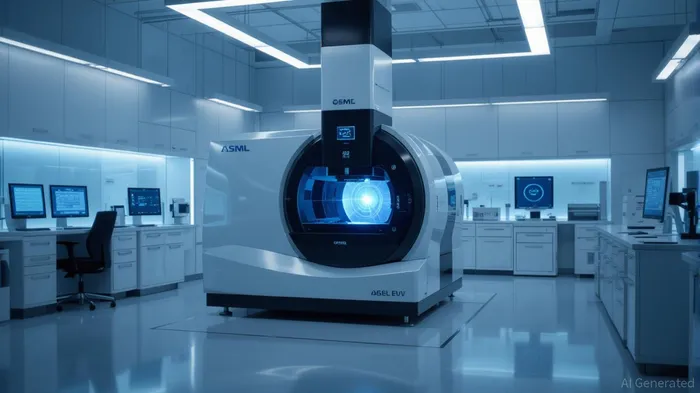
ASML's Guidance Cut: A Microcosm of Macro Risks
ASML's Q2 2025 earnings revealed a stark contradiction. While net sales hit €7.7 billion (beating expectations), the company's refusal to confirm 2026 growth marked a pivotal moment. CEO Christophe Fouquet explicitly tied this uncertainty to “U.S.-EU tariff threats,” which could disrupt shipments of its €150 million EUV lithography systems—a linchpin of AI-driven chip production.
The direct financial risks are clear:
- Tariff Costs: Potential 30% tariffs on EU-made equipment sold in the U.S. could add €45 million to the price of a single EUV system, pricing U.S. customers like IntelINTC-- out of critical upgrades.
- Indirect Demand Chill: Geopolitical uncertainty is already slowing customer investment cycles. ASML's Q2 bookings fell to €5.5 billion, missing consensus estimates, as buyers delay spending amid tariff uncertainty.
The Trans-Atlantic Semiconductor Supply Chain is Fraying
The ASML case is not an isolated incident. U.S. tariffs targeting EU semiconductor equipment—announced under Section 232 of the Trade Expansion Act—have exposed vulnerabilities in a supply chain long reliant on cross-border collaboration:
- Trade Data Shows Rising Barriers:
- EU exports of semiconductor manufacturing equipment to the U.S. fell by 18% year-over-year in early 2025, per SEMI data.
U.S. imports of ASML's EUV systems dropped to zero in Q1 2025 as customers awaited clarity on tariff impacts.
Decoupling is Already Underway:
- U.S. “Friend-Shoring” Push: The Biden administration's $39 billion CHIPS Act aims to rebuild domestic capacity, but progress is slow. U.S. semiconductor equipment manufacturing remains at 12% of global output—down from 25% in 2010.
- EU Diversification: The EU's Critical Raw Materials Act now mandates stockpiling of quartz and other materials, reducing reliance on U.S. and Chinese sources.
Why Semiconductor Equities Deserve an Underweight Rating
The ASML warning amplifies risks for chipmakers and equipment suppliers exposed to trans-Atlantic supply chains. Key vulnerabilities include:
- Margin Pressure: Tariffs force cost pass-throughs, squeezing margins. ASML's gross margin guidance narrowed to ~52% for 2025, down from 55% in 2023.
- Demand Volatility: AI's insatiable appetite for advanced chips is real, but geopolitical headwinds could starve U.S. and EU fabs of critical tools.
Investors should avoid overexposure to companies like:
- Applied Materials (AMAT): Over 30% of revenue comes from EU-U.S. trade corridors.
- Lam Research (LRCX): Geopolitical risks to its U.S. foundry customers (e.g., Intel) compound supply chain threats.
Redeploy Capital to China's Self-Reliance Play
While the West grapples with decoupling, China is accelerating its push for semiconductor independence. Beijing's $1.3 trillion “Made in China 2025” initiative targets 70% domestic content in chips by 2030—a goal now turbocharged by U.S. export restrictions.
Top Plays for Investors:
1. Shanghai Microelectronics (688041.CN): China's leading lithography supplier, developing 14nm systems. While far behind ASML's EUV tech, its progress is funded by state-backed capital.
2. SMIC (0981.HK): The nation's largest chipmaker, investing $20 billion in new fabs to bypass U.S. sanctions. Its 14nm nodes now supply 55% of domestic demand.
The Bottom Line: Position for Decoupling, Not Globalization
ASML's guidance cut is a canary in the coalmine. Investors must recognize that geopolitical trade tensions are here to stay—and that supply chains are fracturing along national lines. Underweight semiconductor equities exposed to trans-Atlantic trade volatility, and instead allocate capital to regions like China, where self-reliance is a strategic priority. The next decade's winners will be those insulated from tariff wars, not those reliant on a vanishing era of free-flowing trade.
Investment Advice:
- Underweight: ASML (ASML), Applied MaterialsAMAT-- (AMAT), Lam ResearchLRCX-- (LRCX).
- Overweight: Shanghai Microelectronics (688041.CN), SMIC (0981.HK), and broader China semiconductor ETFs (e.g., KWEB).
- Monitor: U.S.-EU tariff negotiations and China's progress in 7nm lithography.
The semiconductor sector is no longer a single market—it's a battleground of supply chain nationalism. Position accordingly.

Stay ahead of the market.
Get curated U.S. market news, insights and key dates delivered to your inbox.




Comments
No comments yet