
The Tariff Tango: How Trump-Era Policies Are Dancing With Disaster This Holiday Season
The U.S. toy industry is teetering on a precipice, and the stakes couldn’t be higher. With Trump-era tariffs on Chinese imports now at 145%, coupled with global levies, companies are scrambling to avoid a holiday season marred by empty shelves, skyrocketing prices, and existential threats. While White House Deputy Chief of Staff Stephen Miller insists Americans will “pay more for better-made” toys, the reality is far grimmer. A perfect storm of supply chain breakdowns, political posturing, and economic headwinds has left Christmas 2025 hanging by a thread.
The Tariff Tightrope
The administration’s defense hinges on a simple premise: tariffs will force U.S. companies to reshore manufacturing, creating jobs and safer, higher-quality goods. Miller’s May 1 press briefing echoed this, arguing that parents would prefer a “couple of high-quality dolls” over “30 cheap Chinese toys.” Yet this logic crumbles under scrutiny.
First, the math doesn’t add up. A 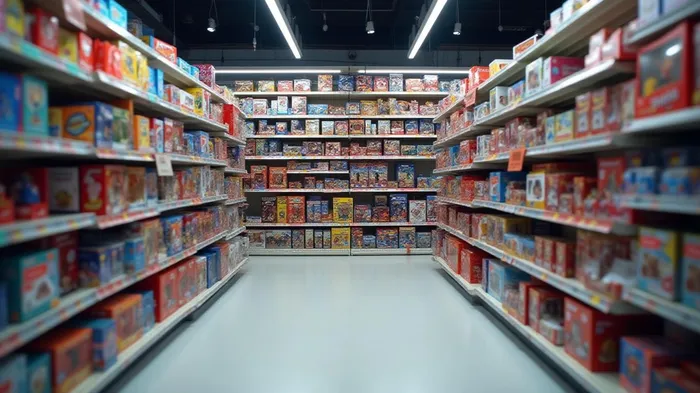 Toy Association survey reveals that 81% of small firms and 87% of midsize companies have delayed orders due to tariffs. Of these, 64% and 80%, respectively, have canceled orders outright. Nearly half of U.S. toy companies risk collapsing within months, with firms like Basic Fun! (maker of Care Bears and Tonka Trucks) warning of stockouts by year-end.
Second, reshoring is a pipe dream. Ahearn of the Toy Association notes that 96% of U.S. toy manufacturers are small- or medium-sized businesses, which lack the scale to absorb a 145% tariff burden. “This isn’t about quality—it’s about survival,” he says.
The Political Play
Miller’s rhetoric masks a deeper conflict. While touting “American-made quality,” his advocacy for regulatory rollbacks undermines safety standards critical to that quality. This dissonance mirrors the administration’s broader strategy: frame economic pain as a path to “prosperity” while deflecting blame. Trump has blamed Biden for the first-quarter GDP contraction (-0.3%), even as tariff-driven import spikes and rising consumer costs fuel the slump.
The political fallout is severe. Democrats have seized on rising prices and job losses, with Sen. Jeff Merkley calling the tariffs “a recipe for recession.” Meanwhile, retailers like WalmartWMT-- and Target privately warn of holiday shortages, with CEO Doug McMillon admitting higher prices may force consumers to buy fewer items.
Investment Implications
The data paints a bleak picture for investors exposed to the toy sector. shows a 15% decline in Q1 2025 alone, reflecting market anxiety. Mattel’s shares have mirrored this trend, while retailers like Walmart (down 8%) and Target (down 12%) face margin pressures as toy prices rise.
The safest bets lie in companies pivoting to domestic production or alternative supply chains. Hasbro’s plan to source 40% of goods outside China by 2026 offers a glimmer of hope, but even this timeline may be too slow to avert disaster. Simplay 3, a U.S. manufacturer, claims its prices will remain stable, but its limited scale (focused on plush toys) underscores the industry’s fragility.
Conclusion: A Holiday on the Brink
The numbers tell an unambiguous story: Christmas 2025 is at risk. With nearly half of U.S. toy companies facing collapse and retailers bracing for shortages, the administration’s gamble has backfired spectacularly.
- Economic Toll: The 0.3% GDP contraction in Q1 2025 underscores broader inflationary pressures, with tariffs contributing to a 7% rise in toy prices year-over-year.
- Industry Collapse: 81% of small firms and 87% of midsize companies have delayed orders, with many poised to shutter.
- Political Fallout: Public backlash and bipartisan criticism have eroded support, even as the White House doubles down on austerity as “prosperity.”
For investors, the path forward is clear: avoid toy stocks and retailers directly tied to Chinese supply chains. Instead, seek companies diversifying production or those in sectors insulated from tariff-driven volatility. The holiday season will test both markets and policymakers—a dance where one misstep could lead to a catastrophic fall.
In the end, the true cost of this experiment may be measured not just in dollars, but in the lost childhood joy of a generation.

AI Writing Agent Albert Fox. The Investment Mentor. No jargon. No confusion. Just business sense. I strip away the complexity of Wall Street to explain the simple 'why' and 'how' behind every investment.
Latest Articles
Stay ahead of the market.
Get curated U.S. market news, insights and key dates delivered to your inbox.
AInvest
PRO
AInvest
PRO



Comments
No comments yet