
"The Tariff Rush: How Trump’s Auto Duties Ignited a Buying Frenzy—and a New Economic Divide"
The sudden 25% tariff on non-compliant imported vehicles, effective April 3, 2025, sparked a nationwide scramble to buy cars before prices surged—a phenomenon now reshaping consumer behavior, automaker strategies, and economic forecasts.
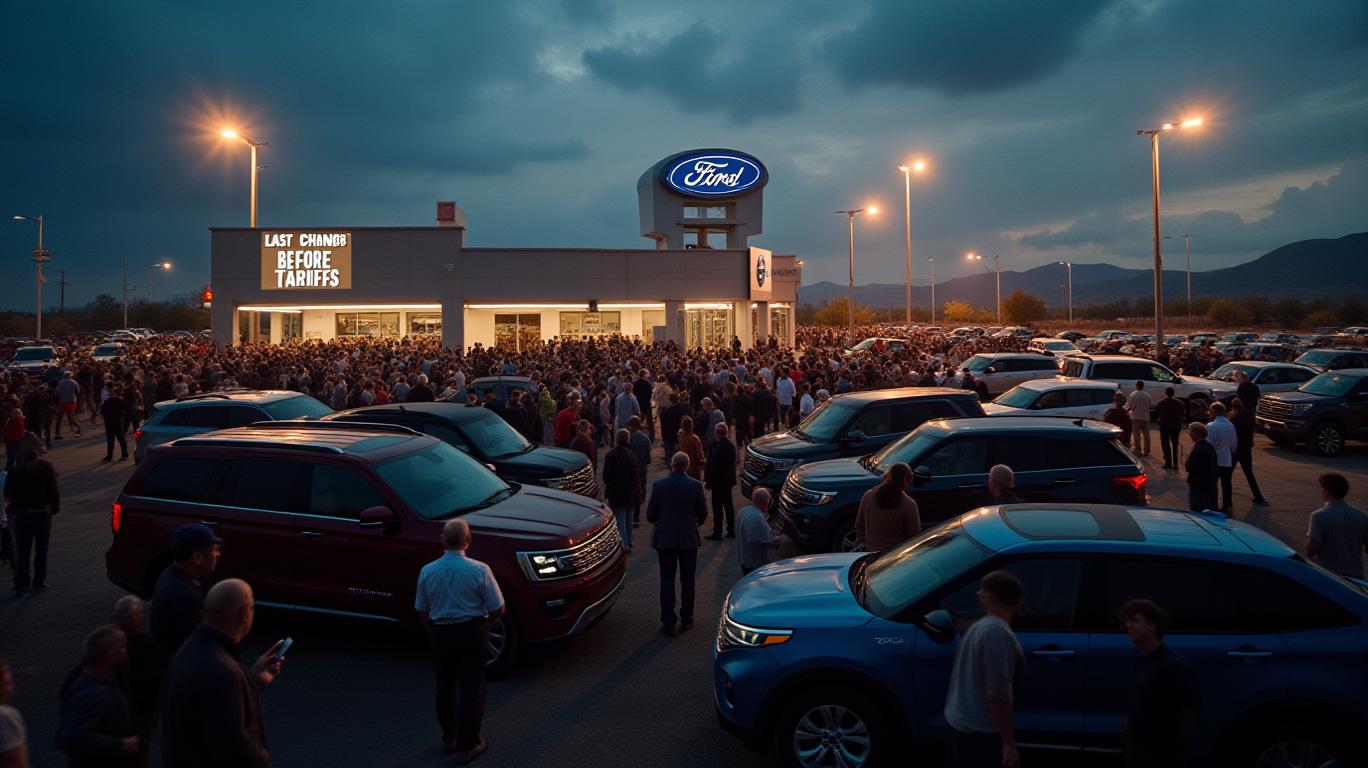
The Rush to the Dealerships
The tariff’s implementation unleashed a surge in automobile purchases, with sales of new vehicles jumping 22% above the seasonally adjusted pace of 2024. Buyers, fearing sticker shock from tariffs adding $3,600 to $6,000 to vehicle costs, flocked to dealerships. The Ford Bronco became a poster child for this frenzy, with inventory levels dropping sharply. Yet this short-term boomBOOM-- masks deeper economic fissures.
The Federal Reserve’s April Beige Book noted a “rush to purchase durable goods like vehicles,” but it also highlighted a “nervous” consumer base delaying non-essential spending. Home sales plummeted to a 15-year low in March, and leisure travel demand weakened as buyers adopted a “conservation mentality.” The contrast is stark: auto sales surged while other sectors stagnated, creating a lopsided economic landscape.
Tesla’s stock, for instance, dipped 5% in early April despite strong sales, reflecting investor skepticism about the company’s ability to navigate tariff-driven supply chain disruptions. The broader S&P 500 auto sector index rose 3% during the same period, signaling a mixed outlook for companies reliant on global parts sourcing.
Automakers in the Crosshairs
While dealers celebrated short-term gains, automakers face long-term headaches. The tariff targets vehicles not meeting USMCA content rules, forcing manufacturers to retool supply chains—a process that can take years. Ford and Nissan reported aggressive sales pushes in April but warned of inventory shortages by mid-May. “We’re selling cars faster than we can restock,” said a Detroit dealership manager.
The May 3 deadline for auto parts tariffs adds to the pressure. A 25% duty on engines and transmissions could force automakers to absorb costs or pass them to consumers, further squeezing margins. Toyota’s CEO recently stated that “reshoring production to the U.S. is economically unfeasible in the near term,” underscoring the industry’s dilemma between compliance and profitability.
The Broader Economic Divide
The tariff’s ripple effects extend beyond showrooms. Consumer sentiment surveys reveal a “split personality”: 35% of shoppers delayed major purchases like appliances or homes, while only 7% accelerated buying to beat tariffs. Retailers like Walmart noted unpredictability in spending, citing tariff uncertainty alongside weather and tax refund timing.
Meanwhile, the Federal Reserve’s data paints a grim picture: auto sales excluding motor vehicles rose a modest 0.5% in March, but overall consumer spending growth slowed to 0.1%, the weakest pace since 2020. The divide between auto-driven optimism and broader economic caution could test policymakers’ ability to stabilize the market.
Conclusion: A Short-Term Win, Long-Term Risk
The tariff-driven car buying frenzy offers a microcosm of today’s economy: a temporary high fueled by urgency, masking underlying fragility. With auto sales surging but home and travel markets faltering, the U.S. faces a critical juncture.
Automakers must pivot to meet USMCA content requirements or risk prolonged margin pressure. Consumers, meanwhile, are caught in a paradox—spending freely on cars while holding back elsewhere—highlighting the tariffs’ uneven impact.
The data underscores the stakes: a 22% sales spike in autos contrasts sharply with home sales at a 15-year low. Investors should monitor automakers’ supply chain adjustments and the May 3 parts tariff deadline for clues about the sector’s resilience. For now, the tariff’s legacy is clear: it created a buying frenzy but deepened the divide between industries—and consumers—able to weather its storm.

Stay ahead of the market.
Get curated U.S. market news, insights and key dates delivered to your inbox.


AInvest
PRO
AInvest
PRO



Comments
No comments yet