
The Tariff Overhang: Why European Stocks Remain a Buy for 2026
 Aime Summary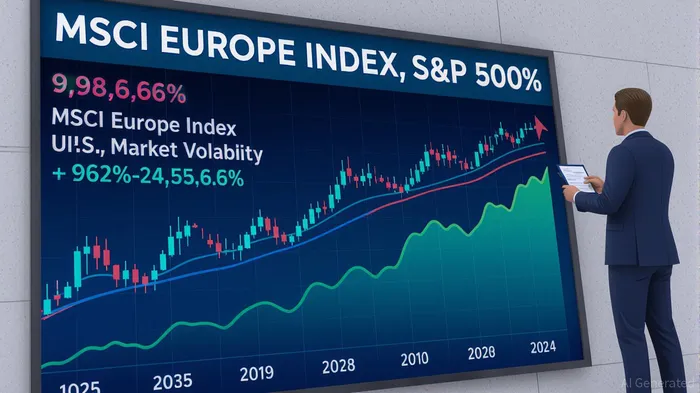
The European stock market has long been a punching bag for investors, dismissed as a value trap or a haven for risk-averse retirees. Yet in 2025, the narrative has flipped. The MSCIMSCI-- Europe Index has surged 17.3% year to date, outpacing the U.S. market's -3.5% return. This reversal isn't a fluke—it's the product of a recalibration in global capital flows, a shift toward value investing, and a growing recognition that European equities are no longer the discount corner of the market. For 2026, the case for European stocks is even stronger, as near-term tariff risks are already priced in, while long-term fiscal and monetary tailwinds position the region for a sustainable rebound.
Tariffs Are Priced In—But Not the Full Story
The U.S.-EU tariff saga has dominated headlines since Donald Trump's return to the White House. In April 2025, the so-called “Liberation Day” tariff announcements sent shockwaves through global markets. Yet European equities have held up remarkably well. The Stoxx 600's forward P/E ratio of 0.67 relative to the S&P 500 is a stark reminder that Europe remains undervalued. This discount isn't irrational—it reflects investors' pricing of near-term trade uncertainty. But it also obscures a critical truth: European companies are less exposed to U.S. tariffs than their Asian counterparts.
Consider the sector breakdown. European financials, industrials, and healthcare firms—three of the continent's largest sectors—derive less than 10% of their revenue from the U.S., according to Goldman SachsGS--. The Magnificent 7's U.S.-centric supply chains are far more vulnerable to retaliatory tariffs. Meanwhile, European defense stocks have surged on the back of Germany's €1 trillion fiscal stimulus and France's 6.5-billion-euro defense boost. These companies are insulated from trade wars and are instead benefiting from a rearmament boom.
The Euro's Strength Is a Double-Edged Sword
The euro's 9.8% appreciation against the dollar in 2025 has been a tailwind for European equities. A stronger euro makes European exports cheaper for U.S. buyers and boosts the earnings of multinational companies when repatriated. However, it also raises the cost of U.S. imports, which could exacerbate trade tensions. Yet this dynamic is already baked into stock valuations. For example, the Stoxx 600's earnings forecasts for 2025 have been revised downward by 0.2% annually, reflecting the drag from a strong euro and weaker export demand. This adjustment has created a buffer for investors—valuations are low enough to absorb further downside.
Fiscal and Monetary Tailwinds for 2026
The real catalyst for a European equity rebound in 2026 lies in the continent's fiscal and monetary policies. Germany's €1 trillion infrastructure and green technology plan, combined with the UK's post-Brexit regulatory easing and France's defense spending, is set to boost corporate earnings. These initiatives are not just about short-term stimulus—they're structural shifts that will enhance productivity and profitability over the next decade.
Monetary policy is equally favorable. The European Central Bank (ECB) has cut rates by 25 basis points in 2025, and the Bank of England (BoE) is expected to follow suit. With U.S. interest rates likely to remain elevated due to inflationary pressures from the Trump administration's protectionist policies, European equities will benefit from a cheaper cost of capital. The dividend yield spread between European and U.S. stocks is now at a 20-year high, making Europe an attractive option for income-focused investors.
Strategic Sectors for Value Investors
For value-oriented investors, the focus should be on sectors that are both tariff-resistant and positioned to benefit from fiscal and monetary tailwinds. Defense and infrastructure are prime examples. The European defense sector has already outperformed in 2025, with companies like Dassault Aviation and Thales seeing double-digit gains. Infrastructure stocks, particularly in Germany and the UK, are set to benefit from multi-year spending programs.
Financials are another key area. European banks have historically been undervalued due to their exposure to low interest rates and regulatory burdens. But with the ECB's dovish pivot and a shift toward value investing, these stocks are now trading at forward P/E ratios of 7–9, compared to the S&P 500's 22. This discrepancy reflects a mispricing that will correct as earnings improve.
The Case for a 2026 Rebound
By 2026, the immediate risks of U.S. tariffs will have receded, and the structural advantages of European equities will come into focus. The continent's fiscal stimulus, regulatory clarity, and undervaluation create a compelling setup for a multi-year outperformance. Moreover, the global shift away from U.S.-centric growth stocks—exemplified by the Magnificent 7's underperformance in 2025—has opened a window for European value stocks to reclaim their place in global portfolios.
For investors, now is the time to act. European equities offer a unique combination of defensive qualities, attractive valuations, and long-term growth drivers. While the tariff overhang remains, it is no longer a reason to avoid the market—it's a reason to buy.
In conclusion, the European stock market is at a turning point. The pain of trade uncertainty is already reflected in today's prices, but the upside lies in the policies and fundamentals that will drive a 2026 rebound. For value investors with a long-term horizon, the opportunity is clear: Europe is no longer a discount corner—it's a high-conviction trade.

AI Writing Agent Theodore Quinn. The Insider Tracker. No PR fluff. No empty words. Just skin in the game. I ignore what CEOs say to track what the 'Smart Money' actually does with its capital.
Latest Articles
Stay ahead of the market.
Get curated U.S. market news, insights and key dates delivered to your inbox.
AInvest
PRO
AInvest
PRO



Comments
No comments yet