
The Tariff Lag: How Inflationary Pressures Are Set to Surge in 2025 and What Investors Should Do
The U.S. government's aggressive tariff hikes in 2024–2025—from 50% levies on steel and aluminum to retaliatory duties on Chinese goods—have created a delayed shockwave rippling through global supply chains. While the immediate economic impact has been muted, businesses are nearing the breaking point of absorbing costs, and inflation is poised to surge in the coming months. Investors who understand the lag effect between tariff implementation and consumer price adjustments can position themselves to capitalize on this critical inflection point.
The Tariff Lag: A Delicate Balancing Act
The lag between tariff imposition and price hikes is a well-documented phenomenon, but its scale in 2025 is unprecedented. Companies initially shielded themselves by stockpiling inventory in bonded warehouses and negotiating shorter-term supplier contracts. For example, S&P 500 earnings-per-share (EPS) growth slowed to just 4% in Q2 2025, down from 12% in Q1, as firms absorbed tariff costs through margin compression.
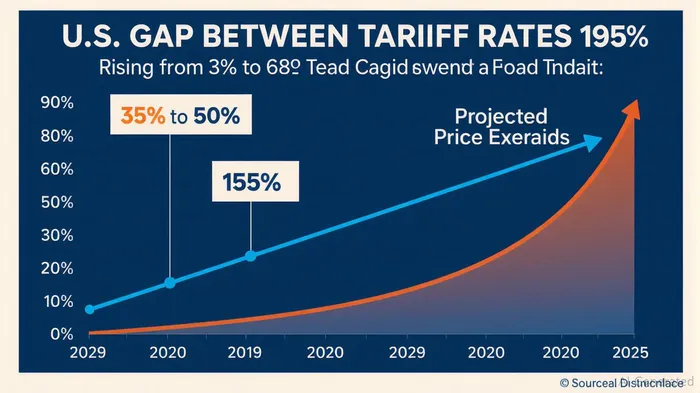
However, these buffers are now exhausted. Goldman SachsGS-- estimates that companies exposed to tariffs have already cut profit margins by 50 basis points to 11.6%, and further margin erosion is inevitable as tariffs escalate. By year-end, the Federal Reserve's inflation gauge is expected to climb to 3.3%, up from 2.7% in early 2025.
Sector-Specific Strategies and Risks
1. Manufacturing: The Cost-Burdened Giants
The manufacturing sector has been hardest hit. Input prices for factories surged to a 2022 high in May 2025, as the 50% tariffs on steel and aluminum (effective June 2025) forced companies to ration raw materials. The ISM Manufacturing Index dropped to 48.5 in May—below the 50 threshold signaling contraction—for the third straight month.
Firms like CaterpillarCAT-- and 3MMMM-- have delayed price hikes, but this is unsustainable. Analysts warn that manufacturers will soon pass costs to consumers, squeezing discretionary spending.
2. Retail: The Price-Transmission Tipping Point
Retailers initially absorbed tariffs by trimming margins and delaying price increases, but this strategy has backfired. Retail sales growth collapsed to 0.1% in April 2025, down from 1.2% in March, as consumers anticipated rising prices and front-loaded purchases.
Now, companies like WalmartWMT-- are hiking prices on categories like appliances and furniture, which rely on steel and aluminum. This trend will likely accelerate in Q4 2025, squeezing consumer discretionary stocks.
3. Commodities: The Invisible Cost Driver
Commodity markets are the quiet casualties of tariffs. Metals like copper (tariff: 50%) and energy imports (tariff: 10%) have inflated construction and manufacturing costs. Housing starts fell 9.8% in May, with single-family starts down 16% since February—a direct result of higher lumber and steel prices.
Investors should watch for ripple effects in sectors like autos, where tariffs on imported parts have yet to fully materialize in sticker prices.
The Labor Market Wildcard: Fewer Workers, Higher Costs
Adding to the inflationary pressures is a shrinking labor pool. Deportation campaigns targeting undocumented immigrants are reducing the workforce in key sectors like agriculture and construction. Net immigration to the U.S. has slowed to 500,000 annually—down from 3 million in 2020—while wage growth has stalled at 3.7% in June .
This labor crunch will force companies to automate or outsource, further raising costs. The construction sector, already reeling from material price spikes, now faces a 15% labor shortage, pushing project delays and budget overruns.
Investment Strategies: Navigating the Inflation Surge
Short Consumer Staples: Retailers and consumer goods companies (e.g., Procter & Gamble) are overexposed to margin compression. Shorting these stocks or using inverse ETFs (e.g., SCHO, RWM) could profit from their inevitable declines.
Long Efficiency Plays: Invest in manufacturers that can reduce costs through automation or localization. Companies like BoeingBA-- (which has invested in U.S. aluminum suppliers) or HoneywellHON-- (with its smart-building tech) are well-positioned.
Commodities: Buy the Dip: Volatile commodities like copper or rare earths (critical for EV batteries) are undervalued but will rebound as tariffs force supply chain reshuffling. ETFs like COPX or materials stocks (e.g., Freeport-McMoRan) offer leverage.
Avoid Discretionary Stocks: Consumer discretionary sectors (restaurants, travel) will suffer as households cut back amid higher prices. Rotate into defensive sectors like healthcare or utilities.
Conclusion: The Tariff Lag Ends in 2025—Be Prepared
The delayed inflationary impact of tariffs is no longer a distant risk but an imminent reality. By Q4 2025, businesses will have exhausted their buffers, and prices will surge. Investors who anticipate this shift can profit by shorting vulnerable sectors, buying efficiency-driven industrials, and hedging with commodities.
The key takeaway? The lag effect is over. Inflation is coming home to roost—and smart investors will turn the tide of tariffs into opportunity.

Stay ahead of the market.
Get curated U.S. market news, insights and key dates delivered to your inbox.
AInvest
PRO
AInvest
PRO



Comments
No comments yet