
Tariff-Driven Manufacturing Woes: Navigating Supply Chain Risks and Labor Market Fallout
The U.S. manufacturing sector faces unprecedented headwinds as tariffs and trade wars reshape global supply chains. Companies like HasbroHAS-- are emblematic of a broader crisis: forced job cuts, rising costs, and supply chain fragility. This article examines how tariff policies have destabilized labor markets and consumer goods sectors, while offering investment strategies to insulate portfolios from trade-related volatility.
Hasbro's Layoffs: A Microcosm of Tariff-Induced Pain
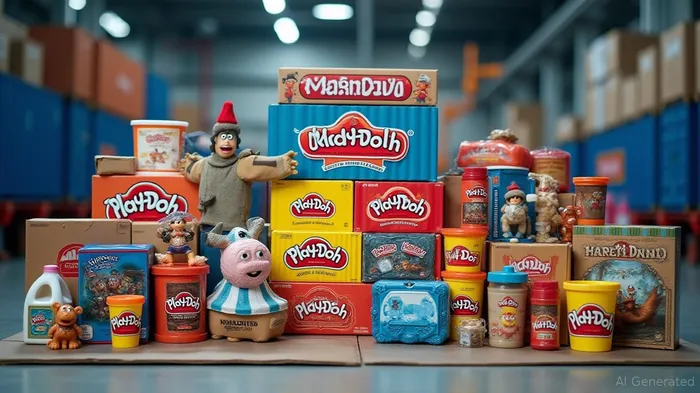
Hasbro's decision to cut 1,900 jobs (20% of its workforce) by 2024 underscores the human cost of tariff-driven restructuring. The company faces up to $300 million in tariff costs in 2025 alone, prompting a shift from China to Turkey for Play-Doh production and a 66% product line reduction. While its Wizards of the Coast division (Magic: The Gathering, Dungeons & Dragons) thrives, the core toy business—a labor-intensive segment—has become a financial drain.
The layoffs signal two critical risks:
1. Supply Chain Vulnerabilities: Reliance on Chinese manufacturing has left Hasbro exposed to 145% tariffs on imports, forcing costly relocations.
2. Labor Market Spillover: Smaller firms, which lack Hasbro's scale, face existential threats. Nearly half of U.S. toy companies are at risk of closure due to tariff pressures.
Sector-Wide Implications: Beyond Toys
The toy industry's struggles mirror broader manufacturing challenges:
- Input Cost Inflation: Tariffs on steel, machinery, and components raise production expenses. Steel tariffs alone cost U.S. automakers 200,000 jobs between 2002 and 2023.
- Trade Distortions: Retaliatory tariffs from China and the EU reduced U.S. exports by 18%, dampening GDP growth by 0.9% in 2025.
- Regressive Impact: Lower-income households bear 60% of tariff-related price hikes, risking consumer spending during peak seasons.
The automotive sector exemplifies cascading effects: Volvo Group cut 450 jobs in 2025, citing “market uncertainty” tied to tariff volatility, while Stellantis laid off 5,400 workers globally.
Investment Strategy: Defending Against Tariff Risks
Investors must prioritize sectors insulated from trade wars and labor disruptions:
1. Domestic Infrastructure & Utilities
- Why: Companies like Brookfield Infrastructure Partners (BIP) or NextEra Energy (NEE) rely on U.S.-based assets (e.g., grids, pipelines) and are less exposed to import/export tariffs.
- Data Point: Utilities have outperformed consumer discretionary by 15% YTD 2025.
2. Healthcare & Pharmaceuticals
- Why: Drugmakers like Johnson & Johnson (JNJ) or Merck (MRK) benefit from steady demand and supply chains less dependent on tariff-heavy regions.
- Data Point: Healthcare stocks have a 10% lower correlation to tariff-sensitive sectors than industrials.
3. Tech with Domestic Supply Chains
- Why: Firms like Dematic (DMAC) or Flex Ltd. (FLEX) specialize in automation and logistics, reducing reliance on Chinese components.
- Data Point: Robotics and automation stocks rose 18% in 2025 amid reshoring trends.
4. Consumer Staples with Pricing Power
- Why: Companies like Procter & Gamble (PG) or Coca-Cola (KO) can pass costs to consumers while maintaining loyalty.
- Data Point: Staples outperformed discretionary by 7% in tariff-affected quarters.
Red Flags and Mitigation
- Avoid: Tariff-sensitive sectors like textiles (e.g., L Brands (LB)) or steel (e.g., Cleveland-Cliffs (CLF)).
- Monitor: Geopolitical risks, such as China's retaliatory measures or shifts in U.S. trade policy.
Conclusion: A Call for Prudent Reallocations
The manufacturing sector's tariff-driven turmoil is far from over. While Hasbro's layoffs highlight the perils of global supply chains, investors can mitigate risks by favoring domestic, essential industries. Utilities, healthcare, and automation-focused tech offer stability, while consumer staples provide a defensive buffer. As tariff volatility persists, capital should flow to companies with pricing power, local supply chains, and minimal exposure to trade disputes.
Final Recommendation: Shift 15-20% of equity allocations to defensive sectors, using tariff-resistant stocks as a hedge against manufacturing sector volatility.
Data as of June 2025. Past performance is not indicative of future results.

Stay ahead of the market.
Get curated U.S. market news, insights and key dates delivered to your inbox.




Comments
No comments yet